

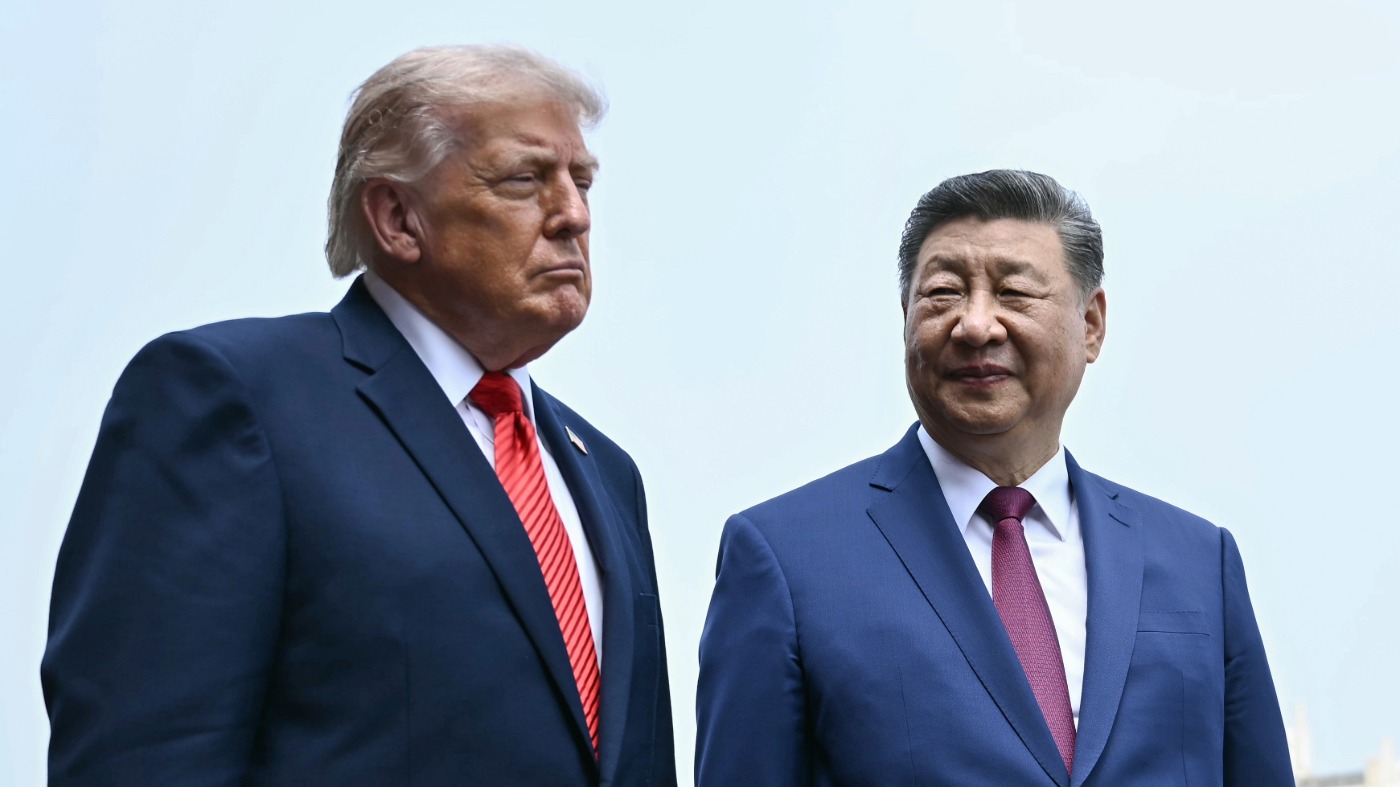
President Donald Trump is preparing to meet Chinese President Xi Jinping this week as concerns grow over artificial intelligence, manufacturing and U.S. dependence on China.
Rep. Ro Khanna, a California Democrat and senior member of the House China Committee, argues that Trump enters the meeting without enough economic leverage. He says the president has not delivered the manufacturing revival promised during his campaign.
Khanna also wants Trump to seek a verifiable Trump Xi AI treaty. He says the agreement should prevent artificial intelligence systems from gaining the ability to improve themselves without human control.
The issue has gained attention as AI systems develop quickly. Khanna points to warnings from Anthropic researchers about the possibility of advanced AI posing an extreme threat to humanity. He argues that the United States should treat AI safety as part of its national security policy.
Khanna says a U.S.-China agreement should ban AI practices that allow systems to advance themselves without human oversight. He argues that such rules could help keep people in control as the technology becomes more capable.
The congressman also calls for a wider economic plan. He proposes a national industrial development bank funded with tariff revenue from Chinese imports. He also wants 1,000 new trade schools and stronger support for workers affected by trade and industrial changes.
Khanna has urged Congress to take other steps against Chinese economic influence. His proposals include the Connected Vehicle Security Act, new procurement rules favoring U.S. steel, fees on Chinese ships and tax credits for rare earth magnet production.
He argues that tariffs alone cannot rebuild American industry.
Khanna cites several examples from U.S. manufacturing communities. During a May tour of the Midwest, he visited Lordstown, Ohio. He said more than 1,300 United Auto Workers members at the Ultium Cells battery plant lost their jobs after the federal electric vehicle tax credit was ended.
Other communities have also faced factory closures and job cuts. In Amana, Iowa, Whirlpool cut hundreds of union jobs while expanding production in Mexico, according to Khanna. In Eastlake, Ohio, Conn-Selmer closed a brass instrument factory and moved production overseas. In Fayetteville, North Carolina, Goodyear plans to eliminate 1,700 United Steelworkers jobs.
Khanna also points to broader manufacturing data. He says U.S. manufacturing employment is about 35,000 jobs lower than when Trump returned to office. He also says spending on new factory construction has fallen 28% since January 2025.
At the same time, Khanna says China remains dominant in several critical industries. He cites China’s large share of global rare earth processing and commercial shipbuilding. China also has a major position in battery cells, solar equipment and other industrial products.
Khanna argues that tariffs can protect U.S. companies from unfair competition but cannot replace factories, skilled workers or long-term financing. He says the United States needs a larger industrial strategy to compete with China’s state-backed production system.
The congressman believes Trump could use the meeting with Xi to seek changes in China’s industrial policies. He also says the president could push for commitments on critical minerals and rare earth exports.
For Khanna, the meeting is about more than trade. He wants Trump to use talks with Xi to pursue an enforceable and verifiable AI agreement.
The proposed Trump Xi AI treaty would focus on keeping humans in control of advanced AI systems. Khanna says the agreement should become part of a wider strategy for protecting U.S. economic and national security interests.
Trump’s meeting with Xi will therefore come amid debates over trade, manufacturing and AI safety. Khanna argues that the results should be measured by concrete commitments rather than public statements.
The meeting could provide an opening for discussions on both economic competition and AI risks. Khanna says the United States needs stronger domestic investment and clearer agreements with China if it wants to reduce its dependence on Beijing.
