

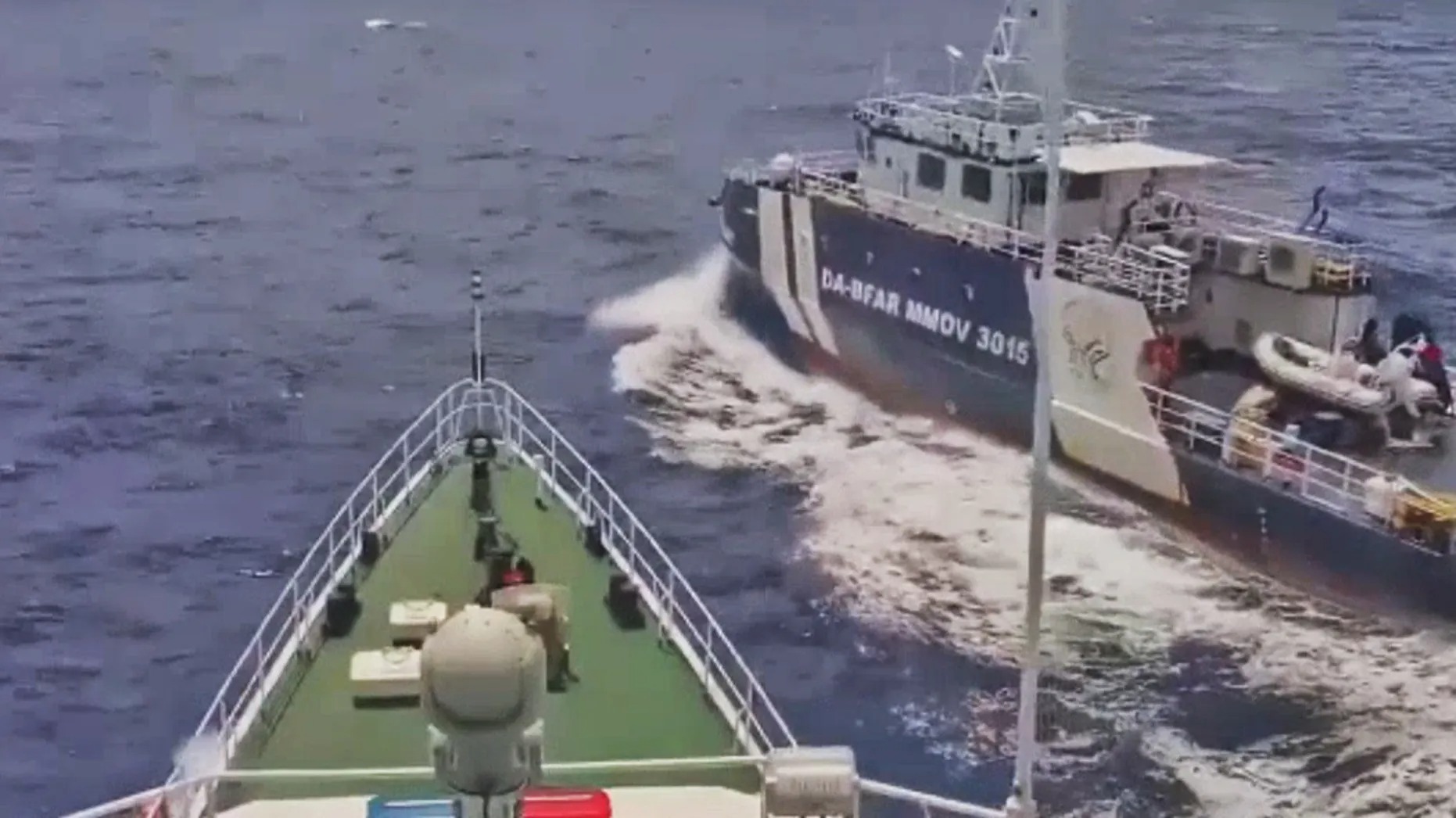
Tensions in the South China Sea rose again after a Chinese Coast Guard vessel collided with a Philippine government ship during a fuel mission near Palawan.
The Philippine Bureau of Fisheries and Aquatic Resources vessel BRP Datu Magat Salamat was carrying fuel for Filipino fishermen when the incident happened on Friday, Sept. 18. The ship was about 54 nautical miles from Palawan. Philippine officials said the area is inside the country’s exclusive economic zone.
The Philippine Coast Guard said the Chinese vessel carried out several close maneuvers before the collision. At about 11:04 a.m., China Coast Guard vessel 21585 reportedly crossed behind the Philippine ship at a distance of about 10 meters.
Nine minutes later, the Chinese vessel repeated the maneuver and struck the BRP Datu Magat Salamat while the Philippine ship was maintaining its course, according to the Philippine Coast Guard.
Video released by the Philippine Coast Guard showed crew members preparing for the impact. The footage included a warning to “brace for impact” before the ships came into contact.
Photos taken after the incident showed damage to the Philippine vessel. Railings were bent, broken and detached. Metal supports were also damaged. Deck equipment was moved, with debris left across the ship.
No injuries were reported among the crew. Philippine authorities sent additional maritime assets to help protect the vessel and its personnel.
Manila accused Beijing of using dangerous tactics against a civilian government vessel. Philippine officials said the ship was carrying out a support mission for Filipino fishermen and was not conducting a military operation.
The Philippine Department of Foreign Affairs also condemned the incident. It said there was no justification for actions that could damage a civilian vessel or put its crew at risk. Manila called on China to exercise restraint and avoid further escalation.
Beijing gave a different account.
Chinese Coast Guard spokesperson Jiang Lue said the Philippine vessel ignored repeated warnings. He said the Philippine ship changed course and accelerated across the path of the Chinese vessel.
China said its Coast Guard was conducting law enforcement operations near Sabina Shoal. Beijing blamed the Philippine side for the collision and said the Chinese vessel acted professionally and lawfully.
The competing accounts reflect the wider dispute between China and the Philippines over the South China Sea. The two countries have repeatedly confronted each other around several disputed features and maritime areas.
The latest China Philippines ship collision also drew a response from the United States. Washington backed Manila and criticized the reported actions of the Chinese Coast Guard. Beijing, in turn, accused the United States of supporting what it described as Philippine provocations.
The incident happened near Sabina Shoal, an area that has become another point of tension between the two countries. The region is also close to important fishing grounds used by Filipino fishermen.
The South China Sea dispute involves overlapping territorial and maritime claims. China claims large parts of the sea, while the Philippines maintains rights over waters within its exclusive economic zone. An international arbitration ruling in 2016 rejected the legal basis of China’s broad historic claims, a decision Beijing does not accept.
The collision follows other confrontations this year. In July, Manila accused Chinese forces of using water cannons against Philippine government vessels near Scarborough Shoal. Philippine officials also said a Navy staff member was struck during an encounter near Second Thomas Shoal.
The repeated encounters have increased concern about the risk of a more serious incident. Both governments continue to defend their positions while accusing the other side of unsafe actions.
For now, the latest collision has caused damage but no reported injuries. The incident has nevertheless added another difficult episode to the already tense China-Philippines relationship in the South China Sea.
