

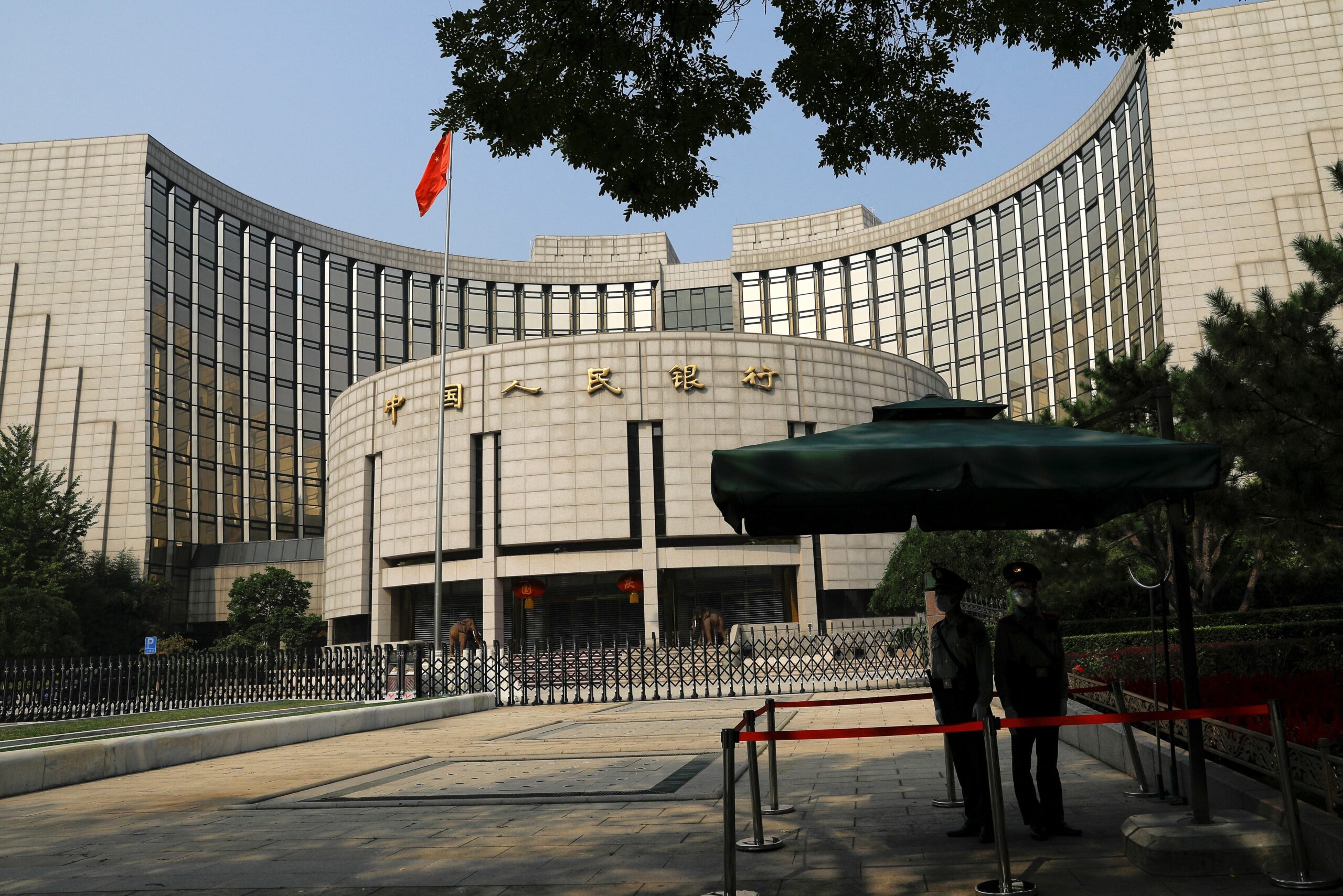
China left its benchmark lending rates unchanged on Sunday, extending a policy pause that has now lasted 16 consecutive months as policymakers weigh economic conditions at home against a changing global financial environment.
The decision matched market expectations and signaled that Chinese authorities remain cautious about introducing further monetary stimulus despite ongoing concerns about slowing credit demand and uneven economic growth.
The People’s Bank of China kept the one-year Loan Prime Rate (LPR) at 3.00 per cent. The five-year LPR, which serves as a key reference for mortgage lending, also remained unchanged at 3.50 per cent.
The outcome was widely expected. All 21 participants surveyed ahead of the decision forecast that both benchmark rates would remain at current levels.
The latest move highlights the increasingly limited room available for additional monetary easing. Financial markets have been closely watching central bank actions around the world, particularly after major economies adopted a firmer approach toward interest rates in recent weeks.
Analysts say global developments have become an important factor in China’s policy calculations. Higher interest rates in major economies can increase pressure on capital flows and exchange rates, making aggressive domestic easing more difficult.
At the same time, China’s currency has shown signs of strength, helping ease some concerns about financial stability. Policymakers have therefore been able to maintain a wait-and-see approach while assessing broader economic trends.
The decision comes as China’s economy continues to navigate structural challenges. Growth in lending activity has slowed as demand for credit weakens in sectors that once drove expansion.
Property development, which for years played a major role in economic growth, remains under pressure. Local government financing activity has also slowed, reducing borrowing demand across parts of the economy.
Speaking recently, central bank Governor Pan Gongsheng said slower loan growth is becoming a more permanent feature of the economic landscape. He noted that shrinking demand from traditional sectors is occurring faster than newer industries can fully replace it.
Economists say this transition reflects broader changes in China’s economic model. Policymakers are encouraging growth in advanced manufacturing, technology, green energy, and other emerging industries, but those sectors are still developing their ability to generate large-scale credit demand.
The interest rate decision also follows recent action by the U.S. Federal Reserve. Last week, the Fed raised interest rates and indicated that additional increases could be possible in the months ahead.
Higher U.S. interest rates can complicate monetary policy decisions for other countries. When American rates rise, differences between U.S. and Chinese bond yields often widen, creating additional challenges for policymakers seeking to support growth while maintaining financial stability.
Market analysts believe those international conditions reduce the likelihood of broad-based policy easing in China during the remainder of the year.
Serena Zhou, senior China strategist at Mizuho Securities, said the possibility of significant monetary easing in the fourth quarter appears lower unless domestic demand weakens substantially. She noted that a more hawkish stance from the U.S. Federal Reserve has narrowed policy flexibility.
Other economists see a similar outlook. Jacqueline Rong, chief China economist at BNP Paribas, said China appears to be nearing the end of its current interest-rate adjustment cycle.
According to Rong, the central bank is likely to maintain its current policy stance through the rest of the year. She pointed to pressure on bank profitability and signs that the economy is moving from a period of deflation toward mild inflation as factors supporting a steady approach.
However, economists also acknowledge risks to that outlook. If economic growth slows more sharply than expected, policymakers could reconsider additional support measures.
For now, China’s central bank appears focused on maintaining stability while monitoring economic conditions at home and abroad. The decision to leave lending rates unchanged suggests officials believe current settings remain appropriate as the economy continues its transition toward new sources of growth.
With credit demand evolving, global interest rates remaining elevated, and policymakers seeking to balance growth with financial stability, markets are expected to watch closely for any signs of a shift in China’s monetary policy strategy in the months ahead.
