

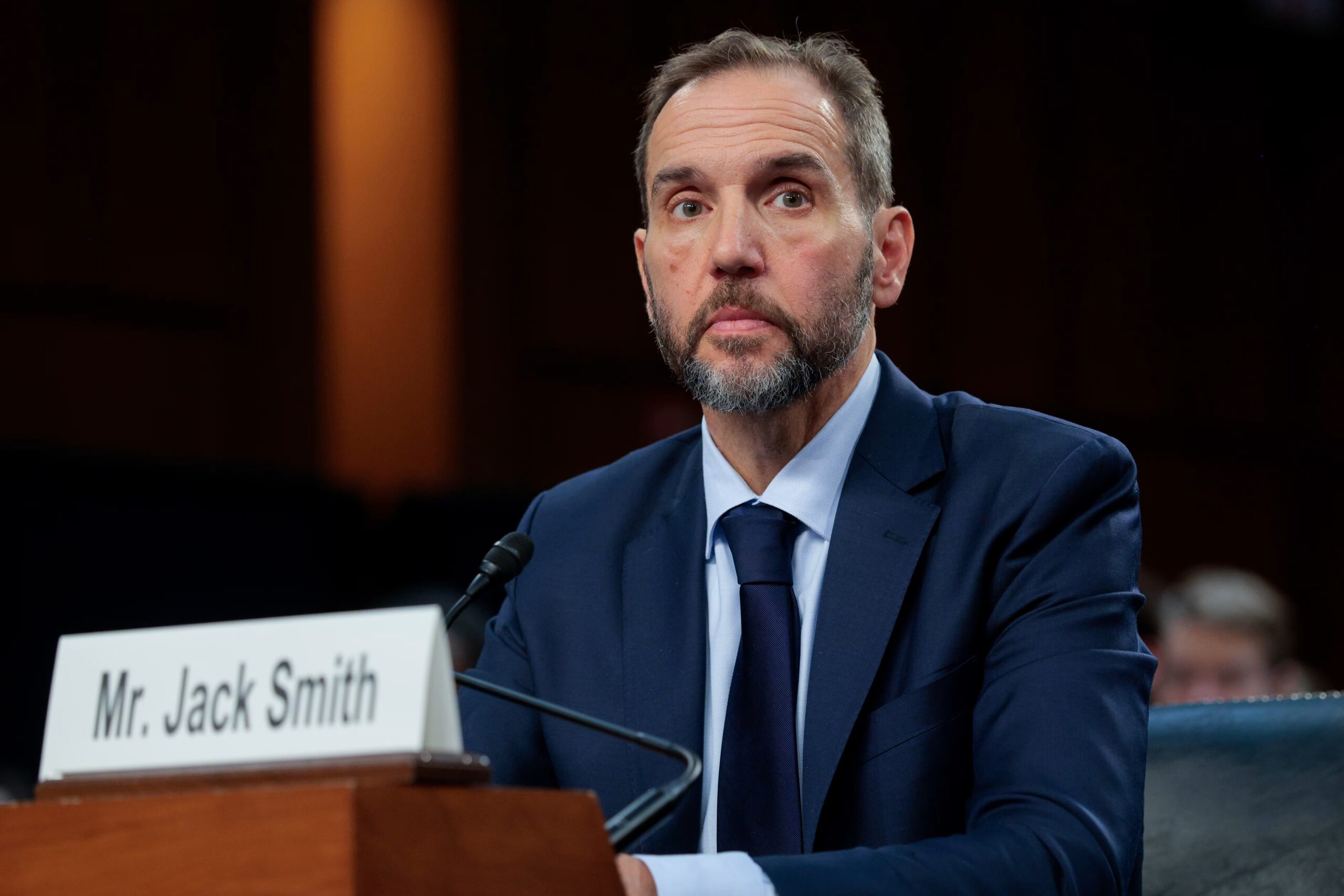
Former special counsel Jack Smith returned to Capitol Hill on Tuesday for a closely watched Senate Judiciary Committee hearing that exposed deep divisions over the investigation into President Donald Trump and the events surrounding the 2020 election.
The hearing was expected to provide major developments after two years of Republican-led investigations into Smith’s work. Instead, the session became defined by heated exchanges, personal criticism, and a disputed allegation that later drew fact checks from Democratic lawmakers.
Republican members of the committee have spent years arguing that Smith’s investigation was driven by political motives. They hoped the hearing would uncover evidence supporting claims that federal prosecutors unfairly targeted Trump and his allies.
During the four-hour session, several Republican senators sharply criticized Smith. Missouri Senator Eric Schmitt accused him of misconduct and questioned his actions during the election investigation. Louisiana Senator John Kennedy and Texas Senator Ted Cruz also delivered strong attacks on Smith and his handling of the case.
The hearing often focused more on investigative tactics than on the details of the criminal case itself. Republican lawmakers questioned how prosecutors gathered evidence and whether constitutional protections for members of Congress were fully respected.
A key issue involved subpoenas issued for phone records connected to lawmakers who communicated with Trump after the 2020 election. Republicans argued that such actions raised serious concerns about congressional independence and executive branch power.
Lawmakers also questioned the use of secrecy orders that prevented telecommunications companies from notifying elected officials about those subpoenas. Critics said those orders limited transparency and prevented lawmakers from challenging requests in a timely manner.
Despite the criticism, Smith defended the investigation and insisted that every major decision followed federal law and Justice Department policy. He said investigators sought evidence necessary to establish facts and build a case in court.
Smith repeatedly stated that his office did not target individuals because of their political affiliation. Instead, he said prosecutors followed evidence and testimony provided by witnesses connected to the events under investigation.
One of Smith’s central arguments was that many of the most important witnesses against Trump were Republicans. According to Smith, their testimony helped investigators understand efforts to challenge the 2020 election outcome and provided evidence that supported the case.
The former special counsel highlighted several Republican figures who cooperated with investigators. He praised former Vice President Mike Pence and former Arizona House Speaker Rusty Bowers, describing them as important witnesses whose accounts helped establish key facts.
Smith also responded to criticism directed at members of his investigative team. He defended their work and argued that they carried out their duties professionally and lawfully. He further criticized decisions that led to the dismissal of some staff members after his investigation ended.
Throughout the hearing, Smith maintained that the evidence gathered during the investigation was strong. He said prosecutors believed they had sufficient evidence to secure convictions related to efforts to overturn the 2020 presidential election results.
At the same time, Smith noted that Justice Department policy prohibits criminal prosecution of a sitting president. Following Trump’s victory in the 2024 election, the case was ultimately dropped under that long-standing policy.
One of the hearing’s most dramatic moments came during an exchange involving Schmitt. The Missouri senator presented text messages that he said showed Smith attending a basketball game in Atlanta during a period connected to another election-related investigation.
Schmitt suggested the trip could have been linked to investigative activity. For several moments, Smith appeared uncertain about the details being discussed.
After reviewing the claim, Smith explained that the text messages referred to a different event. He said he had attended a college basketball game in Maryland featuring Iowa star Caitlin Clark rather than a professional basketball game in Atlanta.
The clarification quickly became a major topic during the hearing. Democratic Senator Amy Klobuchar responded by citing the schedule of the Maryland-Iowa game and argued that the accusation was based on a misunderstanding.
Klobuchar said lawmakers should verify facts before making serious allegations. She added that public information showed the game Smith referenced took place on the exact date mentioned in the text messages.
As the hearing came to a close, no major new evidence emerged from the long-running congressional inquiry. Instead, the session highlighted the continuing political divide over the Trump investigations and the broader debate about the limits of prosecutorial power, congressional oversight, and election-related inquiries in the United States.
