

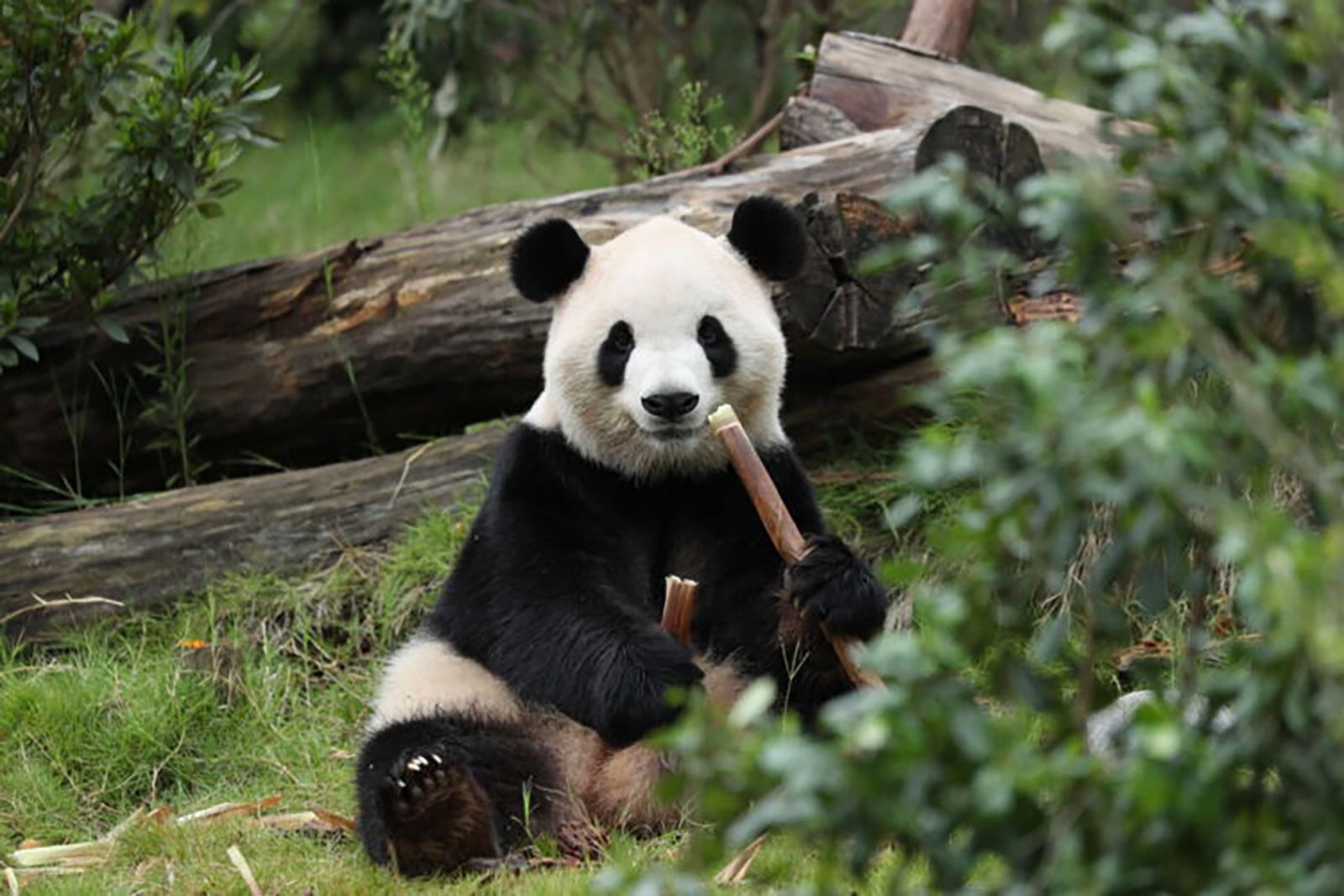
China has sent two giant pandas to the United States, continuing a decades-long tradition known as panda diplomacy that has often served as a symbol of friendship between Beijing and Washington.
The pandas, named Ping Ping and Fu Shuang, departed from Chengdu in southwestern China early Sunday and began a journey of approximately 15 hours to their new home at Zoo Atlanta. Their departure came just one day after Chinese President Xi Jinping concluded a high-profile state visit to Washington.
The timing of the transfer has drawn attention because it follows discussions between Xi and U.S. President Donald Trump aimed at easing tensions between the world’s two largest economies. During the visit, both leaders agreed to extend a trade truce and establish a communication channel focused on artificial intelligence cooperation.
Video released by Chinese media showed crowds gathering to bid farewell to the pandas as vehicles transported them from the Chengdu Research Base of Giant Panda Breeding to the airport. Special crates carrying the animals were then loaded onto the aircraft for the long journey across the Pacific.
Chinese authorities said veterinarians and panda specialists will remain in Atlanta during the animals’ quarantine period to help ensure a smooth transition to their new environment.
Preparations for the pandas’ arrival have been underway for months. Teams from Zoo Atlanta and Chinese wildlife experts conducted extensive planning sessions to prepare the panda habitat and coordinate care arrangements.
The two bears are being loaned by the Chinese government as part of ongoing conservation and cultural exchange programs between the two countries.
Ping Ping and Fu Shuang were selected after careful evaluation of their health, genetics, age and personalities. Chinese wildlife officials said the pair were chosen because they are compatible and may eventually contribute to future breeding efforts.
Ping Ping, whose name means “peace,” was born on March 17, 2020. Wildlife officials describe him as calm, gentle and skilled at climbing trees. His name carries historical significance because it matches the name of the first panda China gifted to the Soviet Union in 1957.
Fu Shuang, whose name means “double blessings,” was born on October 18, 2020. She is known for her distinctive tuft of fur and strong interest in food, particularly honey, according to her caretakers.
Their longtime keeper, Fu Jia, said the pair developed different personalities while growing up at the breeding center. She described Ping Ping as brave and friendly, while Fu Shuang is energetic and highly motivated by treats.
The Chengdu Research Base of Giant Panda Breeding is one of the world’s leading panda conservation facilities. Located in Sichuan Province, it houses more than 240 giant pandas, representing roughly one-third of the global captive panda population.
Sichuan is widely recognized as the center of panda conservation efforts. The province contains extensive breeding centers and protected reserves established to help preserve the species after decades of habitat loss and population decline.
Giant pandas have become one of China’s most recognized national symbols. Over the past several decades, Beijing has used panda loans to strengthen diplomatic relationships, improve cultural exchanges and build goodwill with partner nations.
The modern era of panda diplomacy between China and the United States began in 1972 following President Richard Nixon’s historic visit to China. Since then, pandas have served as popular ambassadors in American zoos and have often remained a positive element in bilateral relations during periods of political tension.
Zoo Atlanta has significant experience caring for giant pandas. Previous residents Lun Lun and Yang Yang produced seven offspring at the facility between 2006 and 2016 before returning to China.
The arrival of Ping Ping and Fu Shuang marks the latest chapter in that relationship. As the pandas settle into their new home, officials from both countries hope the program will continue promoting scientific cooperation, cultural exchange and public engagement.
Their journey also highlights how conservation partnerships can remain active even as broader geopolitical challenges continue to shape relations between China and the United States.
