

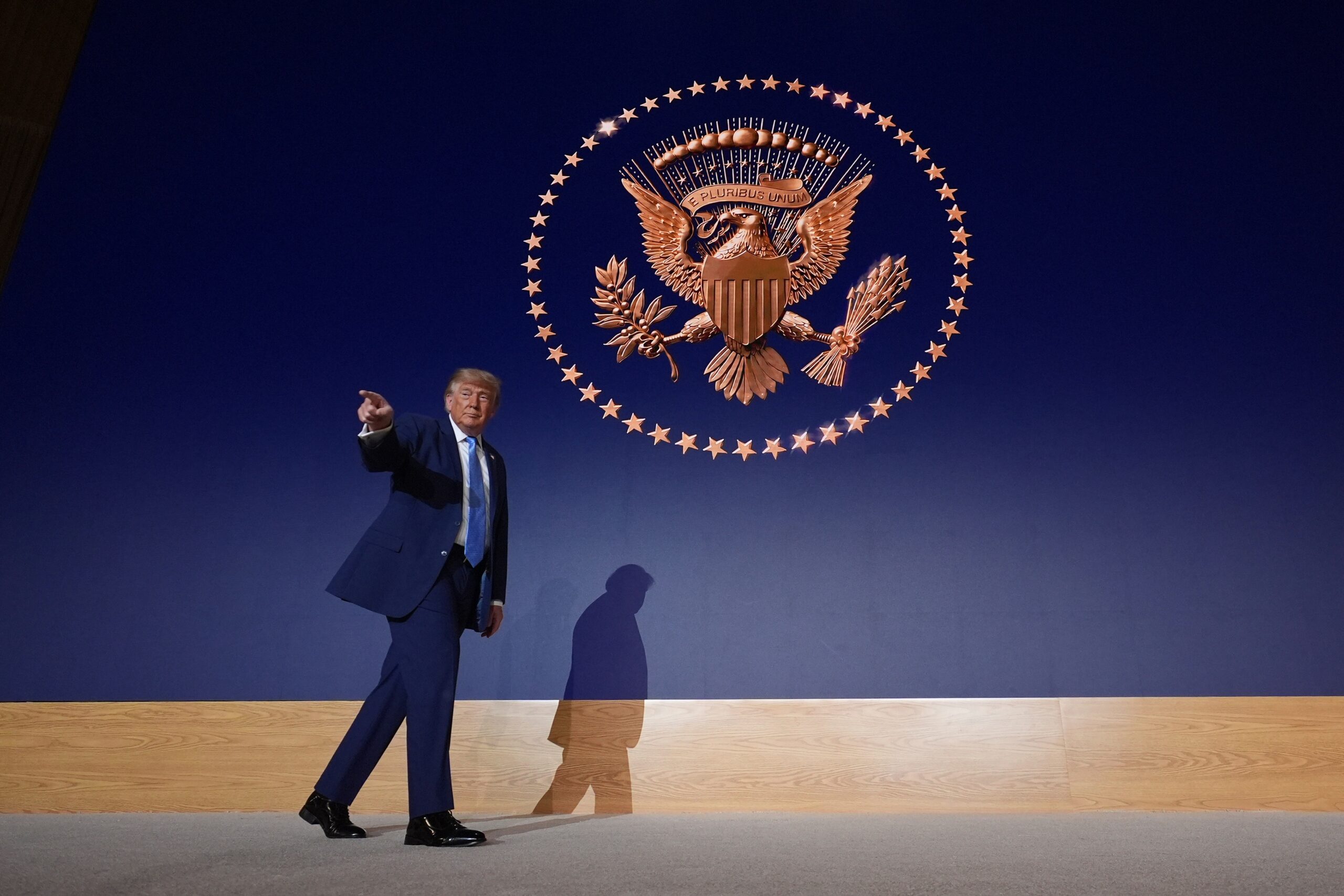
President Donald Trump signed an executive order on Tuesday launching a government-wide effort to replace the term artificial intelligence with Super Intelligence. The order requires federal agencies across the executive branch to adopt the new terminology in official communications and policy materials.
The announcement came after a White House summit attended by leading technology executives and government officials. The administration said the change reflects the growing capabilities of advanced digital systems and signals a new approach to how the federal government discusses emerging technology.
Under the executive order, agencies are directed to use the terms Super Intelligence and SI in reports, websites, policy documents, public statements, and other non-statutory materials. Federal departments are also instructed to stop using the terms artificial intelligence and AI in future communications whenever legally possible.
Trump said the existing term no longer reflects the rapid development of modern systems. According to the order, advanced technologies are moving beyond traditional definitions and are increasingly helping people solve difficult problems, improve efficiency, and support innovation across many fields.
The president argued that Super Intelligence is a better description of these technologies because it highlights their expanding capabilities and future potential. He said modern systems are becoming powerful tools that strengthen human creativity and productivity.
The order also assigns responsibility to the White House science and technology office to create an official federal definition of Super Intelligence. Officials will also review whether additional executive actions are necessary to ensure consistent use of the new language throughout government operations.
The directive follows comments Trump made during the United Nations General Assembly last week. During those remarks, he publicly advocated replacing artificial intelligence with Super Intelligence and said leadership in advanced technology would become a key factor in future economic and strategic competition.
Trump argued that countries leading the development of advanced digital systems could gain major advantages in innovation, national security, and economic growth. He described the technology race as one of the most important global challenges facing governments today.
The executive order arrives as policymakers and industry leaders continue debating the future of advanced technology. Discussions have focused on balancing innovation with concerns about safety, transparency, accountability, and responsible development.
Many technology experts have called for stronger oversight of increasingly capable systems. Others argue that heavy regulation could slow progress and weaken competitiveness. The administration has generally supported a less restrictive approach that encourages innovation while promoting voluntary industry standards.
During the White House summit, Trump met with executives from major technology companies to discuss the future of advanced computing and digital intelligence. At the conclusion of the meeting, participants signed a voluntary agreement called the White House Accord on Super Intelligence.
Trump described the accord as morally binding and said it represented a commitment by technology leaders to support responsible development practices. While the agreement does not create legal obligations, it establishes a set of principles intended to guide industry behavior.
Administration officials said the accord promotes stronger internal safeguards, oversight systems, and review procedures. The goal is to encourage responsible innovation while maintaining public confidence in rapidly evolving technologies.
House Speaker Mike Johnson said summit participants focused on finding the right balance between innovation and public interest. He noted that maintaining American leadership in technology remained a central theme throughout the discussions.
Johnson explained that the agreement serves as a framework of voluntary commitments rather than a regulatory program. According to him, participating companies agreed to strengthen internal controls and expand review processes designed to improve accountability.
Technology executives responded positively to the summit. Meta chief executive Mark Zuckerberg described the gathering as an important step and welcomed commitments made by major technology companies to enhance audits, reviews, and oversight mechanisms.
Supporters of the new policy argue that the term Super Intelligence better reflects the pace of technological advancement. They believe the updated language captures the growing role advanced systems play in research, business, government, and daily life.
Critics, however, question whether changing terminology addresses broader concerns surrounding powerful technologies. They argue that issues involving safety, governance, and accountability remain unchanged regardless of the name used.
As agencies begin implementing the executive order, attention will focus on the federal definition of Super Intelligence and the impact the new terminology may have on future technology policy. The move represents a significant shift in federal language and highlights the administration’s effort to redefine how advanced technology is discussed in the United States.
