

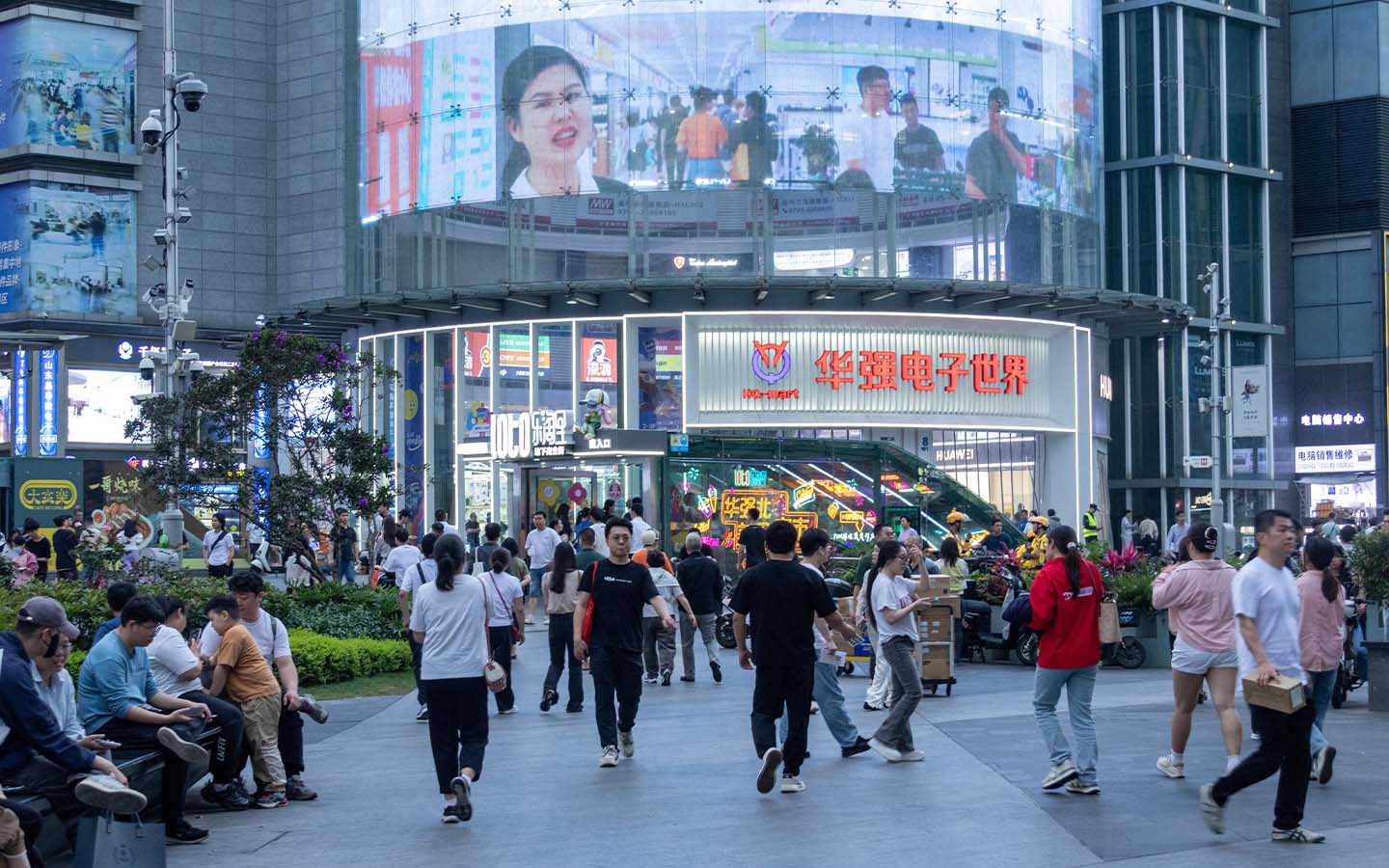
Huaqiangbei, one of the world’s largest electronics trading hubs, is undergoing a major transformation as it shifts its focus toward artificial intelligence to regain global attention and attract international buyers.
Located in Shenzhen, the district has long been known for its vast marketplaces selling everything from smartphone parts to advanced electronic components. Now, it is positioning itself as a global showcase for AI-powered devices and smart technologies.
The move comes as local businesses aim to revive declining foot traffic from foreign traders and tourists, many of whom reduced visits in recent years due to global economic uncertainty and shifting supply chains.
Shop owners and market operators are increasingly promoting AI-related gadgets, including smart home devices, wearable technology, robotics components, and intelligent consumer electronics.
For many first-time visitors, the scale and density of the marketplace remains overwhelming, with thousands of stalls spread across multiple multi-story buildings.
One visitor, Abigail Slagveer from Rotterdam, described her experience as disorienting due to the size and complexity of the market. She said she quickly became lost while exploring the first floor of one of the major electronics malls.
Her experience reflects the broader appeal of Huaqiangbei, which attracts buyers, engineers, and tech enthusiasts from around the world looking for low-cost components and cutting-edge electronics.
The district has traditionally been a key part of China’s global electronics supply chain, serving as both a wholesale hub and a testing ground for new hardware products.
In recent years, however, competition from online platforms and other manufacturing regions has challenged its dominance, pushing local vendors to adapt.
The shift toward artificial intelligence is seen as a strategic effort to reposition Huaqiangbei as a modern innovation center rather than just a traditional electronics marketplace.
Vendors are increasingly showcasing AI-integrated devices that can perform tasks such as voice recognition, automation, and smart connectivity across multiple platforms.
The transformation also aligns with China’s broader push to expand its leadership in artificial intelligence and advanced manufacturing technologies.
Local authorities and business operators are encouraging innovation within the district by supporting startups and tech suppliers who can bring new AI-based products to market.
The rebranding effort aims to attract not only buyers but also developers, engineers, and international tech companies interested in sourcing or testing new technologies.
Huaqiangbei’s evolution reflects the changing nature of global electronics trade, where demand is increasingly driven by intelligent systems rather than traditional hardware alone.
Despite its modernization efforts, the district continues to maintain its identity as a dense, fast-moving marketplace where thousands of transactions take place daily.
For many international visitors, it remains both a commercial destination and a unique cultural experience within China’s technology ecosystem.
If successful, the AI transformation could help Huaqiangbei strengthen its position as a global hub for electronics innovation and restore its appeal to overseas buyers.
