

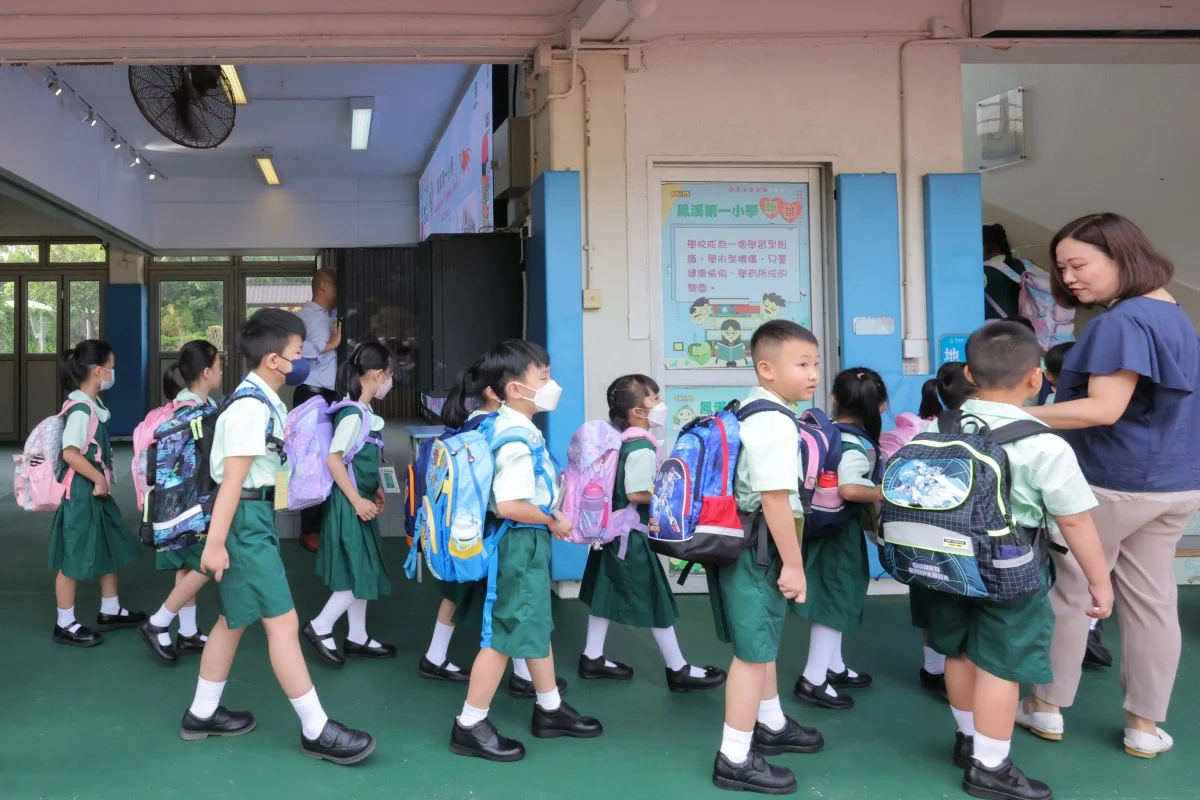
Hong Kong schools have reported a net increase in student enrolment for the second year in a row, marking a continued rebound in the city’s education sector.
According to figures published by the Education Bureau, schools across all categories, including government, aided, private, international, and direct subsidy schools, saw an overall rise of about 7,200 students in the current academic year.
The data was collected during the annual school headcount exercise conducted in September 2025, which tracks enrolment levels across different grade groups and school types.
This increase follows a similar upward trend recorded in the previous year, suggesting a sustained recovery in student numbers after earlier declines.
Education sector analysts have linked the rise to a growing number of dependants accompanying individuals who have moved to Hong Kong under talent admission schemes.
These programmes are designed to attract skilled professionals from outside the city, many of whom bring family members, contributing to higher school enrolment figures.
The rise in student numbers has been observed across multiple education levels, from kindergarten through secondary school, indicating a broad-based increase rather than growth in a single category.
To assess the overall change, education data comparisons were made between successive academic years, tracking student movement from lower to higher grade levels.
The increase in enrolment comes at a time when Hong Kong has been actively promoting policies aimed at strengthening its workforce through talent attraction initiatives.
These policies have encouraged professionals in fields such as finance, technology, and healthcare to relocate to the city, often with school-age children.
The presence of additional students has placed renewed attention on the capacity and resources of local schools, particularly in popular districts where demand is already high.
Education authorities are expected to continue monitoring enrolment trends closely to ensure adequate school placements and maintain balanced distribution across regions.
Private and international schools have also contributed to the overall increase, as some incoming families opt for alternative education systems alongside local public schools.
The steady rise in student numbers may also signal a gradual stabilization of Hong Kong’s demographic trends after several years of fluctuation in school-age population figures.
Education planners are likely to use these findings to adjust long-term resource allocation, staffing levels, and infrastructure development within the school system.
While the overall increase is relatively modest, it represents a notable shift after a period of declining enrolment in some previous years.
The trend also highlights the role of immigration and talent policies in shaping local population structures, particularly in urban education systems.
As Hong Kong continues to position itself as a regional hub for professionals, further changes in school enrolment patterns may emerge in the coming years.
