

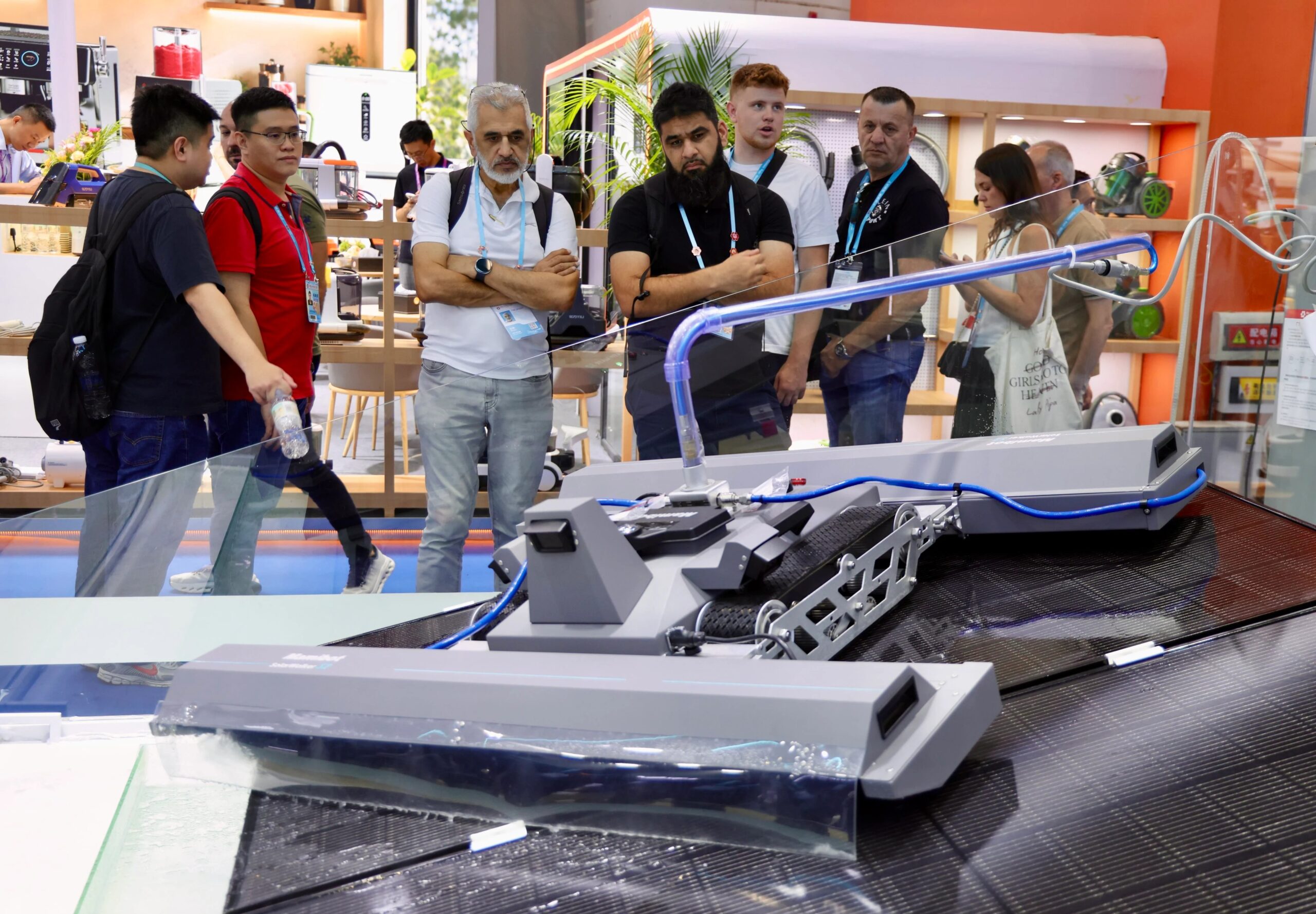
China’s solar energy industry is attracting strong interest from overseas buyers as concerns about oil supplies and climate change increase demand for reliable power. At the Canton Fair, the country’s largest trade exhibition, solar panels and energy storage products have become a major attraction.
During the fair’s first phase, thousands of visitors entered the solar power and energy storage exhibition hall each day. Chinese manufacturers used the event to present new products and seek orders from international buyers.
The growing interest comes amid concerns about restricted oil shipments through the Strait of Hormuz. The vital shipping route carries a large share of the world’s oil trade. Disruptions can create uncertainty in energy markets and push countries and businesses to consider other sources of power.
Solar energy offers one possible solution. It can help households and businesses produce electricity locally and reduce their dependence on traditional energy supplies. When combined with battery storage, solar systems can also provide power when sunlight is limited.
Chinese manufacturers are seeking to turn these concerns into new export opportunities. Their products range from household solar panels to larger energy systems designed for commercial and industrial use.
Xu Leiping, deputy general manager of sales at Zhejiang Era Solar Technology, said the company began selling a newly developed lightweight solar panel in July. The product is designed for use on balconies, making it suitable for people who may not have access to a large rooftop.
Balcony solar panels can offer a practical option for apartment residents who want to generate some of their own electricity. Their smaller size and lighter weight may make them easier to install in places where traditional solar systems are unsuitable.
The product also reflects a broader shift in the solar market. Manufacturers are developing systems for different types of homes and buildings, rather than focusing only on large rooftop installations or solar farms.
For many consumers, the cost and ease of installation are important factors when choosing renewable energy products. Smaller systems may allow households to begin producing electricity without making a major investment in a complete home energy system.
Energy storage is another important part of the market. Solar panels generate electricity during daylight hours, but household demand often continues after sunset. Batteries can store extra power for later use and help users make better use of the electricity their panels produce.
This combination has become increasingly important as countries look for ways to strengthen energy security. Solar power can reduce demand for electricity from conventional sources, while batteries can help manage changes in supply and demand.
The Canton Fair provides Chinese companies with an opportunity to reach buyers from many international markets. The event brings together manufacturers, distributors and importers looking for products that meet local needs. For solar businesses, it can also help establish relationships with overseas partners and support future sales.
China has built a large manufacturing base for solar panels and related equipment. Its companies compete in markets where buyers often compare prices, product performance, delivery times and technical support. As interest in renewable energy grows, manufacturers are looking for new ways to stand out.
The latest products are also being promoted against the backdrop of global climate concerns. Governments and businesses face pressure to reduce emissions and increase the use of cleaner energy. Solar power can help meet these goals while providing an additional source of electricity.
However, the pace of adoption depends on local conditions. Buyers must consider installation rules, available space, grid connections and the cost of batteries. In some markets, imported products may also face taxes or other trade restrictions.
For manufacturers, these differences mean that success depends on more than offering low prices. Products must meet local safety standards and fit the needs of customers in each market. Reliable supply and after-sales service can also influence purchasing decisions.
The interest at the Canton Fair suggests that energy security and climate concerns are creating opportunities for Chinese solar companies. Buyers seeking alternatives to conventional power may increasingly consider small solar systems, battery storage and other renewable technologies.
As global energy markets face uncertainty, manufacturers are working to turn demand into long-term business. The lightweight balcony panel from Zhejiang Era Solar Technology is one example of how companies are adapting products to reach more customers.
The wider outlook for solar energy will depend on prices, policy support and the reliability of supply chains. Yet the strong visitor numbers at the exhibition show that renewable energy remains an important area of interest for international buyers.
For China’s solar industry, the challenge now is to convert that interest into firm orders and lasting overseas partnerships.
