

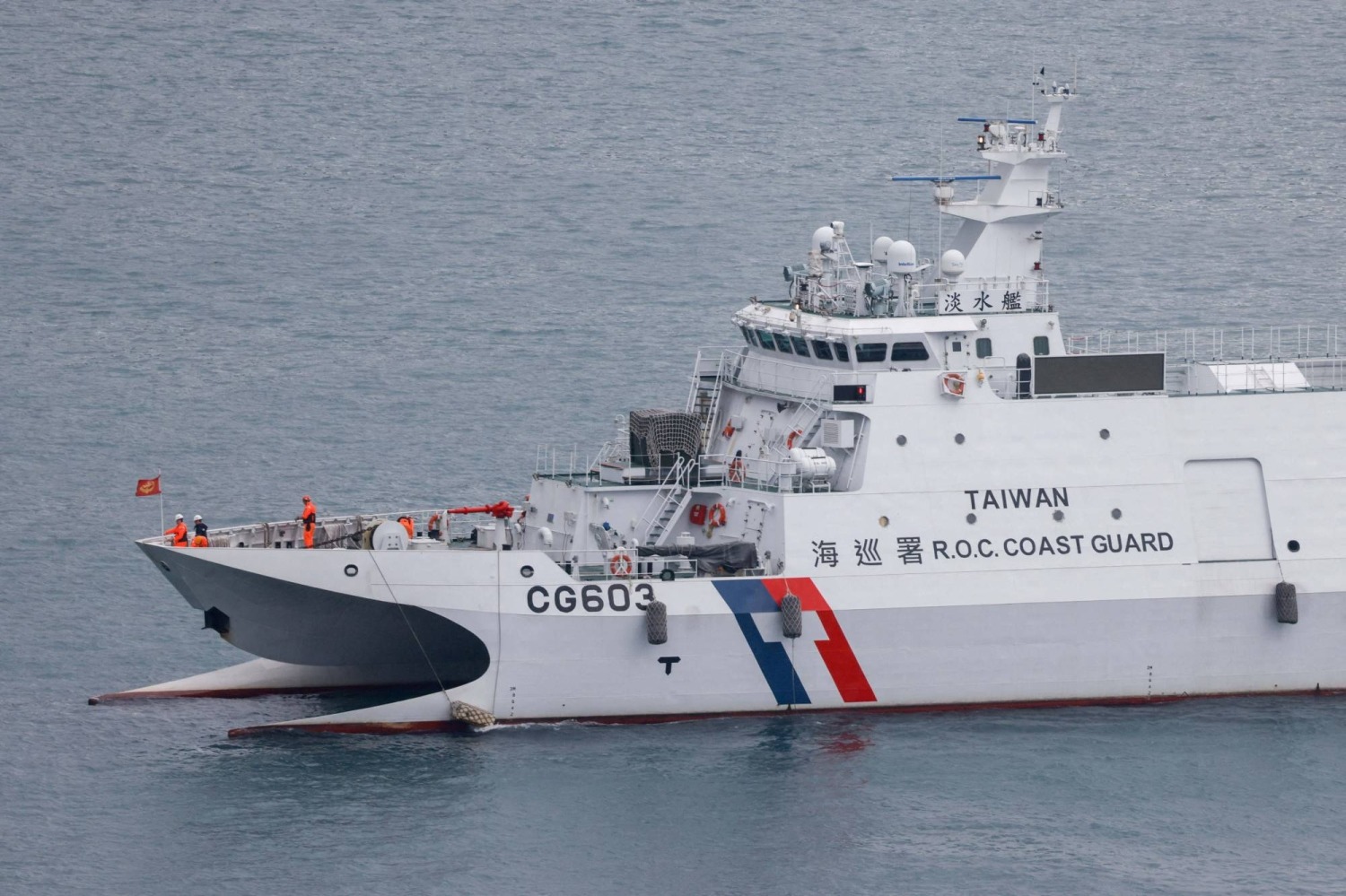
Taiwan has accused China of harassing ships near its east coast after two Chinese coast guard vessels conducted a patrol in the area. Taiwan’s coast guard said it had deployed its own ships to monitor the Chinese vessels and protect maritime activity.
The latest patrol has raised fresh concerns about China’s growing presence around the island. Beijing claims Taiwan as part of its territory, while Taipei rejects that claim and maintains its own government and maritime authority.
Taiwan’s coast guard said the Chinese ships were attempting to exercise authority in waters where Beijing has no legal jurisdiction. It described the patrol as an effort to expand China’s power at sea and warned that such actions could threaten regional peace and stability.
The dispute comes as China has increased coast guard activity off Taiwan’s east coast since June. Chinese vessels have carried out regular patrols in the area, prompting concern among Taiwanese officials about the purpose of the operations.
Taiwan believes the patrols could form part of preparations for a possible maritime blockade. Such a move could involve China’s navy, coast guard, other paramilitary forces and civilian vessels working together to restrict access to the island.
The waters off Taiwan’s eastern coast are strategically important. Taiwanese officials consider them a key route for supplies and support from international partners if a conflict or blockade disrupts other shipping lanes.
Unlike the waters west of Taiwan, which face the Chinese mainland, the island’s eastern coast opens toward the wider Pacific Ocean. Maintaining access to these routes could be vital for Taiwan’s economy and security during a crisis.
China does not recognize Taiwan’s claims of separate sovereignty. Beijing has repeatedly said the island is part of China and has not ruled out using force to bring it under its control. Taiwan’s government rejects Beijing’s position and says the island’s future must be decided by its people.
In a statement issued late Saturday, Taiwan’s coast guard said two Chinese vessels were involved in the latest patrol. Taiwanese ships were sent to monitor their movements and keep watch over the surrounding waters.
Chinese state media also released video showing one of the coast guard vessels broadcasting a radio message. The ship said it was carrying out law enforcement duties and offered assistance if needed.
The broadcast did not identify the intended recipient. However, the footage showed an unidentified fishing trawler in the area.
Taiwan’s coast guard criticized the use of radio communications to approach or contact vessels during the patrol. It said the practice represented an attempt to extend China’s influence over maritime activity near the island.
The agency argued that the actions violated international law and undermined regional stability. It also rejected China’s claims to authority over waters surrounding Taiwan.
Taiwan said it held sovereign rights and jurisdiction over its exclusive economic zone east of the island. It insisted that China had no authority over Taiwan’s waters.
An exclusive economic zone allows a coastal state to exercise specific rights over natural resources and certain economic activities in nearby waters. However, it does not automatically give a country full sovereignty over every part of the sea or unrestricted control over navigation.
The latest patrol was not China’s only maritime activity near Taiwan this weekend. Taiwan’s coast guard separately reported that another Chinese coast guard vessel had approached the Pratas Islands, which are controlled by Taiwan and lie in the northern part of the South China Sea.
Taiwan said its forces had driven Chinese coast guard vessels away from waters around Pratas 13 times so far this year. The repeated encounters highlight the continuing pressure around Taiwan-controlled islands and surrounding sea routes.
The Pratas Islands are located roughly between southern Taiwan and Hong Kong. They have no permanent civilian population but hold strategic importance because of their position in the South China Sea.
Security experts consider the islands vulnerable to a potential Chinese operation because they are more than 400 kilometers, or about 250 miles, from Taiwan. Their distance from the main island could make it harder for Taiwan to reinforce and defend them during a sudden crisis.
China’s growing coast guard presence has become a major concern for Taiwanese officials. Coast guard vessels can operate alongside naval forces while carrying out missions presented as law enforcement. Analysts say such activity could allow Beijing to increase pressure without immediately launching a conventional military operation.
Taiwan continues to monitor Chinese movements and send vessels to areas where it believes its maritime interests are threatened. The latest incidents show that tensions extend beyond military exercises to routine patrols, radio communications and competing claims over jurisdiction.
For Taiwan, protecting eastern shipping routes and maintaining access to the Pacific remain important security priorities. For Beijing, coast guard patrols provide another way to reinforce its territorial claims.
As Chinese vessels continue operating near Taiwan and the Pratas Islands, further encounters could increase tensions across the Taiwan Strait and the wider region.
