

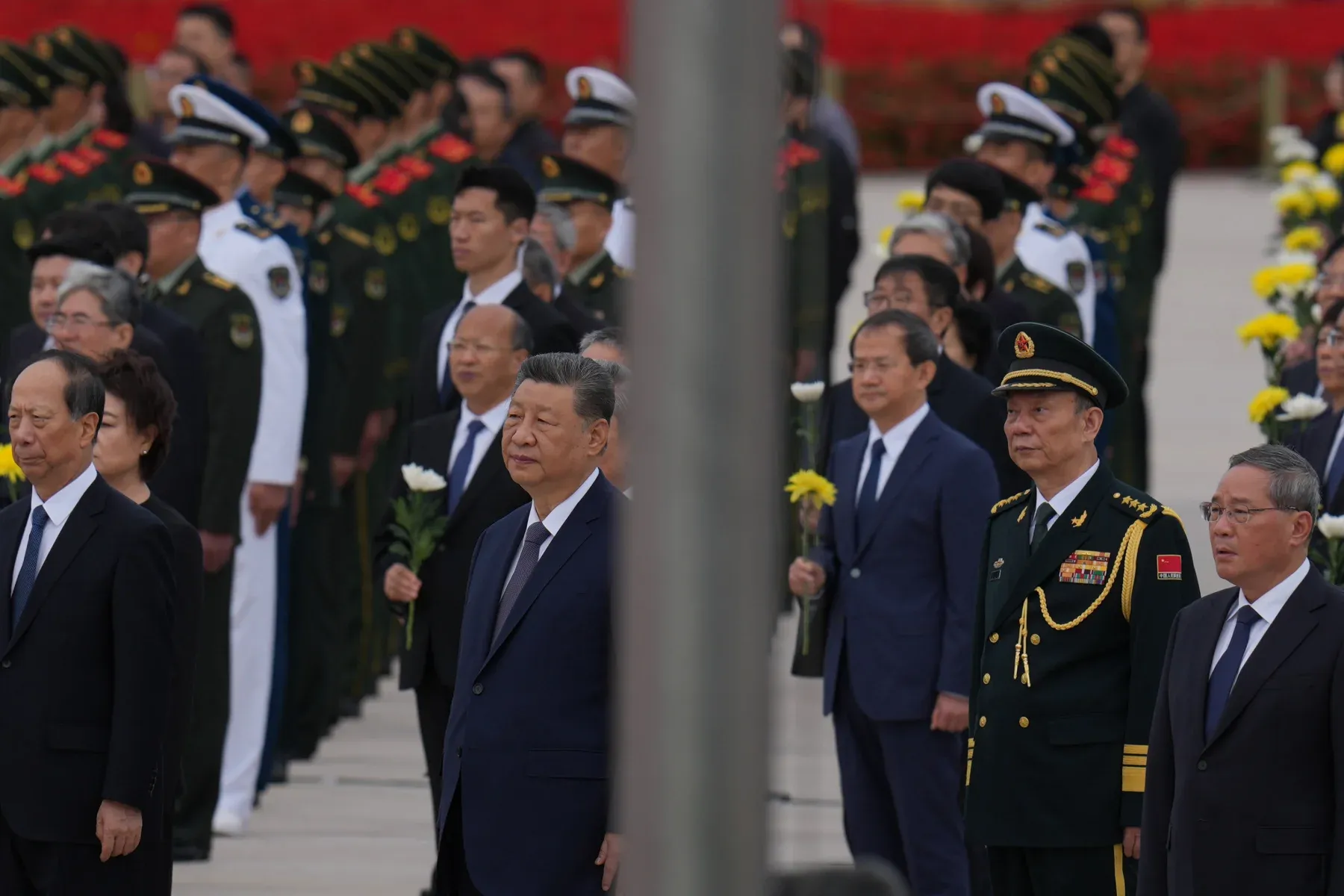
China’s top leaders have promoted General Zhang Shengmin, the only remaining military general on the country’s Central Military Commission, to the Communist Party’s Politburo. The move comes as President Xi Jinping intensifies efforts to tighten discipline and strengthen his control over the ruling party and armed forces.
The decision was announced on Thursday after a four-day closed-door meeting of senior Communist Party officials. The gathering focused on future political priorities and adopted a resolution calling for stronger internal discipline, better governance, and continued action against corruption.
Zhang serves as vice chairman of the Central Military Commission (CMC), the body responsible for overseeing China’s armed forces. His promotion follows the removal of two senior generals in Xi’s ongoing crackdown.
The changes have left Zhang as the only member of the military commission besides Xi himself. They have also left the Politburo without a representative from the People’s Liberation Army.
The latest appointment highlights the importance Xi places on political loyalty and discipline within the military. It also raises questions about the future structure of China’s military leadership as the country prepares for a major party congress in 2027.
Zhang Takes a Higher Position in the Party
Zhang’s promotion places him in the Politburo, the Communist Party’s top governing body between national party congresses.
He already holds a key role in the military’s internal oversight system. Zhang serves as deputy secretary of the CMC Commission for Discipline Inspection, which is responsible for investigating misconduct and enforcing discipline within the armed forces.
His new position gives him a stronger role in the party’s senior leadership at a time when investigations have removed several powerful military figures.
The Central Military Commission is a key part of China’s political and military system. It oversees the People’s Liberation Army and plays a central role in decisions on defence policy, military appointments, and command.
The recent removals have sharply reduced the commission’s membership. Xi remains its chairman, while Zhang is the only other member left, according to the latest reports.
The situation is unusual because the commission normally includes several senior military leaders. Its reduced size has drawn attention to the scale of the purge and the challenges facing the military leadership.
Party Calls for Stronger Internal Discipline
During the meeting, senior officials adopted a resolution focused on improving the party’s self-governance. The plan calls for stronger discipline, continued anti-corruption efforts, and a renewed focus on the party’s political values.
A summary of the resolution said the tasks facing the party were becoming increasingly difficult. These included leading the public and protecting China’s national sovereignty, security, and development interests.
The document also stressed the need to preserve the party’s long-term ability to govern.
It called on members to maintain the party’s progressive nature and political purity while keeping close ties with the public.
The language reflects Xi’s long-standing view that corruption and weak discipline can threaten the party’s authority. Since becoming China’s leader in 2012, Xi has made the campaign against corruption one of the main features of his rule.
The crackdown has affected officials across government departments, state-owned companies, and the military. Thousands of officials have faced investigations or punishment over the years.
However, analysts say the campaign now appears to cover more than corruption alone. Officials who fail to meet expectations or show poor performance may also face greater pressure.
The latest resolution suggests that the leadership intends to maintain strict oversight rather than ease the campaign.
Earlier Purges Confirmed at the Meeting
The four-day gathering also reviewed earlier removals of senior party and military officials. Leaders confirmed the personnel changes, reinforcing the effects of the recent purge.
The scale of the removals has surprised some analysts who follow Chinese politics.
Neil Thomas, a senior fellow at Asia Policy, calculated that attendance at the meeting stood at about 74 percent. He said the rate was the lowest since the era of former leader Mao Zedong, when political purges were common.
The low attendance reflects the number of officials who have been removed or are otherwise absent from the Central Committee. Some absences have not been publicly explained.
The meeting therefore offered a clear picture of the extent of the changes inside the party’s senior ranks.
The removals also raise questions about how the leadership will replace experienced officials while maintaining stability. Large-scale changes can create openings for new leaders, but they can also leave gaps in expertise and command experience.
Xi Prepares for a Fourth Term
The meeting comes about a year before the next Communist Party congress, which is expected to take place in the second half of 2027.
The congress is held every five years and determines the party’s senior leadership for the next political cycle. Xi is widely expected to seek a fourth five-year term as party leader.
If he remains in power, he will extend a period of leadership that has already reshaped China’s political system, military structure, and relations with other countries.
The next congress will also bring changes to the Central Committee and the Politburo. The recent purges may make the selection of new leaders more difficult because many senior officials have been removed.
The party will need to fill important positions while ensuring that the new leadership has the experience needed to manage government, security, and economic challenges.
The promotion of Zhang may offer clues about Xi’s priorities. By elevating a senior figure responsible for military discipline, the leadership is signalling that oversight and political control remain central to its approach.
Military Stability Remains a Key Concern
The sweeping changes have put China’s military leadership under close scrutiny. Removing senior generals can help a leader tighten control, but it can also create uncertainty over command structures and future appointments.
China has continued to modernise its armed forces and expand its military capabilities. A stable leadership structure is important for managing these efforts and carrying out long-term defence plans.
The latest developments suggest that Xi is determined to ensure the military remains firmly under party control.
For now, Zhang’s promotion gives him a more prominent position in both the military and the wider party leadership. The new resolution also makes clear that the fight against corruption and the enforcement of discipline will continue.
As the 2027 party congress approaches, the leadership will face the task of rebuilding senior ranks while maintaining Xi’s political priorities. The decisions made at this meeting show that internal discipline will remain a central part of that effort.
