

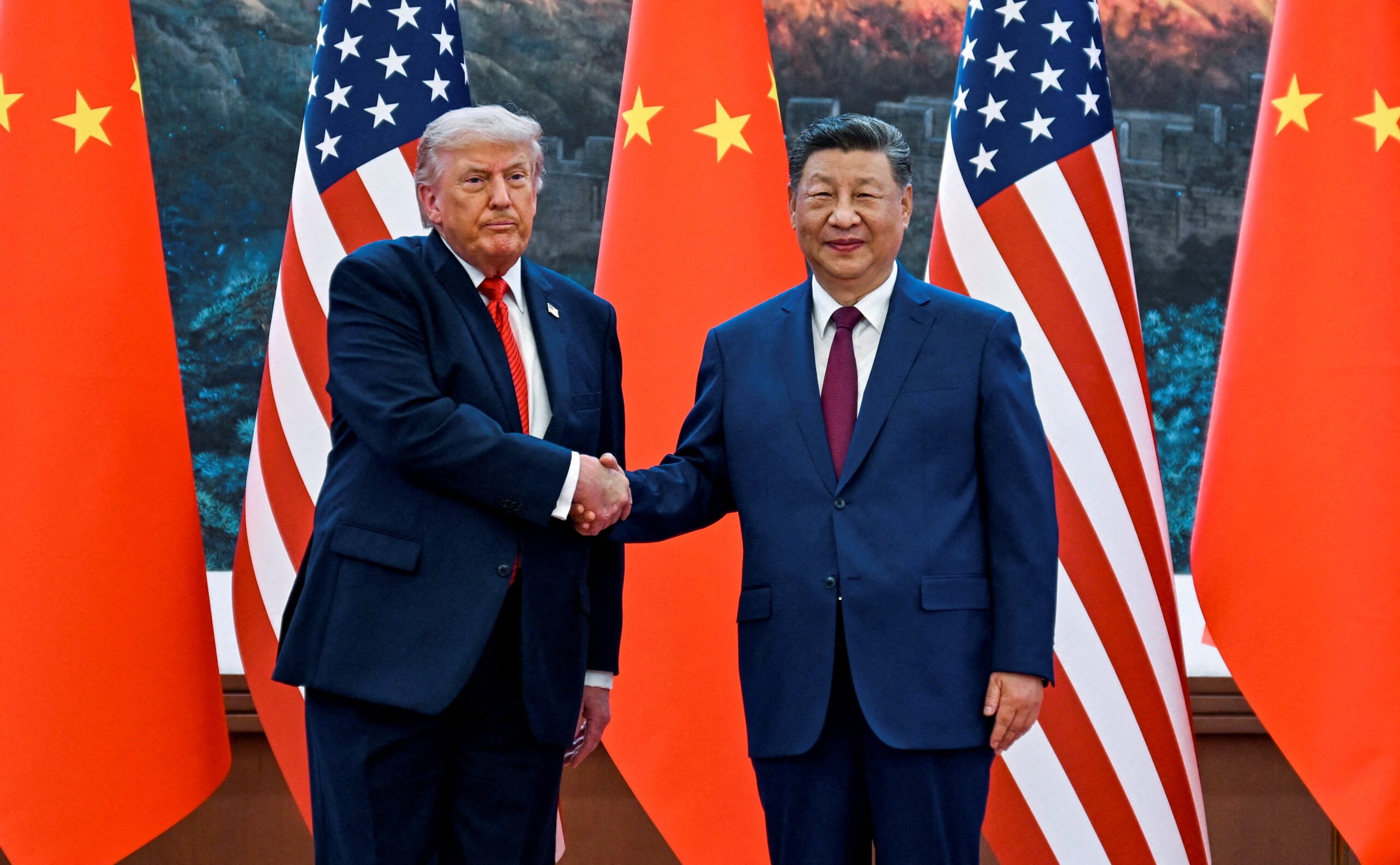
Chinese President Xi Jinping is set to arrive in Maryland this week for a high-profile meeting with U.S. President Donald Trump, marking the second face-to-face summit between the leaders of the world’s two largest economies this year.
The visit comes months after Trump and Xi met in Beijing, where both leaders spoke about building greater strategic stability between their countries. While that meeting helped improve communication, it produced few major agreements, leaving many of the biggest issues between Washington and Beijing unresolved.
Trade disputes, export controls, technology competition, and geopolitical concerns continue to shape relations between the two nations. As a result, expectations for major breakthroughs during this week’s summit remain limited.
Analysts say both sides appear focused on maintaining dialogue rather than announcing significant new agreements.
One area where progress may be possible is artificial intelligence.
The topic has become increasingly important for both governments as AI technology advances rapidly. Several leading technology executives are expected to attend a state dinner at the White House during Xi’s visit. Reports indicate that leaders from major technology companies, including firms involved in AI development, are expected to be present.
The growing influence of artificial intelligence has become a major strategic issue for both countries.
Trump has repeatedly argued that the United States must maintain its lead in AI technology. In recent comments, he emphasized the importance of remaining ahead of China in the race to develop advanced AI systems.
At the same time, concerns about AI safety have increased among policymakers, researchers, and technology leaders.
Earlier this week, U.S. Treasury Secretary Scott Bessent concluded discussions with Chinese Vice Premier He Lifeng and proposed creating a bilateral AI safety mechanism. The proposal would establish a framework for communication between Washington and Beijing regarding AI-related concerns.
Chinese officials have also expressed support for greater dialogue.
An article published by the People’s Daily, the official newspaper of the Chinese Communist Party, called for artificial intelligence to become a new area of cooperation between the two countries. The article encouraged both governments to use existing dialogue channels to discuss AI development and governance.
United Nations Secretary-General António Guterres has also urged stronger communication between the two powers. He suggested that AI discussions could play a role similar to communication channels used by the United States and the Soviet Union during the Cold War.
Despite those calls, significant differences remain.
Chinese officials have pushed back against arguments from some American technology leaders who warn about the risks posed by China’s AI progress. Beijing has argued that competition and fear-driven policies could harm efforts to build effective global AI governance.
China has introduced several domestic AI regulations in recent years. These measures include rules requiring labels on AI-generated content, restrictions on AI products aimed at children, and regulations governing chatbot content.
Meanwhile, Chinese leaders continue to express concern about U.S. technology restrictions.
Washington has imposed limits on China’s access to advanced semiconductors needed for AI development. The United States has also introduced other restrictions affecting Chinese technology companies and products.
These actions remain a major source of tension between the two countries.
Trade is expected to be another central topic during the summit.
Last year, Washington and Beijing reached a temporary trade truce that eased some tensions. The agreement included a pause on certain tariffs and measures related to rare earth exports.
However, that arrangement is scheduled to expire in November.
Chinese officials are reportedly seeking greater certainty and longer-term commitments regarding tariffs. U.S. officials, however, appear reluctant to give up negotiating leverage that could be used in future discussions.
Despite the trade dispute, China’s export sector has remained strong. Recent economic data show continued export growth, helping support the country’s economy.
Taiwan is also expected to remain an important issue.
The self-governing island continues to be a major point of disagreement between Washington and Beijing. China considers Taiwan part of its territory, while the United States maintains close unofficial relations with the island.
Following the Beijing summit earlier this year, Trump agreed to pause a major U.S. arms package for Taiwan. Reports suggest future weapons sales could remain part of broader negotiations between the two governments.
Although officials on both sides continue to emphasize stability and cooperation, experts note that deep disagreements remain.
This week’s meeting is therefore expected to focus more on managing competition and maintaining communication than on producing sweeping agreements. As Trump and Xi meet once again, both leaders face the challenge of balancing cooperation in key areas while navigating some of the most complex issues in the U.S.-China relationship.
