

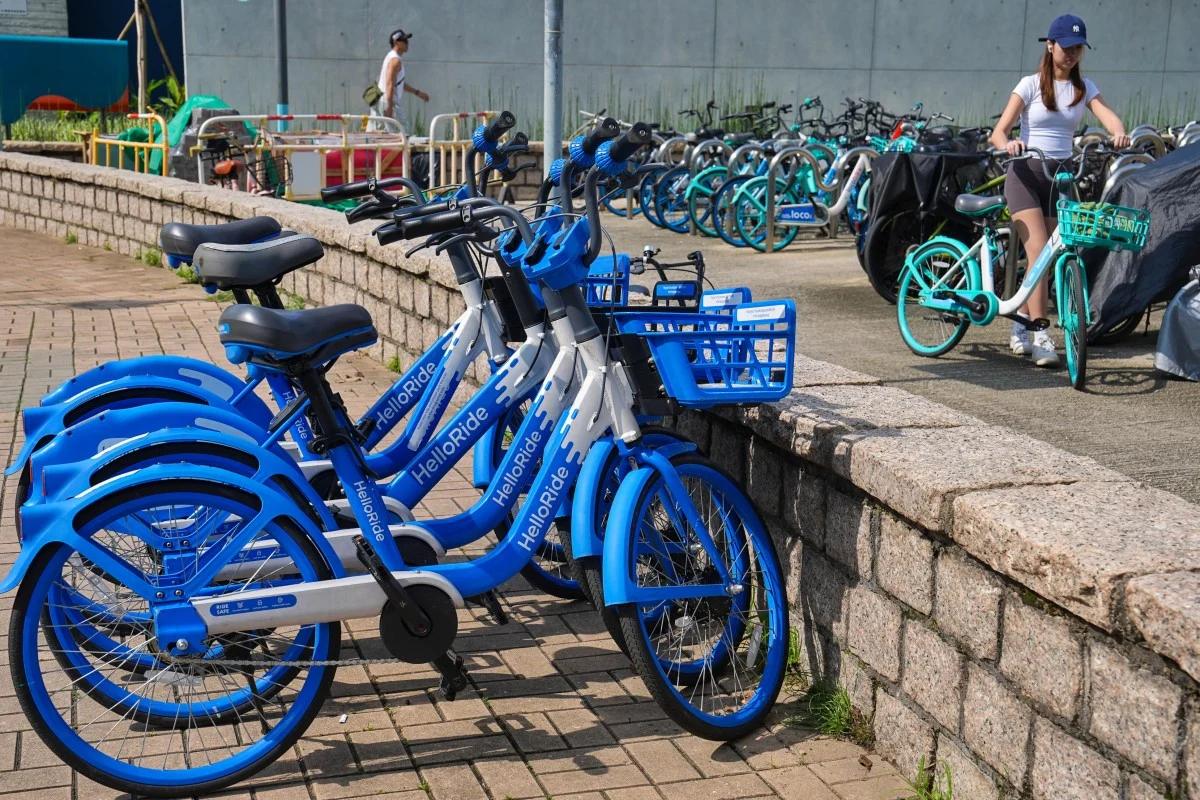
Hong Kong is seeing growing competition in its bike-sharing market as two major apps, Locobike and Helloride, compete for users in an industry that has seen rapid changes in recent years.
The rivalry reflects a broader shift in urban transport habits, where shared mobility services are becoming a flexible option for short-distance travel and leisure activities.
One regular user, retired economist Thomas Yuen Wai-kee, said he uses both services a few times each month for recreational cycling trips around the city.
He said both platforms offer different advantages, with each app focusing on a slightly different user experience.
According to Yuen, Locobike provides a more localized service, with features such as maps and route suggestions designed to help users explore nearby areas more easily.
He described the Locobike app interface as more user-friendly and tailored to local travel needs, which he finds helpful when planning short rides.
In contrast, he said Helloride tends to focus more on promotional offers, including discounts and limited free riding hours, which appeal to cost-conscious users.
The difference in strategy highlights how bike-sharing companies are trying to attract and retain users in a competitive and evolving market.
Bike-sharing services have become increasingly common in urban centers like Hong Kong, where space constraints and traffic congestion make flexible transport options more attractive.
The dockless model used by both platforms allows users to pick up and drop off bicycles at various locations without fixed docking stations, increasing convenience for short trips.
Industry observers say the bike-sharing sector has experienced ups and downs, with some companies expanding rapidly while others have struggled with profitability and regulatory challenges.
Despite these challenges, demand for shared mobility remains steady, particularly among younger users, tourists, and residents looking for low-cost transport options.
Hong Kong’s dense urban layout makes cycling a practical choice for short-distance travel in certain areas, especially for leisure routes along waterfronts and parks.
The competition between Locobike and Helloride also reflects a broader trend in digital mobility services, where companies increasingly rely on mobile apps, pricing incentives, and user experience design to gain market share.
As the sector continues to develop, operators are expected to refine their services further, focusing on safety, convenience, and integration with other public transport systems.
For users like Yuen, the presence of multiple providers offers more choice and flexibility, allowing them to select services based on price, features, or convenience at any given time.
The continued evolution of bike-sharing platforms suggests that Hong Kong’s urban transport landscape will keep diversifying as technology-driven mobility solutions expand.
