

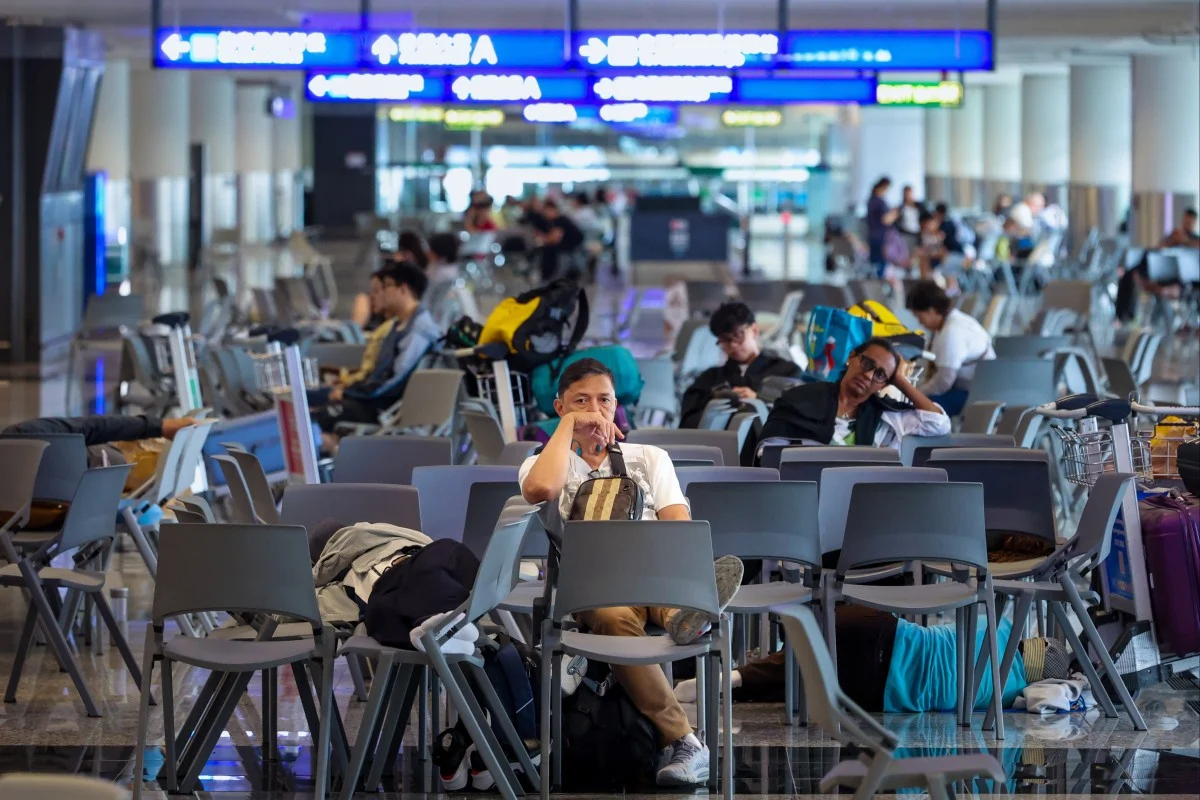
Thousands of travelers were affected at Hong Kong International Airport after Typhoon Noul brought severe weather to the city, forcing widespread flight cancellations and leaving many passengers stranded overnight.
The Hong Kong Airport Typhoon Disruption created long waits inside the airport as travelers searched for updates on delayed and canceled flights. Many passengers spent the night inside the terminal after their travel plans were interrupted by the storm.
Airport terminals remained crowded on Sunday morning. Most seats in the departure hall were occupied as travelers waited for new flight information. Some passengers rested on benches, while others used luggage carts as temporary seats after spending hours inside the airport.
Many travelers checked their mobile phones regularly for airline notifications and departure updates. Families, tourists, and business travelers waited patiently as airlines worked to adjust schedules following the severe weather.
Several stranded passengers also expressed concern about the cost of nearby hotel accommodation. Some said room prices had increased sharply because of the high demand created by the flight disruptions. Reported hotel rates ranged from HK$2,000 to HK$3,000 per night, making it difficult for some travelers to find affordable places to stay.
The airport continued operating under challenging conditions while staff worked to manage the large number of affected passengers. Airline employees and airport teams assisted travelers by providing updated flight information and helping passengers with rebooking procedures.
Yeung Tat-wing, the Airport Authority’s director of service delivery, said the airport expected to handle about 675 flights on Sunday despite the difficult conditions. He also confirmed that 350 flights had been canceled because of the impact of Typhoon Noul.
The cancellations affected both arriving and departing passengers. Airlines adjusted their schedules as weather conditions changed, while some flights were delayed until it was safe to resume normal operations.
Typhoons often bring strong winds and heavy rain that can affect airport operations across the region. Aviation authorities closely monitor weather conditions to protect passengers, airline crews, and aircraft. Flight schedules are adjusted when necessary to maintain safe operations.
Airport officials continued coordinating with airlines to reduce delays and restore services as weather conditions improved. Passengers were encouraged to check directly with their airlines before traveling to the airport, as flight schedules could continue to change throughout the day.
Travel experts note that major storms can cause delays that continue even after weather conditions improve. Aircraft and flight crews must be repositioned, and airlines often need additional time to return to normal schedules after widespread cancellations.
Despite the disruptions, airport operations continued throughout the day with reduced capacity. Ground staff worked to assist travelers, answer questions, and process new bookings as airlines gradually resumed more flights.
Many passengers remained hopeful that they would reach their destinations once weather conditions stabilized. Some continued waiting inside the terminal, while others arranged alternative travel plans or searched for available accommodation.
The Hong Kong Airport Typhoon Disruption highlights the significant impact severe weather can have on international travel. Airport officials and airlines continue working to restore normal flight operations while helping stranded passengers complete their journeys safely.
