

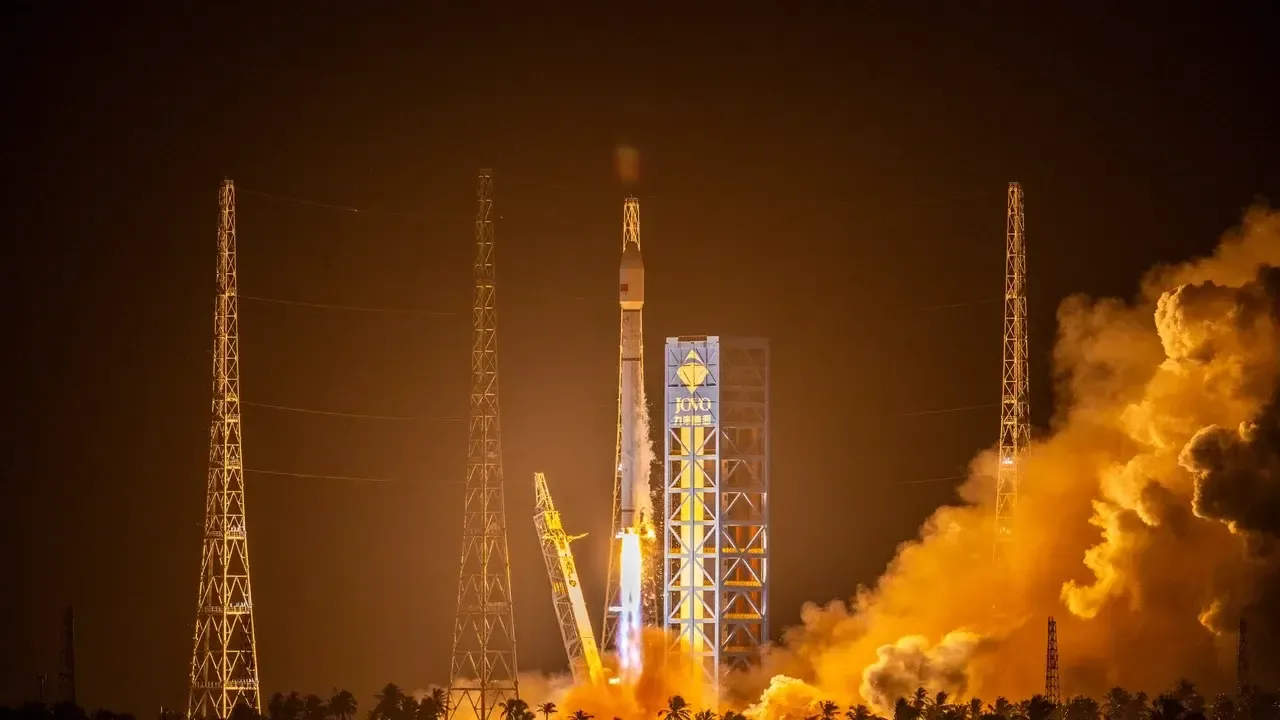
China is expanding its commercial space industry as private companies make progress with rockets, satellites and space services. The country is giving businesses more room to compete while keeping them closely linked to its national space goals.
Recent rocket tests show how quickly the sector is developing. In August, Chinese launch company LandSpace landed the first stage of its Zhuque-3 rocket after an orbital flight. The test brought reusable commercial launches closer to reality.
A few weeks later, Galactic Energy completed the first flight of its Pallas-1 rocket. Other Chinese firms are also working on reusable launch systems.
These developments are important, but the wider change goes beyond individual launches. Beijing is building a system in which commercial companies can help deliver national space projects while also seeking customers abroad.
China says more than 600 commercial space companies now operate across the industry. Their work includes rocket launches, satellite production, communications, remote sensing and data services.
In 2025, commercial space missions accounted for 50 of China’s 92 launches. These missions placed 311 commercial satellites into orbit. However, only half of the missions used launch vehicles developed by commercial companies.
The figures show that the commercial sector is growing within a wider system that still relies on state-backed capabilities. Private firms are becoming another source of launch and satellite services rather than replacing the national space program.
China’s 2025–27 commercial space action plan sets out this approach. It calls for commercial activities to become part of the country’s overall space development system. The plan also seeks to give businesses wider access to state research facilities and testing equipment.
The government wants to encourage public agencies to buy more commercial launch and satellite services. It also aims to help companies take part in national and international space programs.
Beijing has introduced a dedicated standards system for commercial space activities. More than 1,000 standards are planned across six broad areas. They cover rocket and satellite production, launch operations, tracking, licensing, safety, space debris, certification and space-based services.
The standards are intended to provide clear rules as the industry grows. Common requirements could help companies improve safety, ensure reliable services and work with government agencies and international customers.
This approach combines competition with government planning. Companies can develop products, seek investment and pursue new markets, while state policies help guide the sector toward national goals.
China also needs more launch capacity. Its plans include large satellite networks, lunar exploration, human spaceflight and scientific missions. These projects all require reliable access to space.
More launch providers could help meet that demand. Reusable rockets may also lower launch costs and allow companies to fly more often. A wider range of providers could make the overall system less dependent on a small number of launch vehicles.
However, China is not focusing only on its domestic market. The government wants commercial space firms to expand overseas and help other countries develop satellite services.
An example came in August, when Beijing-based GalaxySpace delivered the Lingzhi-09 CubeSat to Thailand’s space agency, GISTDA. The project included ground systems, training and technical support.
GalaxySpace described the deal as the first complete in-orbit satellite delivery by a Chinese commercial space company to a customer in Southeast Asia. It could offer a model for future projects with countries seeking to build their own space capabilities.
China has exported satellites for years, often through state-linked companies and government-backed agreements. Commercial firms may offer a different package, including smaller satellites, integrated services, training and faster procurement.
For countries with developing space programs, these services could create more options. Customers may gain access not only to satellites but also to software, technical skills and support needed to use them.
Yet overseas expansion also brings questions about sensitive technology and data. China’s Order No. 837, a regulation on overseas investment, took effect on July 1. It is not a space-specific rule, but it is relevant to companies that sell technology and services abroad.
The regulation aims to support overseas investment while strengthening rules on areas such as export controls, technology transfers, cross-border data and security reviews. It also covers some forms of overseas technical training.
There is no clear evidence that the regulation has blocked or changed a specific commercial space deal. Its importance lies in showing how China seeks to expand international business while maintaining control over sensitive activities.
The policy creates both opportunities and limits for commercial firms. Companies may gain access to more customers and investment, but their overseas work must also fit within national rules and priorities.
China’s commercial space industry is therefore developing along two paths at once. Private firms are being encouraged to move quickly and compete globally, while the government is building the systems needed to guide that growth.
The main question is how much freedom these companies will have as international businesses while remaining part of a coordinated national space program. The answer could shape China’s role in the global space market and affect the choices available to emerging space nations.
