

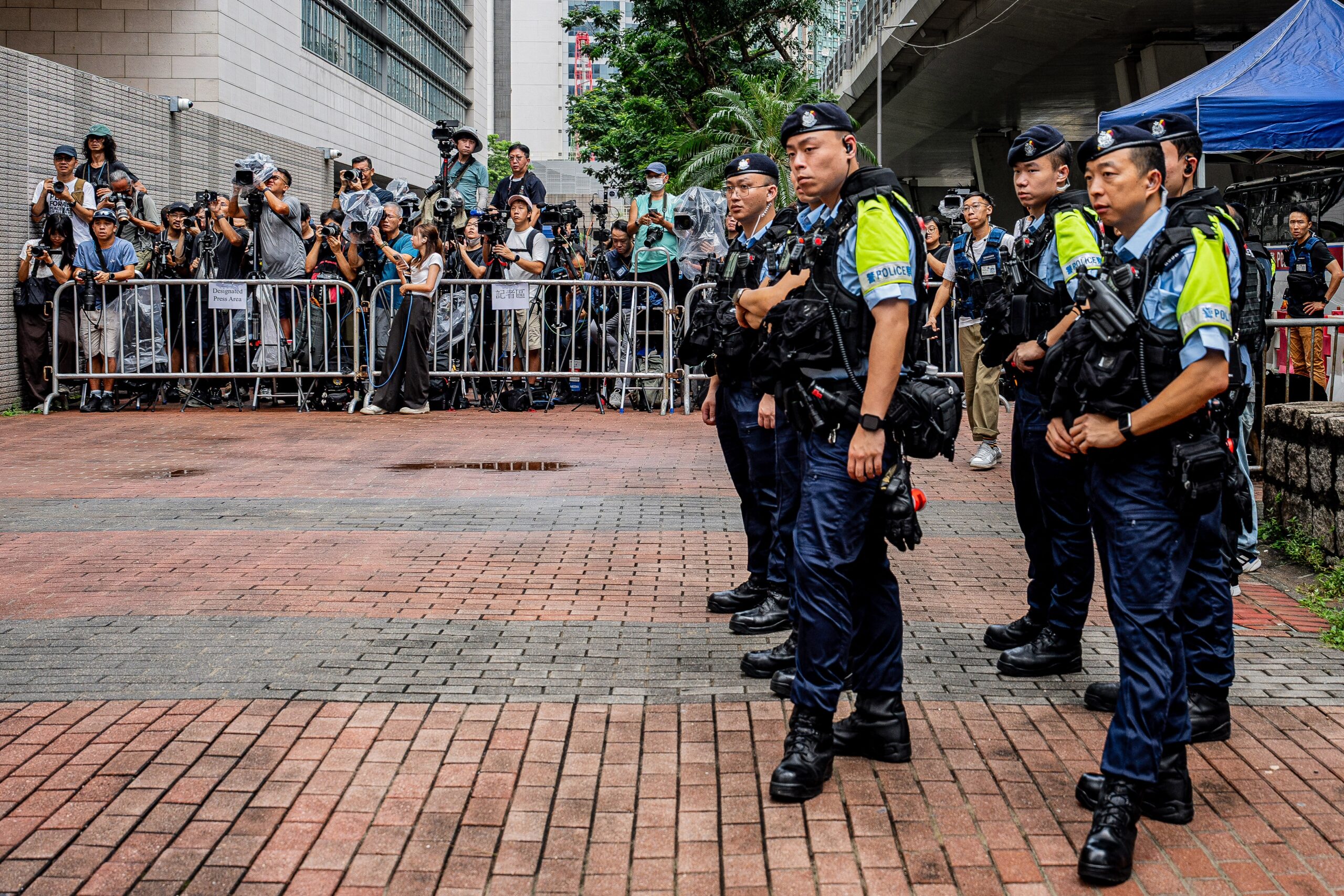
Two prominent Hong Kong activists have been found guilty in a major national security case linked to the city’s former Tiananmen Square vigil.
Lee Cheuk-yan, 69, and Chow Hang-tung, 41, were convicted of inciting subversion on Friday, August 21. Both were former leaders of the Hong Kong Alliance in Support of Patriotic Democratic Movements of China.
The group organised annual candlelight vigils in Hong Kong to remember the victims of the 1989 Tiananmen crackdown in Beijing. The events were held for decades and became a major part of Hong Kong’s public life.
The annual vigil was stopped in 2020. The Hong Kong Alliance was later disbanded. The case against its former leaders has since become one of the most closely watched national security trials in the city.
Lee and Chow were charged under Hong Kong’s National Security Law. The law was imposed in 2020 after major protests in the city in 2019. The pair have been in custody since 2021.
The court found that their actions amounted to inciting people to subvert state power. Prosecutors focused on the group’s calls to end China’s one-party system.
The defendants had rejected the charges. Their supporters said the case was about peaceful political speech and the right to remember the victims of the 1989 crackdown.
The guilty verdict means both activists could face long prison terms. The maximum punishment for the charge is 10 years in prison. Their sentences will be decided at a later date.
The case has drawn strong attention outside Hong Kong. Several governments and rights groups have criticised the convictions. They say the case shows how much political space has narrowed in Hong Kong since the security law came into force.
Supporters of the law take a different view. They say national security rules are needed to protect the city and prevent acts that threaten state power. The court’s ruling reflects that legal position.
The trial has also raised questions about the future of public remembrance in Hong Kong. For many years, the city was the only place in China where a large public Tiananmen memorial event could take place.
Thousands of people once gathered at Victoria Park each June 4. They lit candles and observed a moment of silence for those killed during the 1989 crackdown.
Those large gatherings are now no longer held. Police have also increased security around the anniversary in recent years.
The conviction of Lee and Chow adds another major chapter to that change. Both were closely linked to the organisation that kept the annual vigil alive for decades.
Lee was a former union leader and a long-time political campaigner. Chow is a barrister who became one of the most visible voices in Hong Kong’s democracy movement.
A third former leader of the Alliance, Albert Ho, pleaded guilty to the same charge earlier this year. He is also awaiting sentencing.
The case has become a wider test of how Hong Kong’s national security laws are used. Supporters of the defendants say peaceful remembrance should not be treated as a crime. Authorities say actions that challenge state power can fall under the security law.
The verdict comes as Hong Kong’s political system remains very different from the period before the 2020 law. Many leading opposition figures have been jailed, left the city or stopped public political work.
The ruling is therefore likely to remain a major issue in discussions about Hong Kong’s civil rights and political freedoms.
For Lee and Chow, the next major step will be sentencing. Until then, they remain convicted of inciting subversion and face the possibility of up to 10 years in prison.
The case has also changed how Hong Kong remembers one of the most sensitive events in modern Chinese history. What was once a major public gathering is now largely absent from the city’s streets.
The verdict shows that the debate over Tiananmen memory and political expression in Hong Kong is far from over.
