

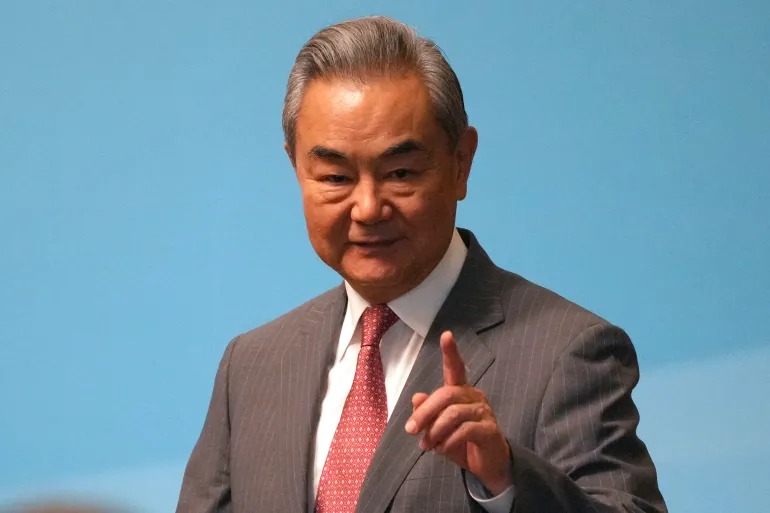
China reaffirmed its support for Iran and called for renewed diplomacy during talks between Chinese Foreign Minister Wang Yi and Iranian Foreign Minister Abbas Araghchi in Beijing, as regional tensions and the ongoing conflict involving Iran remain key international concerns.
The meeting took place on Wednesday, just days before Chinese President Xi Jinping is expected to travel to the United States for talks with President Donald Trump. Analysts expect discussions on the situation in the Middle East, including the conflict involving Iran and developments in the Strait of Hormuz, to feature prominently during the summit.
During the meeting, Wang said China is willing to strengthen dialogue and cooperation with Iran while safeguarding what he described as Iran’s legitimate rights and interests. His remarks underscored Beijing’s continuing effort to maintain close diplomatic ties with Tehran while encouraging regional stability.
China has consistently advocated political dialogue and negotiated solutions to conflicts in the Middle East. Wang repeated that position by urging all parties to remain rational and restrained during a period of heightened regional uncertainty.
A major focus of the discussions was the Strait of Hormuz, one of the world’s most important energy shipping routes. Wang called on all parties to take effective measures to reopen the waterway as soon as possible and reduce risks to global trade and energy supplies.
The Chinese foreign minister also warned against the spread of instability beyond the immediate conflict zone. He said Beijing does not want to see tensions expand into Yemen and the Red Sea, regions that have already experienced significant security challenges in recent years.
Wang further encouraged Iran and the United States to rebuild diplomatic channels and restore a negotiation mechanism based on previous understandings. According to Chinese officials, dialogue remains the most effective path toward reducing tensions and preventing further escalation.
China has increasingly positioned itself as a supporter of diplomatic engagement in the Middle East. Beijing has sought to strengthen relationships with countries across the region while promoting stability that supports trade, investment and energy security.
Wang said recent events demonstrate weaknesses in the existing regional security framework. He argued that the current security architecture in the Middle East requires reform and strengthening to better address emerging challenges.
China, he added, remains committed to supporting peace, fairness and stability in the region. He also stressed that Beijing’s policy toward Iran has remained stable and consistent over time.
Iranian Foreign Minister Abbas Araghchi described the current period as one of major change for the Middle East. He said regional developments have transformed the political and security environment and require new diplomatic efforts.
According to statements released after the meeting, Araghchi emphasized Iran’s desire for peace and constructive relations with neighboring countries. He said Tehran has begun discussions with regional governments as part of broader efforts to reduce tensions and support stability.
Iranian officials have repeatedly stated that dialogue remains an important tool for addressing disputes and restoring calm across the region. Araghchi indicated that ongoing contacts with neighboring states are intended to support those goals.
The Beijing meeting occurred amid continuing international attention on the conflict involving Iran and its wider impact on regional security. The situation has affected shipping routes, energy markets and diplomatic relations among several countries.
China has closely followed these developments because of its significant economic interests in the Middle East. The region remains a major source of energy imports for China, making stability and secure transportation routes important priorities for Beijing.
The discussions also came shortly after Chinese officials rejected reports suggesting that Chinese entities had provided military-related satellite imagery to Iran. Beijing denied the claims and reiterated its commitment to responsible international engagement.
As preparations continue for the upcoming meeting between Xi and Trump, developments in the Middle East are expected to remain a major topic of discussion. Observers will be watching closely to see whether diplomatic efforts by major powers contribute to reducing tensions and encouraging renewed negotiations.
The latest talks highlight the importance of China Iran Relations as both countries seek to navigate a rapidly changing regional environment. With Beijing continuing to promote dialogue and Tehran emphasizing regional engagement, diplomatic efforts are likely to remain central to discussions about the future of stability and security in the Middle East.
