

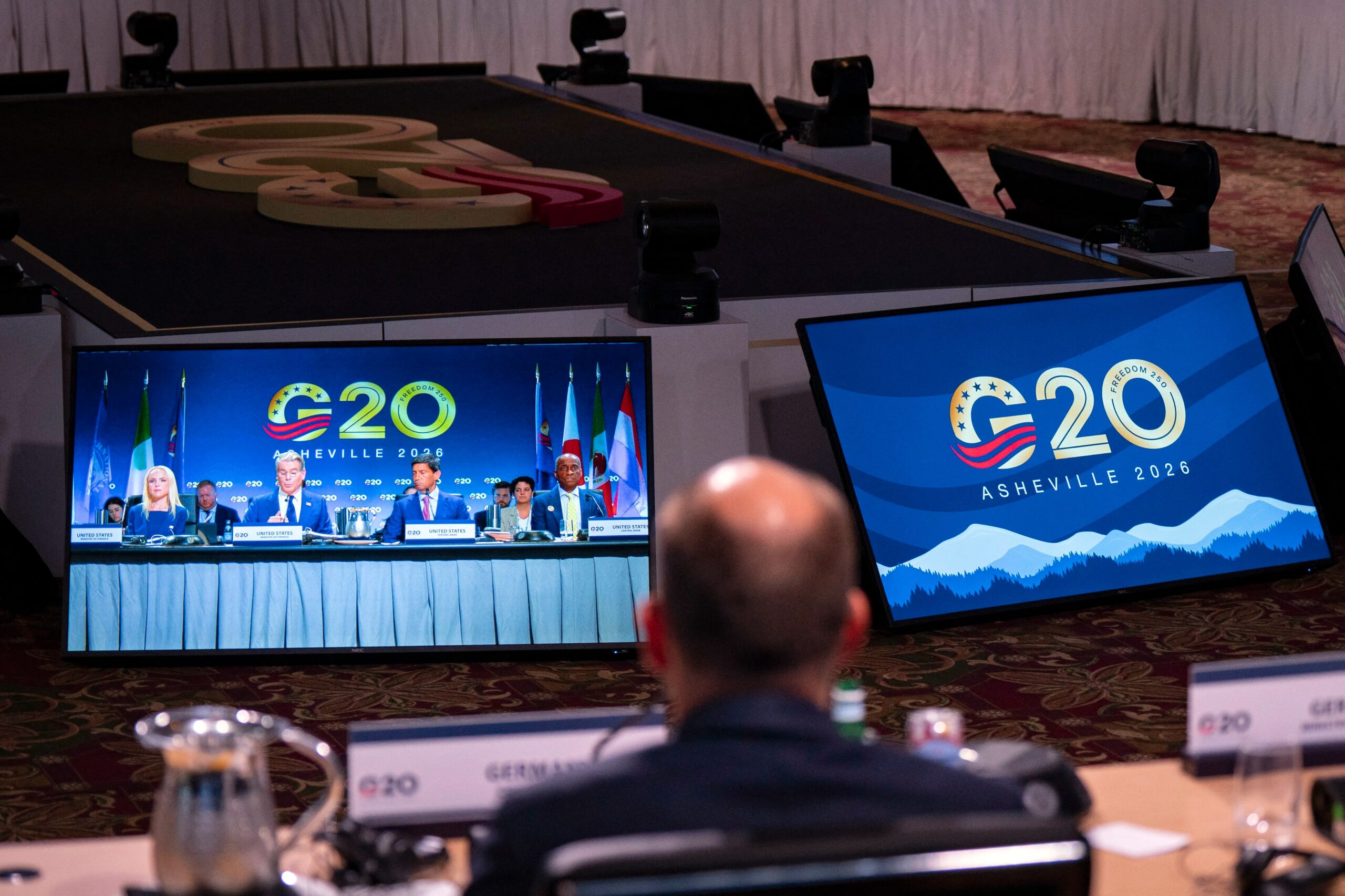
Finance ministers from the world’s largest economies ended a major G20 meeting without issuing a joint statement after disagreements over trade and economic policy prevented a consensus among member nations.
The failure to produce a unified communiqué came after China objected to several sections of the proposed document, according to officials involved in the discussions. The disagreement highlighted growing tensions over global trade patterns and the role of exports in national economic growth strategies.
The G20 brings together the world’s leading advanced and emerging economies to discuss major financial and economic issues. Joint statements released after these meetings are intended to reflect areas of agreement and outline shared approaches to global challenges.
This year’s gathering focused heavily on economic stability, trade balances, financial risks, and long-term growth. However, divisions among participants prevented the group from presenting a unified position.
Officials said the proposed statement received support from 19 of the 20 G20 members. China was the only country that did not back the final language, leading to the collapse of efforts to issue a consensus document.
Instead of a traditional joint communiqué, the host nation released a chair’s statement summarizing the discussions and noting that most participants supported the proposed language.
According to officials, China raised concerns about several sections of the draft text. Among the disputed areas were provisions addressing large trade surpluses and the economic risks associated with heavy dependence on export-driven growth models.
Other contested sections reportedly involved recommendations for stronger monitoring of global economic imbalances and proposals related to sovereign debt restructuring. There were also disagreements over language addressing ongoing conflicts and instability affecting global trade routes.
The dispute reflects broader concerns among many governments about trade imbalances and the impact of large-scale exports on domestic industries. Policymakers in several countries have increasingly argued that persistent trade gaps can place pressure on manufacturing sectors and create economic distortions.
The issue has become a central topic in international economic discussions. Governments around the world are debating how to maintain open markets while ensuring fair competition and protecting strategic industries.
During the meeting, officials emphasized the importance of balanced and sustainable growth. Many participants argued that strong domestic demand, investment, and productivity improvements should play a larger role in supporting economic expansion.
The discussions also focused on the role of international financial institutions in monitoring economic risks. Some participants supported enhanced oversight designed to identify vulnerabilities linked to trade imbalances and debt levels before they become larger problems.
The inability to reach agreement underscores the challenges facing multilateral organizations in an increasingly complex global environment. Economic priorities often differ significantly among member countries, making consensus more difficult to achieve.
In recent years, several high-level international meetings have ended without joint declarations because of disagreements over geopolitical and economic issues. As global tensions have increased, achieving unanimous support for policy statements has become more challenging.
Despite the lack of a final communiqué, officials described many discussions as productive. Participants exchanged views on economic growth, inflation, financial stability, debt sustainability, and trade policy.
Treasury Secretary Scott Bessent said securing broad agreement among such a diverse group of nations remains a significant achievement. He noted that support from 19 countries demonstrated strong concern about the issues discussed during the gathering.
Bessent also argued that economic models heavily dependent on continuous export growth raise important questions about long-term sustainability. He said many countries believe these challenges deserve greater international attention.
The meeting took place against a backdrop of continuing global uncertainty. Policymakers are dealing with slower economic growth in some regions, ongoing trade disputes, high debt levels, and concerns about supply chain resilience.
At the same time, governments are trying to balance economic development with financial stability while responding to changing geopolitical conditions. These competing priorities often complicate efforts to build international consensus.
Observers noted that the proposed statement avoided direct references to specific conflicts despite ongoing instability in several parts of the world. However, security concerns and disruptions to trade routes remained important topics throughout the discussions.
While the meeting ended without a joint declaration, analysts said the debate itself revealed growing attention to global trade imbalances and export-driven growth strategies. The strong support for the disputed language among most members suggests that these issues are likely to remain central topics in future international economic negotiations.
As G20 countries continue working to address economic challenges, the disagreements seen during this meeting highlight the difficulties of finding common ground in a rapidly changing global economy.
