

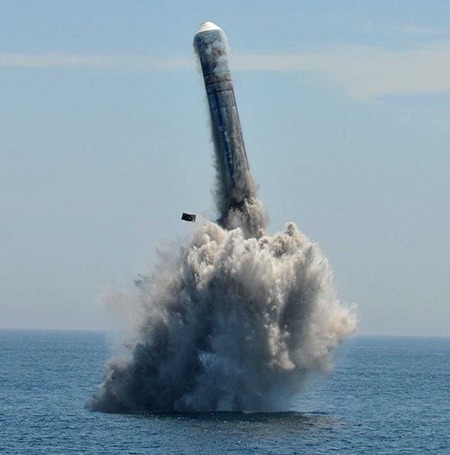
China has carried out a long-range submarine-launched ballistic missile test into the Pacific Ocean, drawing attention from regional governments and renewing debate over military transparency and strategic stability in the Indo-Pacific region.
According to official reports, the missile was launched on July 6 by the Chinese navy and traveled approximately 7,000 kilometers before reaching a designated impact area in the South Pacific Ocean. The test involved a dummy warhead and was described by Chinese authorities as a routine military activity conducted in accordance with international practices.
The launch marked one of the few occasions in recent decades that China has tested a long-range ballistic missile toward the Pacific rather than toward inland target areas within its own territory. Defense analysts say the event highlights the continuing modernization of China’s strategic military capabilities.
Chinese military officials stated that the exercise was not directed at any specific country and was part of normal training and readiness activities. Authorities also noted that advance notifications were issued before the launch took place.
Reports indicate the missile was fired from the South China Sea toward open waters located between the Pacific island nations of Kiribati and Tuvalu. Information released before the operation suggested that a second launch planned from northern Chinese waters was ultimately canceled.
Military experts believe the missile involved was likely either the Julang-2, known as the JL-2, or the more advanced Julang-3, known as the JL-3. Both are submarine-launched ballistic missiles developed as part of China’s nuclear deterrent program.
The JL-2 has been deployed for several years and forms part of China’s sea-based nuclear force. The newer JL-3 is believed to have a significantly longer range, allowing submarines operating closer to Chinese waters to reach targets at much greater distances.
Analysts have noted that distinguishing between the two missile types can be difficult based solely on external observations. However, some regional intelligence assessments indicated that the missile tested may have been a JL-2.
The test follows another notable Chinese strategic missile launch conducted in late 2024. Together, the launches represent a shift from earlier practices, when long-range missile tests were generally directed toward western regions inside China rather than across the Pacific.
The event quickly generated reactions from governments across the Asia-Pacific region. Several countries expressed concerns despite receiving advance notification from Beijing.
Japanese officials urged China to avoid activities that could increase regional tensions or create risks for neighboring countries. Although the launch path did not directly affect Japanese territory, officials said they remained concerned about the broader security implications of such tests.
Australia also voiced concern following the launch. Government representatives argued that military activities of this scale can contribute to uncertainty if they are not accompanied by sufficient transparency regarding intentions and future plans.
Leaders from Pacific Island nations also reacted to the test. Some regional officials said they would prefer not to see major powers conduct missile testing in the Pacific region, regardless of which country is involved.
New Zealand expressed particular concern because the missile traveled into an area covered by regional agreements focused on maintaining a nuclear-free Pacific environment. Officials there argued that such activities could raise questions about the spirit and purpose of those arrangements.
Another point of discussion involved the timing and scope of launch notifications. While China informed countries before the test, some governments said the warning period was too short and did not provide enough time for proper assessment.
The issue of advance notification has become increasingly important in international security discussions. Military analysts argue that timely communication reduces the risk of misunderstandings and helps prevent unnecessary escalation during periods of heightened geopolitical tension.
In August, the United States and dozens of other countries supported a joint call encouraging governments to provide at least 24 hours’ notice before ballistic missile tests. Supporters of the proposal said clearer communication can improve confidence and strengthen international security.
The statement also encouraged countries to share additional information about planned launches, including launch windows, general missile classifications, launch areas, and intended flight directions.
Chinese officials have rejected suggestions that the recent test should be viewed as threatening. Government representatives stated that the launch was part of routine military activities and said there was no reason for other countries to overinterpret its significance.
Nevertheless, the test has intensified discussion about military modernization, strategic deterrence, and security competition in the Indo-Pacific. As nations across the region continue expanding defense capabilities, missile tests of this scale are likely to remain closely watched by governments and security experts around the world.
