

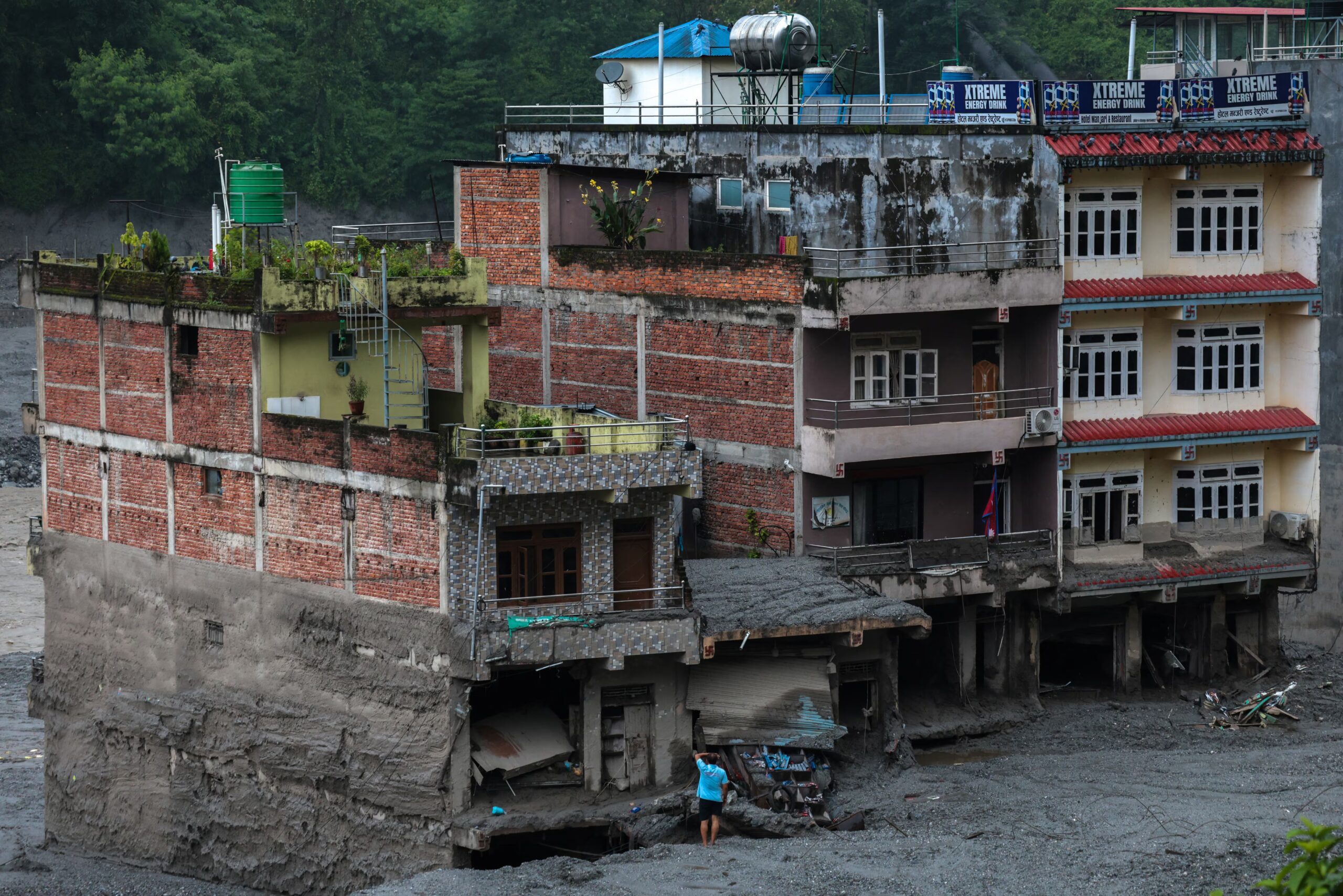
A devastating mudslide in the Himalayan region has left thousands of people dead, missing, or displaced on both sides of the China-Nepal border. Authorities in China and Nepal continue large rescue efforts as concerns grow over further flooding and dangerous conditions in the area.
Chinese officials said on Sunday that 261 foreign nationals from 23 countries remain missing on the Tibetan side of the border crossing affected by the disaster. The announcement marked the first detailed update on missing foreign citizens since the tragedy began earlier in the week.
Officials from Tibet said the largest group of missing foreigners comes from Nepal, with 104 people still unaccounted for. They also reported that 49 Indian citizens, 33 Latvian citizens, 18 Americans, and 15 British nationals remain missing. Chinese authorities said foreign missions have been informed about the situation.
The disaster began on Wednesday when a glacier collapse triggered a massive flow of ice, rocks, mud, and debris. The powerful surge moved through rivers and valleys in the Himalayan region, causing widespread destruction near the border crossing between Tibet and Nepal.
Chinese authorities reported that 16 people had died in Gyirong County by Saturday evening. Officials also said that 546 people remained missing on the Chinese side of the border. Search and rescue teams continue to work in difficult conditions as they look for survivors and recover victims.
The impact has been even more severe in Nepal. The country’s disaster management authority said at least 675 people have lost their lives. Officials also reported that 2,498 people remain missing. Rescue teams have managed to save 7,514 people since emergency operations began.
The scale of the destruction has placed enormous pressure on rescue workers. Damaged roads, unstable ground, and difficult mountain terrain have slowed operations. Emergency crews continue to search affected areas while also trying to protect local communities from additional dangers.
Authorities in Nepal warned that conditions remain risky. Local police in the town of Trishuli said residents and rescue workers moved to higher ground after water levels in the nearby Trishuli River rose in recent hours. The increase raised fears of further flooding and additional damage.
The rising river highlights the ongoing threat facing rescue teams and survivors. Officials said weather and water conditions remain under close observation as emergency workers continue their efforts.
Chinese state media linked the disaster to long-term climate changes affecting glaciers in the region. Reports said scientists believe glacier instability played a key role in the event. According to researchers, the glacier became unstable after years of warming temperatures.
Scientists described the incident as an example of a growing type of disaster affecting the Tibetan Plateau. As temperatures rise, glaciers can weaken and become more vulnerable to sudden collapse. Experts have warned that such events may become more common in mountain regions affected by climate change.
Chinese researchers estimated that it took only six to seven minutes for the mudslide to travel from the Nepalese side of the border to the Gyirong crossing. The rapid movement left little time for people in the area to react.
Surveillance footage from the border crossing showed fast-moving water and debris sweeping through buildings and infrastructure. People were seen attempting to escape as the torrent rushed across the area.
Chinese Foreign Minister Wang Yi described the mudslide as the most severe cross-border disaster faced by China and Nepal in recent years. He said rescue operations have been especially challenging because of the scale of destruction and the difficult terrain.
China has deployed more than 2,100 emergency rescue workers to support recovery efforts. The government has also allocated at least 220 million yuan, or about $32.7 million, for disaster relief and recovery work.
In addition, China has provided emergency financial assistance, relief supplies, satellite information, hydrological data, and tunnel rescue experts to Nepal. Both countries continue to coordinate rescue and recovery operations as they work to locate the missing and assist affected communities across the Himalayan border region.
