

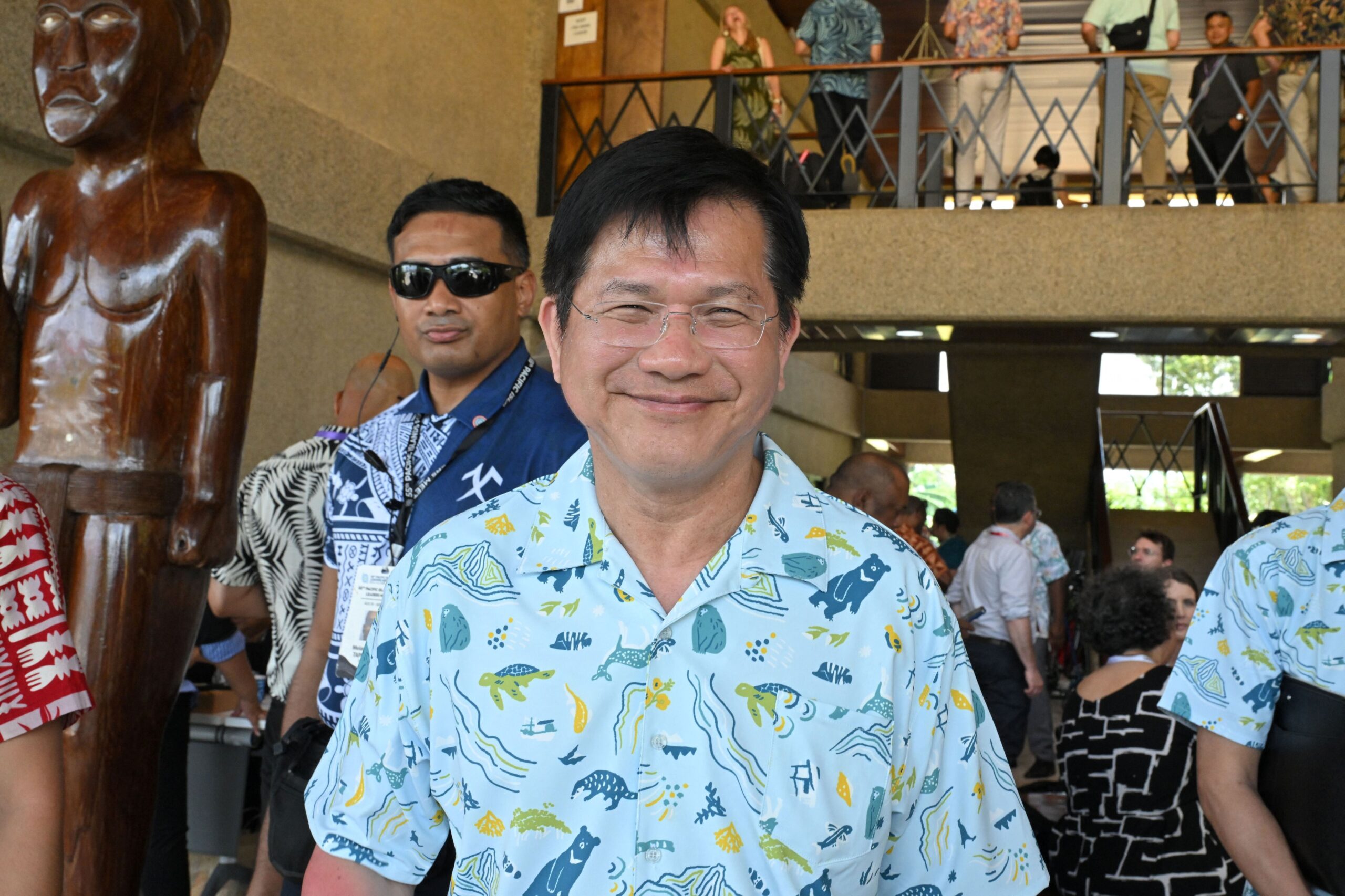
China has warned of possible consequences after Taiwan participated in events linked to the Pacific Islands Forum in Palau, adding fresh tension to a regional gathering focused on cooperation and unity among Pacific nations.
The issue emerged during the opening stages of the annual forum, where Taiwan’s Foreign Minister Lin Chia-lung attended meetings and side events connected to the summit. His participation prompted criticism from Chinese officials, who argued that Taiwan should not have been present at the gathering.
China considers Taiwan part of its territory and opposes any international activity that could be viewed as treating the island as a separate political entity. Taiwan, however, operates under its own government and maintains diplomatic and economic relations with several countries around the world.
Speaking during the forum, China’s special envoy for Pacific island affairs, Qian Bo, said Beijing had serious concerns regarding Taiwan’s attendance. He stated that there would be consequences following the decision but did not provide details about what actions China might take.
Qian said the participation was inappropriate and claimed there was broad opposition to Taiwan’s presence. However, he did not identify specific countries that shared that view.
The comments quickly drew responses from regional leaders attending the summit.
Australian Prime Minister Anthony Albanese stressed that decisions about the Pacific Islands Forum are made by its members. He said the organization determines its own arrangements and guest participation without outside direction.
Albanese described the gathering as an important meeting of the Pacific family and emphasized the value of engagement among member nations and partners.
New Zealand Foreign Minister Winston Peters expressed a similar position. He said the forum does not take instructions from countries outside the organization and that member states retain authority over decisions related to the event.
Taiwan also responded to the controversy. Foreign Minister Lin said Taiwan remains committed to supporting development and cooperation across the Pacific region. He noted that Taiwan values its partnerships with Pacific nations and hopes to contribute to prosperity and stability throughout the region.
Although Taiwan is not a formal dialogue partner of the Pacific Islands Forum, it participates as a development partner. The organization also works with a range of international partners, including the United States, Japan, India, Canada, the European Union and the United Kingdom.
The Pacific Islands Forum consists of 18 members, including Australia, New Zealand and a number of Pacific island nations. The group serves as a platform for regional cooperation on issues such as climate change, economic development, security and infrastructure.
Taiwan continues to maintain formal diplomatic relations with only a small number of Pacific countries. At present, Palau, Tuvalu and the Marshall Islands officially recognize Taipei.
Over the years, China has expanded its diplomatic and economic influence across the Pacific. Several countries that once recognized Taiwan have shifted relations to Beijing, reducing the number of nations that maintain official ties with Taipei.
The question of influence in the Pacific has become increasingly important for major powers. China has invested in infrastructure, development projects and economic partnerships throughout the region, strengthening its presence in island nations.
At the same time, Australia, New Zealand and the United States have increased their engagement with Pacific countries. These nations view the region as strategically important and have expanded cooperation in areas such as security, development and infrastructure.
The latest summit reflects those broader geopolitical dynamics. While the forum is designed to promote regional unity, discussions often take place against a backdrop of growing competition among global powers.
Several Pacific leaders were unable to attend this year’s gathering. The leaders of Fiji, Vanuatu, Samoa, Solomon Islands and Kiribati did not travel to the summit, although government ministers attended on behalf of their countries.
Meanwhile, New Zealand and the United States announced plans to jointly support a major upgrade of a historic World War Two-era port on a Cook Islands atoll. The project is part of wider efforts to strengthen infrastructure and regional partnerships in the Pacific.
The disagreement over Taiwan’s participation highlights the ongoing diplomatic tensions surrounding the island and its international role. As Pacific leaders continue discussions on regional priorities, the issue has become one of the most closely watched developments at this year’s forum.
With China, Taiwan and major regional partners all seeking stronger relationships across the Pacific, the debate is expected to remain a significant topic throughout the summit and beyond.
