

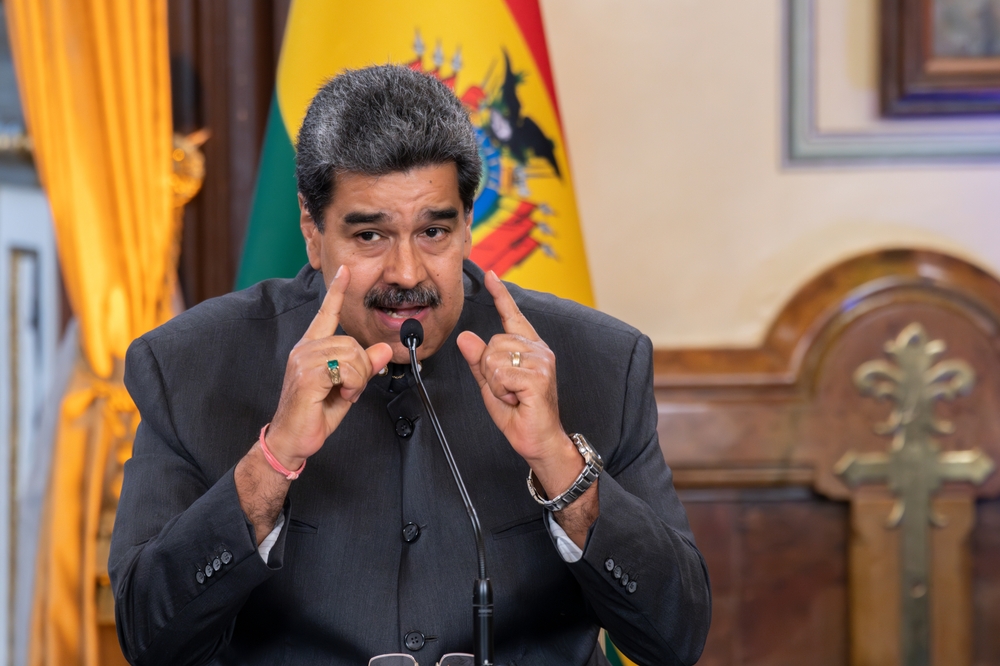
In a move that shocked the world, US forces captured Venezuelan President Nicolás Maduro and his wife, Cilia Flores, in Caracas and transported them to New York to face criminal charges. Shortly after, President Donald Trump announced that Washington would take temporary control of Venezuela until a transition of power could be safely arranged.
“We are going to run the country until such time as we can do a safe, proper and judicious transition,” Trump said during a press conference at his Mar-a-Lago resort. “We can’t take a chance that somebody else takes over Venezuela who doesn’t have the good of the Venezuelan people in mind.”
Interim Leadership and US Plans
Trump stated that the US would manage Venezuela with a small team, naming Secretary of State Marco Rubio, Defense Secretary Pete Hegseth, and Chairman of the Joint Chiefs of Staff General Dan Caine as key figures. However, he offered few details on the structure or length of the interim administration.
At the press briefing, Trump also claimed that Venezuela’s vice president, Delcy Rodríguez, had been sworn in as Maduro’s successor and was willing to cooperate with US plans. The Venezuelan government, however, has not confirmed her appointment.
Trump framed the operation as a necessary intervention after months of speculation about a potential US military move. “We’re not afraid of boots on the ground,” he said. He added that American oil companies would invest billions to repair Venezuela’s failing infrastructure and generate revenue for the country, while warning that a “second and much larger attack” could follow if necessary.
Legal Justification and Political Debate
US Secretary of State Marco Rubio insisted the operation did not require congressional approval, describing it as a law enforcement action supported by the military. He pointed out that Maduro had been indicted in the US in 2020 and labeled him a fugitive with a $50 million reward.
The move drew sharp criticism from Democrats, who warned that such a precedent could justify similar actions by other countries, including China or Russia. Senator Mark Warner said, “Once this line is crossed, the rules that restrain global chaos begin to collapse, and authoritarian regimes will be the first to exploit it.” Warner also highlighted what he called the hypocrisy of the administration, referencing Trump’s pardon of former Honduran President Juan Orlando Hernández.
Meanwhile, Republican leaders expressed support for the operation. Senator Roger Wicker praised the mission as a “successful effort” to disrupt narco-terrorist networks linked to Maduro and called for swift action by Venezuelans to restore stability.
Uncertain Future for Venezuela
Analysts warn that Venezuela faces a precarious path forward. Daniel DePetris, a fellow at Defense Priorities, noted that a split in the military, the rise of criminal groups, civil war, or the emergence of a new authoritarian leader are all possible outcomes.
DePetris also questioned the rationale for the US intervention. While the administration cited drug trafficking, oil resources, and democracy promotion as justifications, he argued that Venezuela is, in reality, a bankrupt state with a collapsed economy and poses little direct threat to US security.
The operation marks a historic escalation in US involvement in Latin America, with far-reaching implications for regional stability and international norms regarding sovereignty and intervention.
