

Nvidia is pushing deeper into the fast-growing market for artificial intelligence that powers machines in the real world. The company is expanding beyond chatbots and data centers. It now aims to play a key role in robots, self-driving vehicles, drones, and other smart systems. China has become one of its most active customers in this effort.
The company calls this field “physical AI.” It covers AI tools that help machines see, move, learn, and make decisions in real environments. While Nvidia is best known for chips used in large AI models, it is also building hardware and software for machines that interact with the physical world.
This business is already becoming an important source of income. Nvidia says physical AI now brings in about $10 billion in annual revenue. That figure remains small compared with the company’s total revenue of $303 billion during the four quarters that ended in July. Even so, company leaders see strong growth ahead.
Chief Executive Jensen Huang believes the market has only begun to develop. He expects physical AI revenue to increase tenfold over the next decade. Such growth would make it one of the company’s most important business segments in the future.
China is playing a major role in that plan. Many Chinese firms that build robots and smart machines depend on Nvidia chips and software. These tools help companies train AI systems and operate machines with greater speed and accuracy.
The country’s robot industry has expanded at a rapid pace in recent years. Companies are investing heavily in humanoid robots that can perform tasks once done only by people. These machines are being tested in factories, warehouses, offices, and other work settings.
Nvidia has worked to strengthen ties with this growing sector. The company has appeared at major industry events and has promoted technologies designed for robot developers. Its products help engineers create machines that can understand their surroundings and respond to changing conditions.
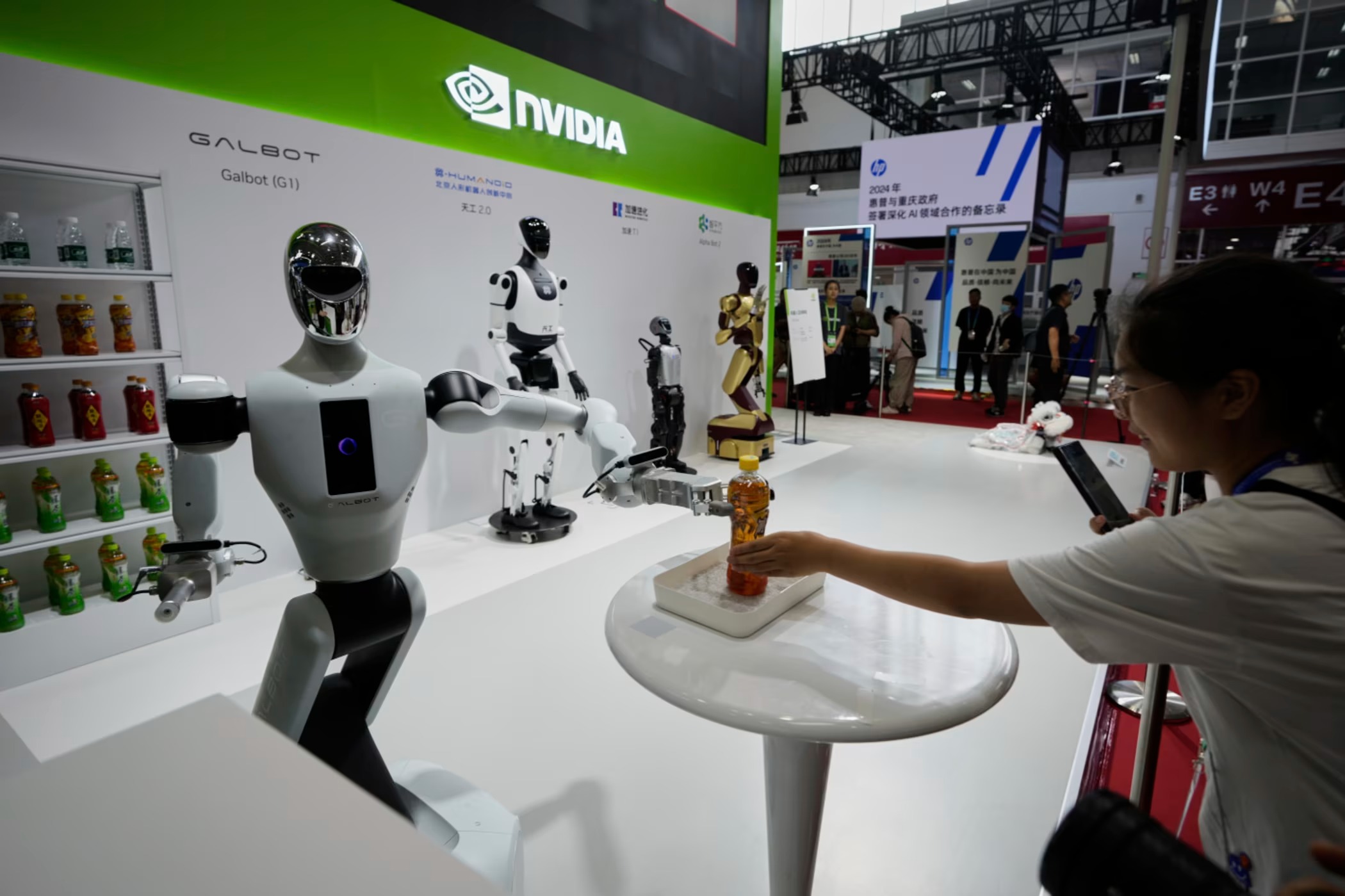
One recent example showed the company’s ambitions clearly. At a major supply chain exhibition in China, a humanoid robot at Nvidia’s display booth handed a soft drink bottle to a visitor. The demonstration highlighted how AI-powered machines are becoming more capable of handling everyday tasks.
Industry experts say physical AI could become one of the next major growth areas for technology companies. As robots become more useful and affordable, demand for advanced chips and software is expected to rise. Companies that provide these tools may benefit from the shift.
For Nvidia, the opportunity goes far beyond robots alone. The same technology can support autonomous vehicles, industrial machines, drones, and other smart systems. These products all require large amounts of computing power to process information and react in real time.
China remains an important market because of its strong manufacturing base and growing investment in automation. Businesses across the country are looking for ways to improve efficiency and reduce costs. Smart machines powered by AI are increasingly viewed as part of that solution.
The company faces competition from other technology firms, but its position in AI computing has given it a strong foundation. Its chips and software are widely used across the industry, making them attractive options for companies building new AI systems.
As investment in robotics and automation continues, Nvidia is placing a large bet on the future of physical AI. The company believes machines that can understand and interact with the real world will become a major part of everyday life. With China showing strong demand for these technologies, Nvidia appears determined to secure a leading role in what could become one of the next major chapters in the global AI industry.
