

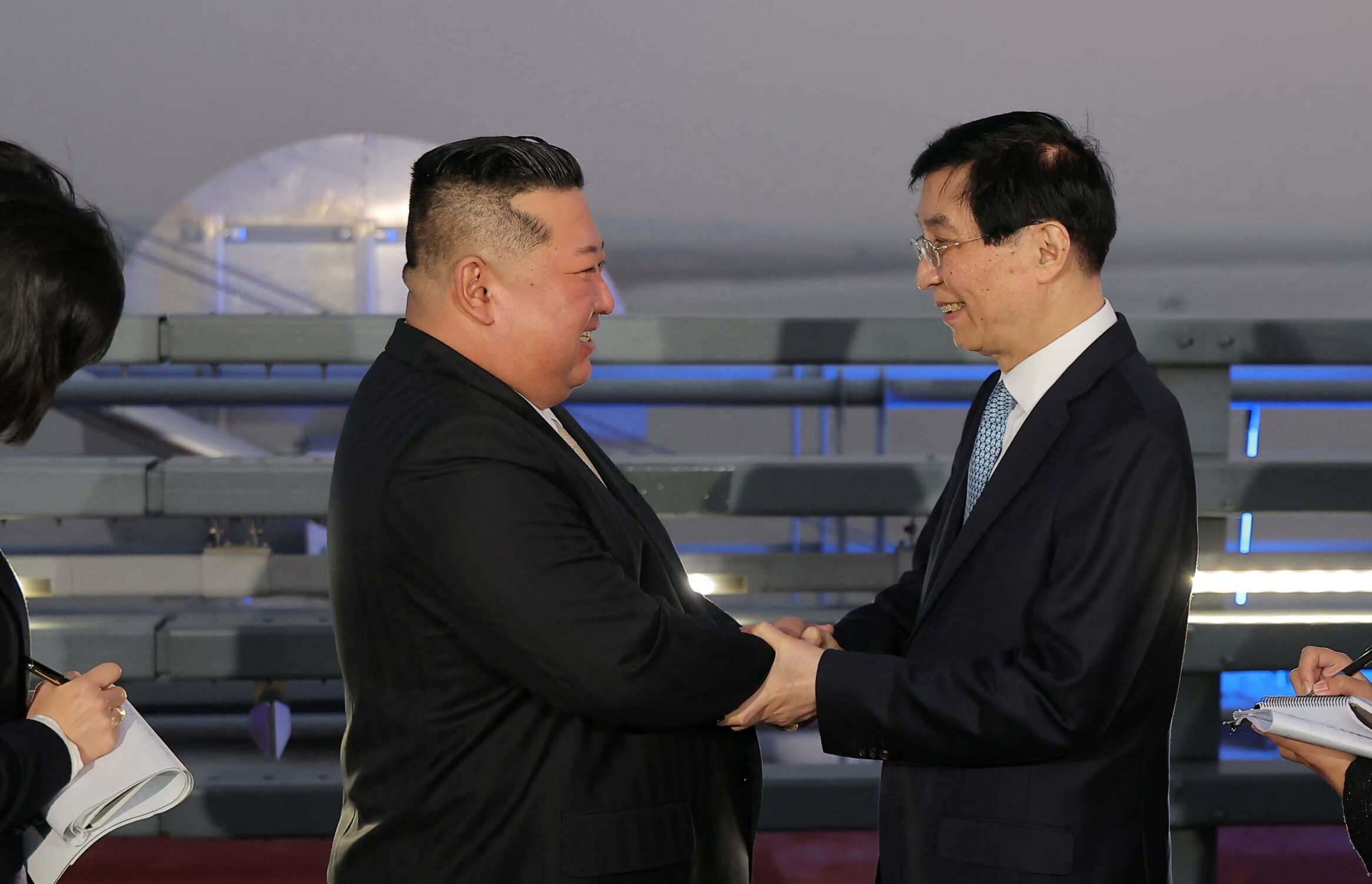
North Korean leader Kim Jong Un returned home by road on Sunday after visiting a Korean War memorial in the Chinese border city of Dandong, North Korean state media reported.
Kim arrived in Dandong on Saturday and visited the Memorial Hall of the War to Resist US Aggression and Aid Korea. The site honors Chinese forces that fought alongside North Korea during the 1950-1953 Korean War.
The visit highlighted the long history between the two countries. It also came as Beijing and Pyongyang seek to strengthen their economic ties.
During his trip, Kim crossed a newly opened bridge linking North Korea and China. China is North Korea’s biggest trading partner. The bridge is seen as a sign of efforts to improve trade and transport between the neighboring countries.
North Korean state media gave strong attention to the historic meaning of Kim’s visit. It described the relationship between the two nations as an “unbreakable” bond built during the Korean War.
According to the Korean Central News Agency, Kim said North Koreans would always remember the years they fought alongside Chinese people. He also spoke of passing down gratitude to Chinese people who supported North Korea’s revolution and lost blood during the conflict.
The comments underlined Pyongyang’s efforts to maintain close ties with Beijing. China played a major role in supporting North Korea during the war, which ended in 1953 with an armistice rather than a formal peace treaty.
The two Koreas remain technically at war because no peace agreement has replaced the armistice.
Kim was accompanied during the memorial visit by a senior North Korean delegation. Members included his sister, Kim Yo Jong, and Foreign Minister Choe Son Hui.
Wang Huning, the fourth-ranking official in China’s Communist Party, guided the visit. His presence reflected the importance Beijing placed on the event and its wider ties with North Korea.
Kim also praised the newly opened bridge between the two countries. State media reported that he expressed confidence it would fulfill its historic role by connecting the nations and bringing their people closer together.
The bridge could help support trade and other cross-border links. However, the visit itself did not provide details about future trade plans or the scale of any expected increase in economic activity.
The trip is viewed as part of a renewed effort by China and North Korea to improve their economic relationship. It comes ahead of a planned regional visit by US President Donald Trump next month.
Beijing and Pyongyang have reasons to maintain contact as regional diplomatic activity continues. Their relationship includes long-standing political and military links, as well as a major economic connection through trade.
At the same time, North Korea has expanded its military relationship with Russia over the past two years. This has added another important factor to Pyongyang’s foreign policy as it manages ties with both Beijing and Moscow.
Kim’s visit therefore placed attention on North Korea’s relationship with China while showing that its wider diplomatic links remain active.
The trip also followed recent high-level contact between the two countries. Kim last visited Beijing in September 2025, when he attended a military parade. Chinese President Xi Jinping visited North Korea in June, according to the reported timeline.
Those meetings have provided opportunities for the two governments to maintain contact and discuss their relationship.
China remains central to North Korea’s economy, making stable relations important for Pyongyang. For Beijing, ties with its neighbor are also a key part of its wider regional engagement.
The newly opened bridge offered a clear symbol of that connection during Kim’s visit. Its role in future trade will depend on how the two countries develop their economic cooperation.
Kim’s return by road on Sunday marked the end of the visit, but the wider message focused on the historic and strategic links between North Korea and China.
Through the memorial ceremony and bridge crossing, both sides highlighted shared wartime history and the value of continued cooperation. The visit also placed their economic relationship in focus as regional diplomacy continues to develop.
