

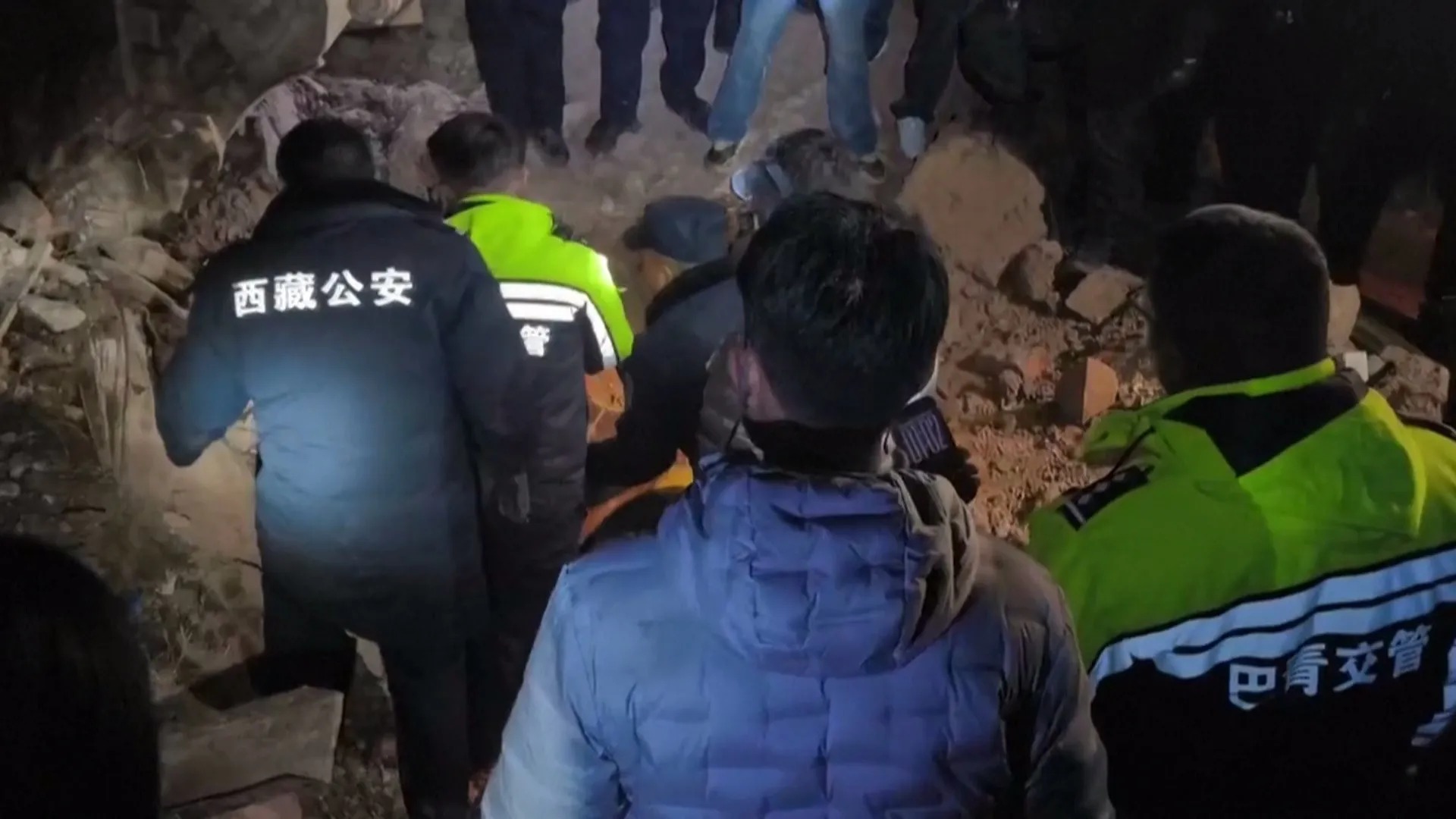
Rescue teams searched remote parts of Tibet on Friday after a powerful earthquake killed at least 16 people and injured 76. The magnitude 7 quake also caused hundreds of homes to collapse, according to Chinese state media.
The earthquake struck Nagqu, a city north of Tibet’s capital, Lhasa, on Thursday. The city sits about 4,800 meters above sea level. The high elevation, cold weather and difficult terrain have made rescue work more challenging.
Officials reported that at least 339 homes had collapsed. They also warned that aftershocks could cause more buildings to fall. Rockslides were another concern for people living in the affected area.
China’s national broadcaster CCTV showed footage of damaged homes and broken stone walls in Nagqu on Friday. The images showed the impact of the earthquake on local communities.
Thousands Evacuated After the Quake
More than 12,000 residents were evacuated from the affected region, China’s official Xinhua news agency reported. Authorities were also building additional shelters to provide safe places for people who could no longer stay in their homes.
No people were reported missing in Baqen County, part of Nagqu where the earthquake struck. However, officials continued to assess the damage and check homes across the region.
The risk of further building collapses remains a concern. Aftershocks can weaken structures that have already been damaged. Officials are also watching for rockslides that could threaten residents and block roads used by rescue teams.
The scale of the evacuation highlights the challenges facing local authorities. Many residents need temporary housing, warm clothing and basic supplies as temperatures remain low.
Rescue Teams Face Harsh Conditions
Search and rescue operations have been difficult because of the remote location and cold weather. Officials said the landscape has slowed efforts to reach some areas and inspect damaged buildings.
Dunzhu, the acting mayor of Nagqu, said rescuers had completed three rounds of searches by Friday afternoon. Teams checked every household and village as part of the effort to locate people who might need help.
More than 5,000 people from three local counties were sent to support rescue operations. Their work included searching damaged homes, checking villages and helping residents move to safer locations.
The repeated searches were aimed at ensuring that no affected households were overlooked. Officials have not reported anyone missing in Baqen County, but rescue and assessment work continued after the initial rounds.
Emergency Supplies Reach the Region
Authorities sent large amounts of emergency equipment and supplies to the earthquake zone. The deliveries included 2,000 prefabricated housing units, about 3,400 tents and 2,000 folding beds.
Flashlights and winter clothing were also among the supplies brought to the region. These items are important for residents who have lost their homes and for rescue workers operating in low temperatures.
The prefabricated housing units and tents are expected to help provide temporary shelter. Folding beds and warm clothing can also support people who must stay in emergency accommodation while officials assess damaged buildings.
More shelters were still under construction as authorities worked to support the thousands of people displaced by the disaster.
Earthquake Struck Northeast of Nagqu
The United States Geological Survey said the earthquake occurred at 10:33 p.m. local time on Thursday. It placed the epicenter 191 kilometers east-northeast of Nagqu.
The agency estimated the earthquake’s depth at 18 kilometers below the surface. The magnitude 7 event was strong enough to cause severe damage in the affected area.
The full impact of the earthquake may take time to establish. Rescue teams must continue checking damaged structures while authorities assess housing losses and other needs.
Officials remain concerned about further collapses and rockslides. For residents who have been evacuated, access to shelter and basic supplies is an immediate priority.
The response will depend on safe access to remote villages and continued checks for damage. Rescue teams are working to assist affected communities as authorities monitor the area for further risks.
