

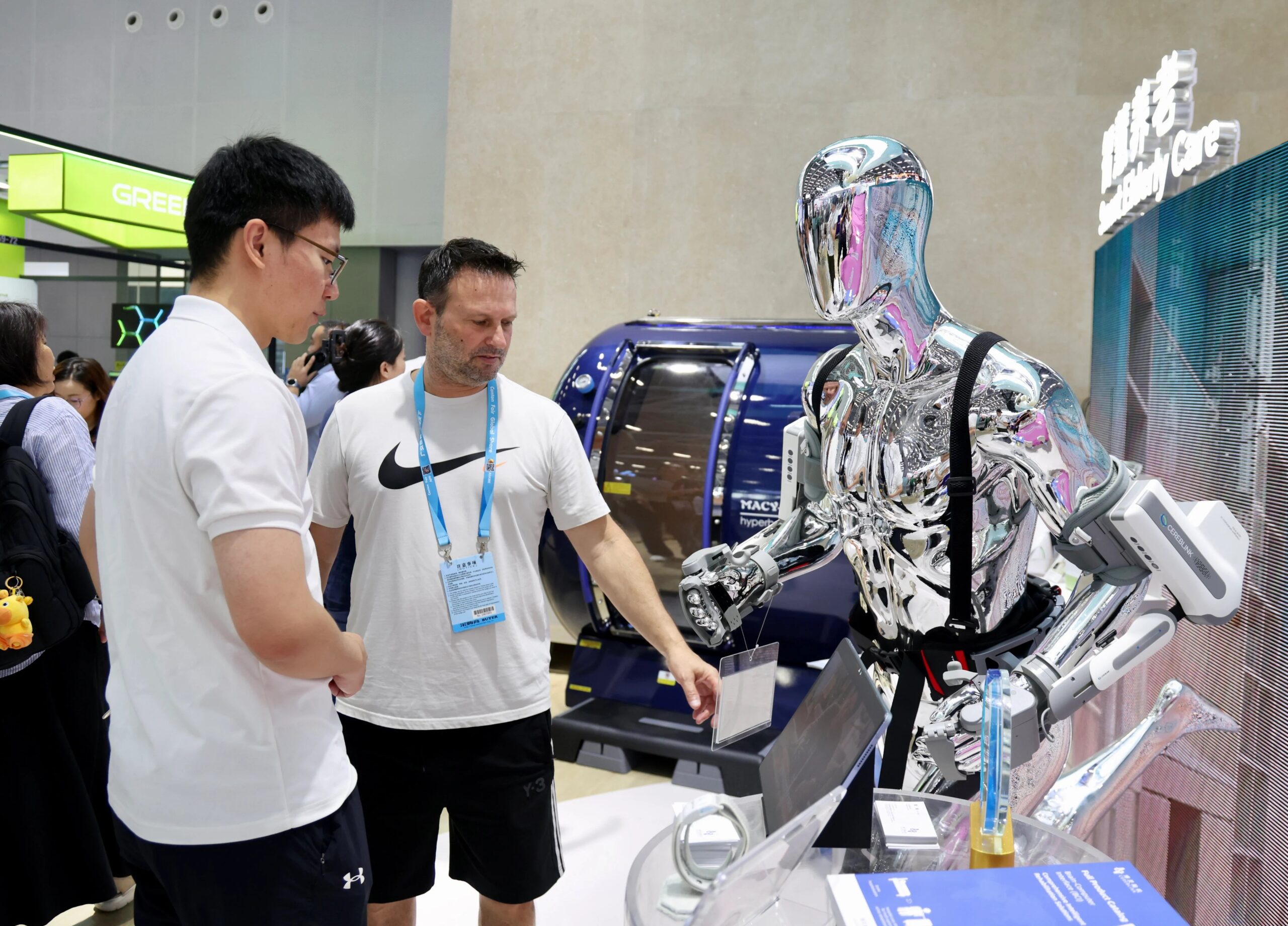
Chinese manufacturers have showcased a new wave of high-tech products at the country’s largest trade fair. The devices range from laser-equipped drones to lightweight exoskeletons and smart wheelchairs that can climb stairs.
Many of the products combine advanced technology with prices aimed at a wide global market. The displays reflect China’s growing focus on research and development as companies face fierce competition at home and rising trade barriers abroad.
The latest Canton Fair took place in Guangzhou, attracting buyers from around the world. By Monday last week, about 189,000 buyers from 214 countries and regions had attended the October event. This was a 13.3% rise from the previous fair in April.
The event gave exporters a chance to show new products and secure orders. Many companies said they were spending more on research to improve their goods and bring new models to market faster.
Some firms now invest up to half of their income in research and development. Their goal is to stay ahead of rivals, lower costs and build stronger positions in overseas markets.
Robots Target Tough Environments
Lingdu Intel-tech, a Guangzhou-based maker of cleaning robots, is investing about 40% of its yearly revenue in new products. The company is also working with the Chinese Academy of Sciences to develop special adhesive materials.
Its sanitation robots already serve customers in more than 20 countries. Now, the company is targeting the market for high-rise window cleaning with a robot priced at about US$70,000.
The machine is designed to work on tall buildings in very hot regions, including parts of the Middle East. Glass surfaces in these areas can reach temperatures above 70 degrees Celsius.
Huang Jian, the company’s sales director, said product design must keep pace with more extreme weather and changing climate conditions.
The window-cleaning robot uses computer vision and several types of sensors to study the surface around it. It can detect obstacles, identify cracks in glass and spot ageing rubber seals.
These features allow the machine to adjust its cleaning pressure and help prevent leaks. The technology could reduce the need for workers to carry out risky cleaning tasks at great heights.
The product shows how Chinese firms are adapting existing technology to meet specific needs in overseas markets.
Lightweight Exoskeleton Draws Buyers
Hangzhou Taixi used the fair to present a redesigned mobility exoskeleton. The company released the new model just six months after launching its earlier version.
The device is made for people who have difficulty walking. It weighs only 1.85 kilograms, making it 550 grams lighter than the previous model.
To cut weight, the company replaced aluminium parts in the joints with custom carbon-fibre materials. The change shows how material research can improve both comfort and ease of use.
Han Xu, a senior executive at the company, said the firm had spent millions of US dollars developing the new model. The product sells for just over US$1,000.
Research and development now accounts for between 30% and 50% of the company’s revenue. The investment appears to be attracting overseas interest.
Hangzhou Taixi has received sample orders from more than 80 countries. It is also working with regulators to obtain the required certifications.
The company’s stand attracted large crowds of international buyers. Some visitors paid cash to buy demonstration units at the fair.
The response points to growing demand for mobility technology that is both advanced and affordable. Lower prices could help such devices reach more users, although wider adoption will also depend on safety checks and regulatory approval.
Solar Systems Offer Flexible Power
Another company used the fair to promote a new product for regions with unreliable electricity supplies.
Zhejiang Era Solar Technology displayed an 800-watt solar power system. The set combines lightweight solar panels, microinverters and energy storage batteries in a plug-and-play design.
The company says the system can cut costs by up to 20% compared with earlier models. It plans to target buyers in Africa, Southeast Asia and Europe.
Interest emerged even before the final product was ready. A customer from Ghana placed a trial order for 200 units before the company released a prototype.
Xu Leiping, a representative of Zhejiang Era, said the company aims to update its products every six to eight months. Regular improvements are seen as essential to maintaining a strong position in the market.
The system could appeal to homes and businesses that need a flexible source of power. It may also offer a practical option in areas where electricity supply remains unstable.
Innovation Drives Export Growth
The products on display reflect a wider shift in China’s manufacturing sector. Companies are moving beyond low-cost production and investing in technology that can solve specific problems for customers.
The push comes as manufacturers face intense competition in the domestic market. At the same time, higher tariffs and trade restrictions have made access to some overseas markets more difficult.
Research spending offers firms a way to stand out through better design, new materials and faster product updates. It can also help them enter markets where buyers seek more advanced equipment at lower prices.
The Canton Fair provides a major platform for testing demand and building overseas business links. Its rising attendance suggests that global buyers continue to look for products from Chinese suppliers.
However, success will depend on more than low prices and rapid development. Companies must also meet local safety rules, secure certification and provide reliable support after sales.
For now, China’s manufacturers are betting that continued investment in research will help them expand abroad. From cleaning robots to mobility aids and solar power systems, the latest products show how quickly the country’s technology sector is evolving.
