

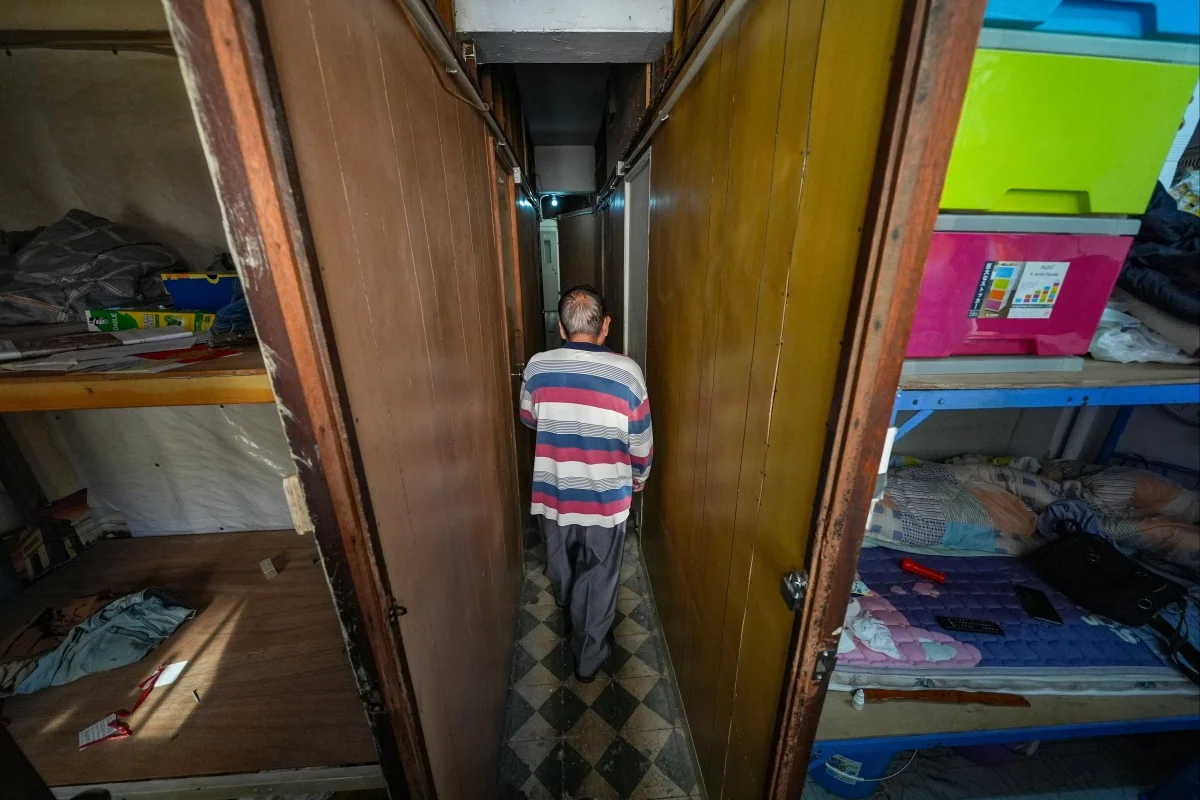
The Hong Kong government says 35 families living in subdivided apartments have faced eviction since new housing regulations took effect earlier this year. The crackdown is part of a broader effort to remove unsafe and overcrowded living spaces commonly known as shoebox flats.
Officials confirmed on Wednesday that the new law has already begun reshaping the city’s low-income housing market. The issue surrounding Hong Kong shoebox flats remains one of the territory’s most pressing housing challenges as authorities try to improve living conditions for vulnerable residents.
Winnie Ho Wing-yin said the evictions occurred during the first two and a half months after the government introduced the Basic Housing Units Ordinance in March. The law now allows only certified “basic housing units” to be legally rented in Hong Kong.
Under the new system, subdivided apartments must meet minimum legal standards before landlords can lease them. Officials said the standards are designed to improve safety, hygiene, ventilation, and living space for tenants.
Many subdivided flats in Hong Kong are extremely small and crowded. Some units are created by splitting larger apartments into multiple tiny rooms, often with poor ventilation and limited facilities. Critics have long argued that these homes create unhealthy living conditions for low-income families who cannot afford higher rents elsewhere in the city.
Ho also revealed that around 40 households living in Yee Wa Building remain in the building despite earlier eviction notices issued last year. Authorities said those families are still considering their future housing options.
The situation highlights the difficult balance facing Hong Kong officials. While the government wants to eliminate unsafe housing conditions, many residents fear they could struggle to find affordable alternatives in one of the world’s most expensive housing markets.
Housing advocates have repeatedly warned that stricter regulations could unintentionally push vulnerable residents into even more unstable living arrangements if replacement housing is not available quickly enough. Some families living in subdivided units already spend large portions of their income on rent.
The Basic Housing Units Ordinance is part of the government’s larger campaign to improve housing standards and reduce substandard accommodation across the city. Officials argue that tighter regulation is necessary to protect tenants and prevent landlords from renting dangerous living spaces.
The government has also promised to increase public housing supply and expand transitional housing programmes to support affected residents. However, demand for affordable housing in Hong Kong remains extremely high, with waiting lists for public housing often stretching for years.
Sham Shui Po, where Yee Wa Building is located, has become one of the districts most associated with subdivided housing. The area contains many older residential buildings where landlords converted apartments into multiple smaller units to maximize rental income.
Housing experts say enforcement of the new law could intensify over the coming months as inspections continue. Landlords whose units fail to meet legal requirements may be forced to carry out renovations or remove the properties from the rental market entirely.
The debate over Hong Kong shoebox flats continues to reflect wider concerns about inequality, affordability, and housing shortages in the city. For many low-income families, subdivided units remain one of the few available housing options despite the poor conditions often linked to such homes.
Officials said the government will continue monitoring the impact of the new rules while working to provide assistance for households affected by the transition.
