

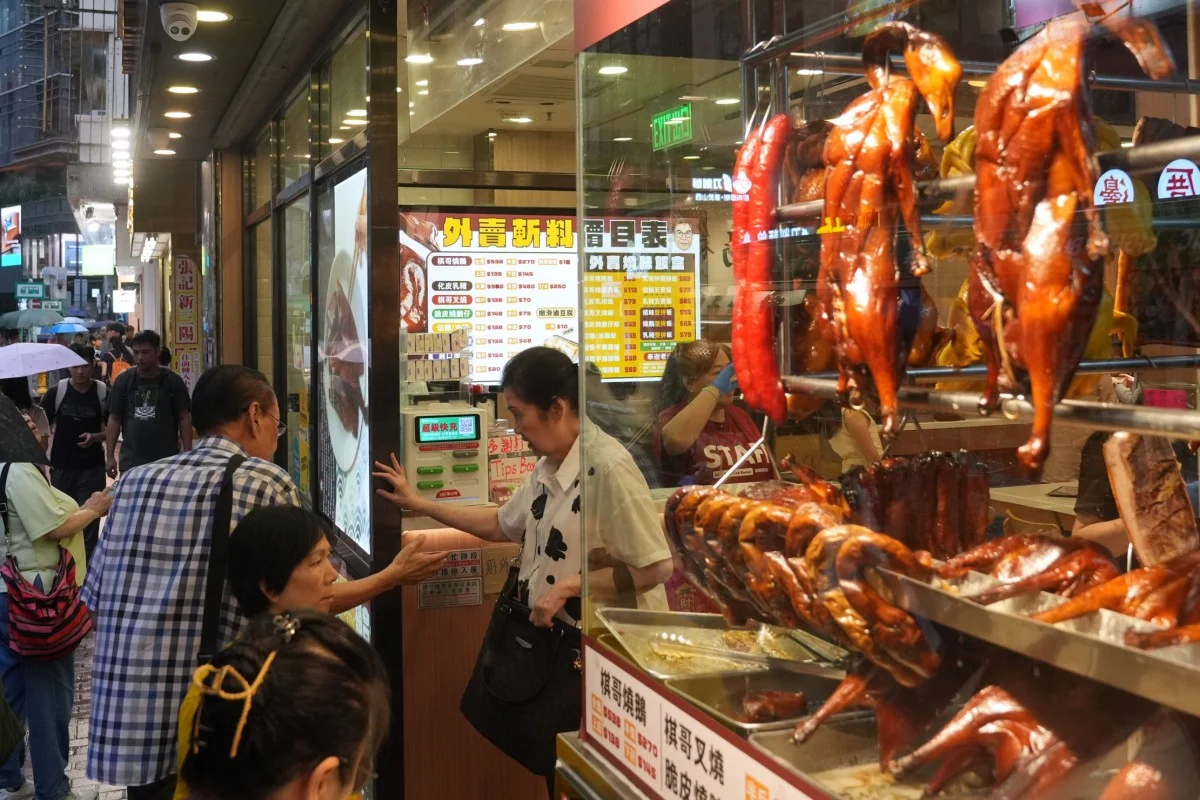
Hong Kong’s roast meat restaurant chains are growing their presence across the city as demand from tourists and local diners supports new business openings. The expansion comes even as the wider retail property market continues to recover at different speeds, with many shopping areas still facing high shop vacancy rates.
New data shows that restaurants serving traditional Cantonese roasted meats are becoming some of the most active tenants in Hong Kong’s street-level retail market. Their steady growth is helping fill empty storefronts in popular shopping districts, although the overall retail sector has yet to return to pre-pandemic conditions.
According to property data, the number of siu mei restaurants in Hong Kong’s four main shopping districts has increased from about 25 in 2022 to nearly 40 this year. These districts include Mong Kok, Tsim Sha Tsui, Central, and Causeway Bay. The increase reflects rising demand for shops that can attract both visitors and local customers.
Siu mei restaurants are known for serving popular Cantonese dishes such as roast goose, roast pork, roast duck, and barbecue pork. These meals remain a favorite among residents and are also popular with tourists looking for local food experiences during their visits to Hong Kong.
Business owners have continued to expand because tourist activity has improved in many parts of the city. Areas with heavy foot traffic offer better opportunities for food businesses than some retail sectors that depend mainly on shopping for fashion or luxury goods.
Many roast meat restaurants benefit from repeat local customers while also attracting travelers searching for authentic Cantonese cuisine. This mix of customers provides a more stable source of income than businesses that rely only on tourists.
Retail property owners have also welcomed food operators because restaurants often bring regular daily traffic. Empty street-level shops can be difficult to lease during periods of slow retail recovery. As a result, landlords are increasingly willing to rent space to businesses with proven customer demand.
While food businesses continue to grow, the overall retail property market remains mixed. Some shopping streets have seen more visitors and stronger leasing activity, while others continue to experience vacant storefronts and slower business conditions. Consumer spending patterns have also changed as residents spend more carefully and online shopping continues to influence the retail sector.
The recovery has not been equal across every part of Hong Kong. Districts that attract large numbers of tourists have generally performed better than locations that depend mainly on neighborhood shoppers. This has encouraged more restaurant operators to focus on high-traffic commercial areas where customer numbers remain strong throughout the day.
Industry observers say food businesses have become an important part of the city’s retail landscape. Restaurants provide services that cannot be replaced by online shopping, making them attractive tenants for landlords looking to improve occupancy levels.
The growth of siu mei restaurants also highlights the lasting appeal of traditional Cantonese food. Roast meats have been part of Hong Kong’s food culture for generations. Many visitors include famous roast meat restaurants on their travel plans, helping these businesses maintain steady demand.
Restaurant operators continue to invest in new locations despite broader economic uncertainty. They believe prime shopping streets offer long-term opportunities as international tourism gradually improves and local dining activity remains stable.
Property experts say the increase in roast meat restaurants shows that businesses linked to food and dining continue to perform better than some other retail categories. While clothing, accessories, and other retail segments still face challenges, restaurants have shown greater resilience because people continue to spend on meals and social gatherings.
The latest figures suggest that Hong Kong Roast Meat businesses are playing an important role in the city’s retail recovery. Although the broader shop market remains uneven, the steady expansion of roast meat chains demonstrates that well-established food brands continue to find opportunities in Hong Kong’s busiest commercial districts. As tourism and local dining remain active, these restaurants are expected to stay among the strongest drivers of demand for prime street-level retail space.
