

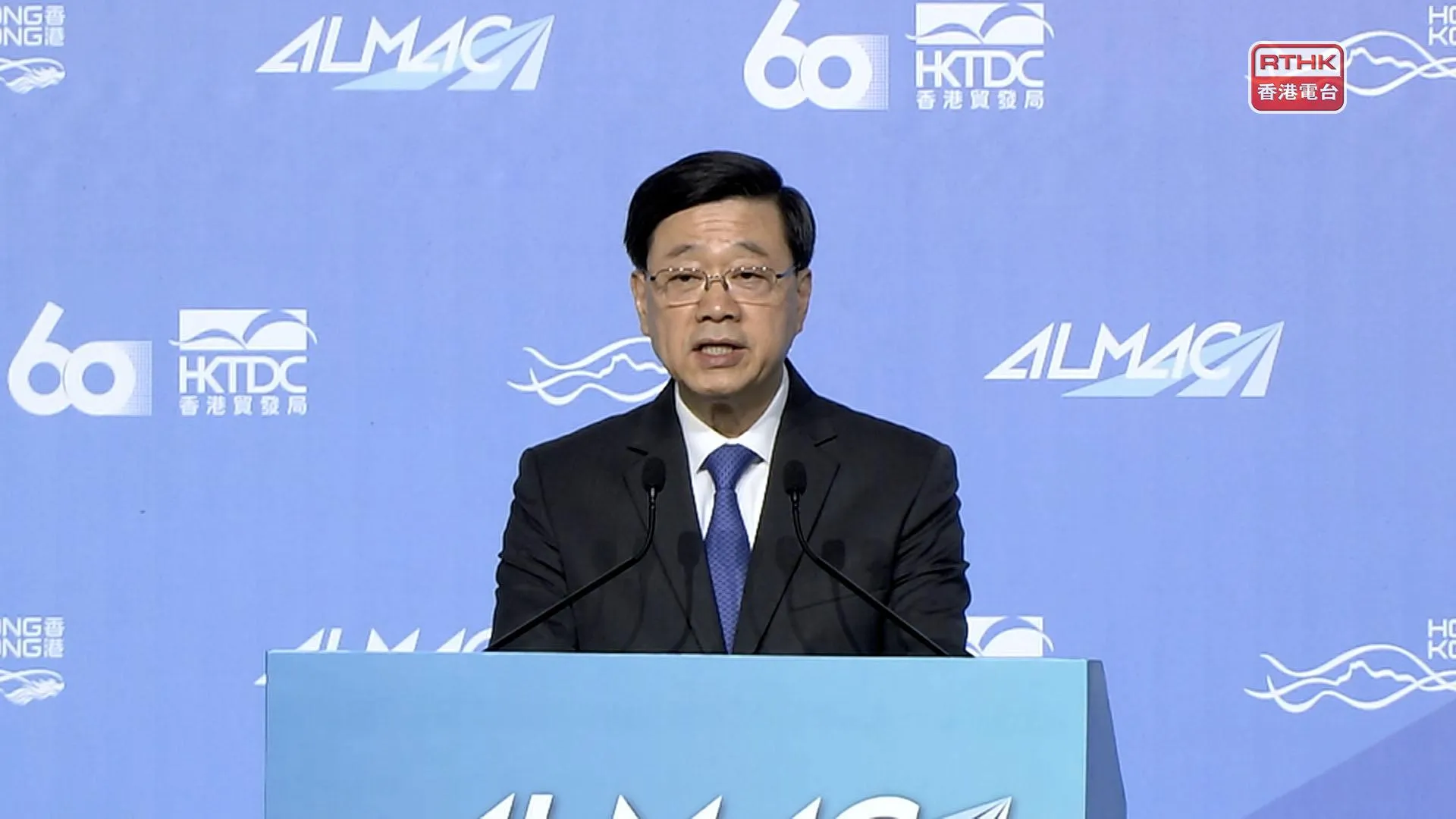
Hong Kong is preparing to expand its role in the international shipping industry by moving beyond its traditional position as a major port. Chief Executive John Lee said the city wants to become a centre for a wider range of maritime businesses, including ship finance, insurance, management and legal services. He made the announcement on November 17 during the opening of the 16th Asian Logistics, Maritime and Aviation Conference.
Lee said Hong Kong would use its existing strengths in logistics and transportation to develop a more complete maritime business network. The city has long played an important role in international trade because of its location and connections with mainland China and other major markets. However, the government believes there is room to attract more companies that provide services linked to the shipping industry.
One of the main goals is to increase the value of services offered in Hong Kong. Instead of focusing mainly on the movement of goods through its port, the city wants to attract businesses involved in the wider shipping process. These include companies that finance vessels, insure shipping operations and manage maritime assets. Legal and professional services could also become a larger part of the sector.
Lee also discussed the role of aviation in the city’s economic plans. Hong Kong is using its three-runway airport system to expand flight connections and increase capacity. The government wants to give businesses more choices when moving goods and reaching international markets. Strong links between shipping and aviation could help the city improve its position as a regional transport centre.
The conference brought together representatives from logistics, aviation and maritime industries. These sectors face major changes as global trade routes, technology and business needs continue to develop. Companies are looking for reliable transport networks and services that can help them manage costs and reduce delays. Hong Kong hopes to attract more of this business by improving its infrastructure and professional services.
The city’s plans also come as competition between regional trade centres increases. Other ports and logistics hubs are investing in new facilities and digital systems. Hong Kong will need to demonstrate that it can offer efficient services, skilled workers and a strong legal framework. Its links with mainland China and the Greater Bay Area could provide an advantage if businesses want to reach markets across southern China.
The government also wants to attract more high-value cargo activity. These operations often require specialist handling and reliable transport services. Expanding the range of maritime services could help Hong Kong earn more from international trade without relying only on the volume of goods passing through its port.
The plan represents a wider effort to strengthen Hong Kong’s role in the regional economy. Its success will depend on attracting companies, improving services and building stronger links with international markets. The city is aiming to become not just a place where ships stop, but a location where maritime businesses can manage many parts of their operations.
