

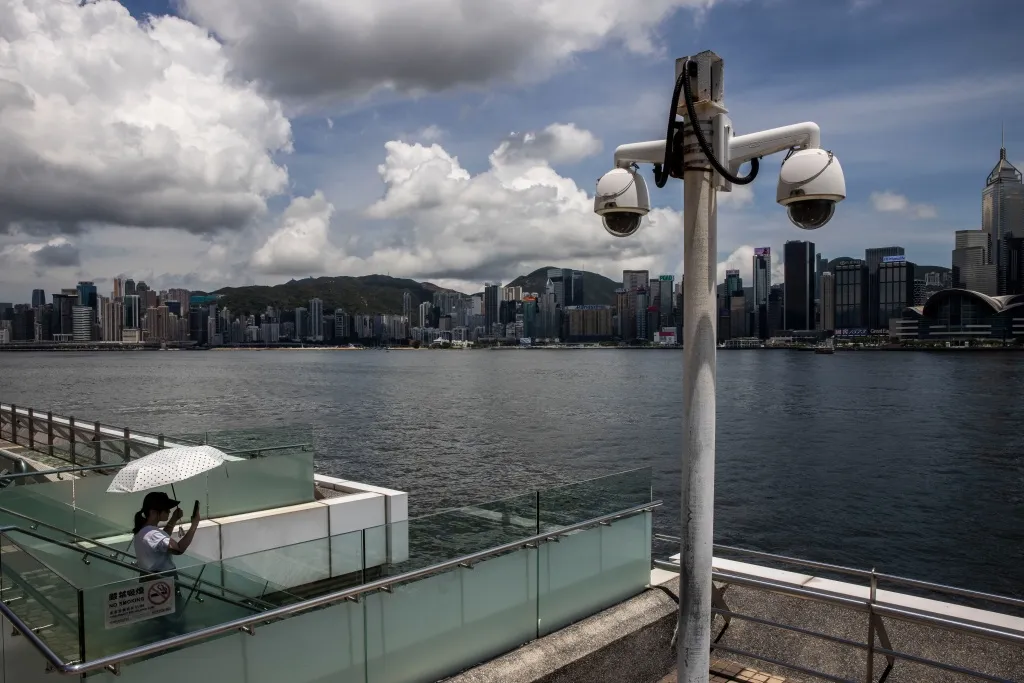
Hong Kong has introduced artificial intelligence-powered facial recognition across its public surveillance network, giving police new tools to monitor people and identify possible suspects. The system began operating on November 16 under a police programme known as SmartView. Authorities say the technology will help prevent crime, improve public safety and support national security work. However, the expansion has also raised questions about privacy, personal freedom and how information collected through surveillance cameras will be used.
Police Commissioner Joe Chow announced the introduction of the new technology before its launch. He described the system as a way to protect law-abiding residents and improve the capabilities of existing cameras. The technology is expected to help officers examine crowded public areas and identify people who may be connected to criminal investigations. It can also support the reading of vehicle registration plates, allowing police to collect information more quickly.
The SmartView programme began in 2024, and authorities have already installed around 5,000 CCTV cameras across Hong Kong. Police say the network has helped them investigate nearly 2,200 cases and make more than 2,800 arrests. Officials plan to increase the number of cameras to 60,000 by 2028. The expansion would give the police a much wider surveillance network and allow them to monitor more public locations across the city.
Supporters of the programme argue that modern technology can help police respond to crime more efficiently. Facial recognition may reduce the time needed to identify suspects, while automatic systems can help officers review large amounts of recorded footage. However, privacy advocates have warned that constant monitoring could affect personal freedoms. Concerns include false matches, misuse of personal information and a lack of clear public oversight. The authorities will face growing pressure to explain how the system works and what protections exist for residents.
