

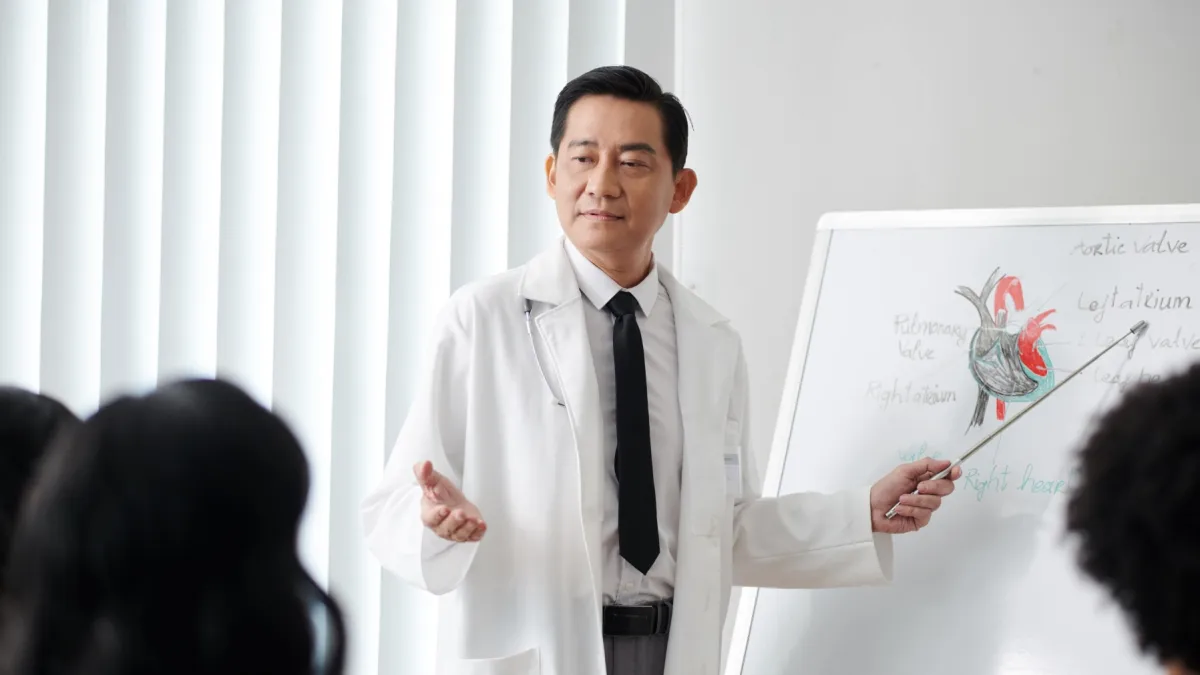
Hong Kong’s new doctors program allows physicians to divide their time between patient care, teaching, and research. The initiative aims to tackle future staff shortages and encourage medical innovation.
Health Secretary Lo Chung-mau said the program will help hospitals link clinical work with academic development. “A doctor’s clinical work is inextricably linked with teaching and research. More clinical experiences can also be translated into new studies,” he said in a statement.
The dual-track program, announced late last year, is supported by public health research funding. Some funds are set aside for infectious disease studies. Doctors in the program will have protected time for academic work at the University of Hong Kong or the Chinese University of Hong Kong, while still handling patients in public hospitals.
Experts say the program could strengthen Hong Kong’s medical workforce over time but warn it may strain resources in the short term. The government estimates the city could face a shortage of over 1,500 doctors by 2030.
Shin Thant Aung, director at consultancy YCP Solidiance, noted that doctors will spend at least 30% of their time on teaching and research. This means they will spend less time treating patients. He also said hospitals need to plan for higher salaries and extra administrative costs during the early stages before research grants and overseas recruitment ease financial pressure.
To limit disruption, the Hospital Authority will introduce the program gradually instead of enrolling all eligible doctors at once. “Scaling up will require a balance between clinical service and academic commitment,” Aung said.
Dicky Chow, head of healthcare and social innovation at Our Hong Kong Foundation, said hospitals will need to adjust staffing and performance assessments once the dual-track model is in place. “They will need to move beyond focusing solely on patient outcomes,” he said. Hospitals could receive more funding if research projects are closely linked to operations. Chow also suggested creating dedicated administrative teams to support doctors and reviewing performance based on both clinical and academic contributions.
Chow highlighted the importance of revising medical education to include research training. Currently, students only gain research skills if they actively choose them. “A revised curriculum could better support this dual pathway,” he said.
Health Secretary Lo said the government will monitor the program’s rollout before deciding whether to expand it to other hospitals and medical specialties. “We will keep the measure under review,” he said.
Experts remain cautious about applying the dual-track model to other health professions. Aung said nurses’ heavy workloads may leave little room for research.
Still, Chow noted small-scale efforts already exist in nursing and allied health programs. “In the long term, there is potential for them to follow a dual track as well. By collaborating with universities, they could expand these opportunities,” he said.
