

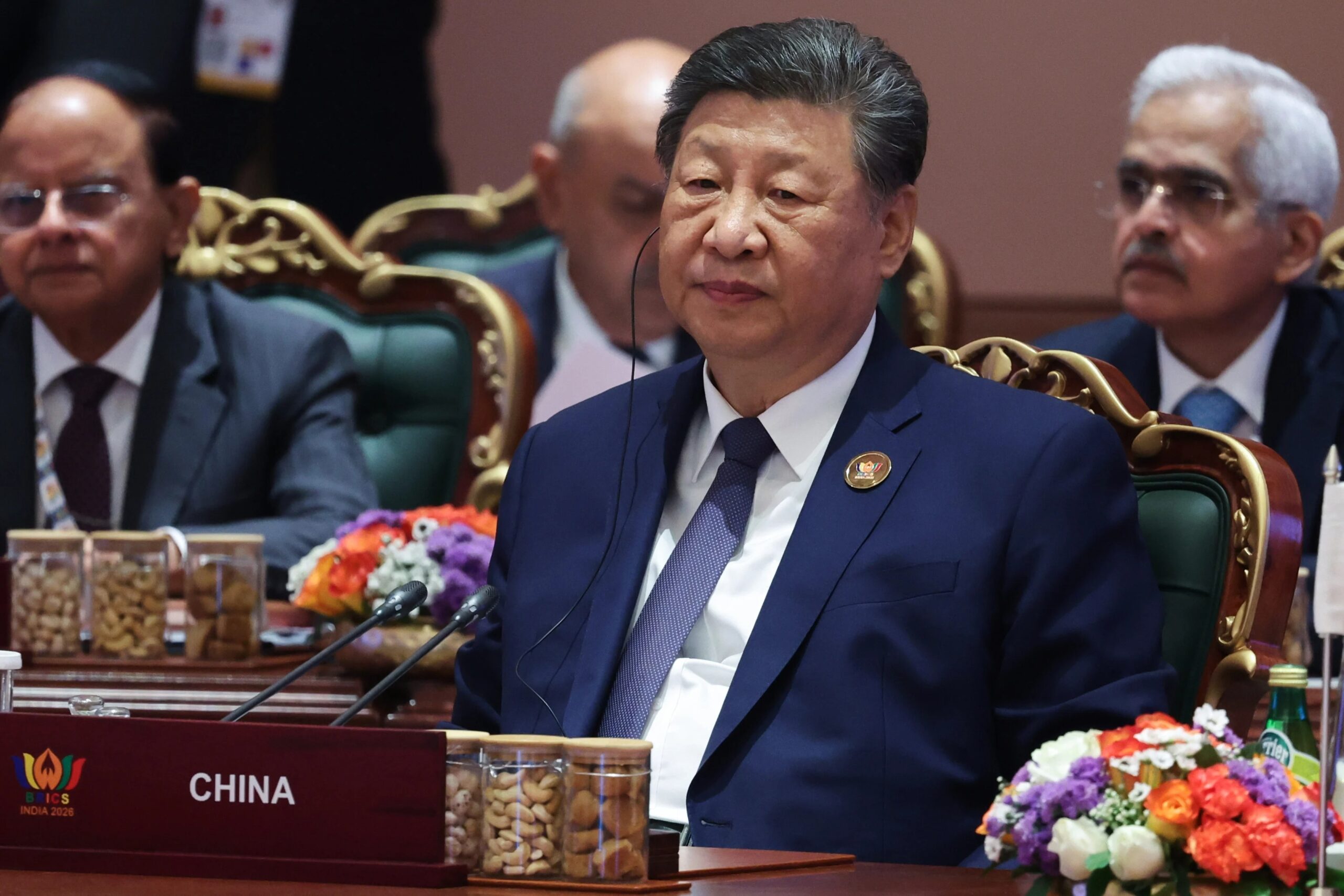
Chinese President Xi Jinping concluded his visit to India on Sunday with a proposal aimed at expanding technology cooperation among BRICS nations, placing artificial intelligence and advanced manufacturing at the center of future collaboration.
Xi’s remarks came at the close of the BRICS summit, where leaders spent two days discussing trade, economic development, and the growing role of emerging economies in global affairs.
The Chinese leader offered support for initiatives that would help member countries develop open-source artificial intelligence technologies and strengthen smart manufacturing capabilities.
His proposal reflected increasing interest among BRICS nations in building technological capacity and reducing dependence on systems dominated by a small number of countries.
At the same summit, Indian Prime Minister Narendra Modi emphasized the importance of keeping technology and critical resources accessible.
Modi warned against using technology or critical minerals as economic weapons. He argued that such practices could create instability in global markets and increase tensions between nations.
His comments highlighted concerns shared by many developing countries about access to advanced technologies and strategic resources that are essential for economic growth.
The exchange between Xi and Modi captured one of the key themes of this year’s summit.
While BRICS leaders presented a largely united position on several international economic issues, differences remained on how to address challenges linked to technology, trade, and supply chains.
During the gathering, member nations expressed opposition to tariffs, sanctions, and economic measures that they believe restrict development and limit international cooperation.
Leaders used a joint declaration to call for a more balanced global economic system and greater representation for developing countries in international institutions.
The summit also demonstrated the growing influence of BRICS on the global stage.
Representatives from major financial and development institutions participated in discussions alongside leaders from emerging economies. The meetings reflected efforts by BRICS members to strengthen cooperation and increase their collective voice in international decision-making.
Observers noted that the summit presented a picture of unity on several major issues.
Member states largely agreed on the need to support multilateral cooperation, improve trade opportunities, and encourage economic development across the Global South.
There was also broad support for reforms that would give developing countries a greater role in shaping global economic policies.
However, discussions surrounding technology and critical minerals revealed important differences among participants.
Many countries see access to advanced technology as essential for future competitiveness. At the same time, critical minerals such as lithium, cobalt, and rare earth elements have become increasingly important because of their role in batteries, electronics, and clean energy technologies.
As demand for these resources grows, governments are paying closer attention to supply chains and resource security.
Experts said these issues exposed the limits of BRICS unity.
While member nations often share concerns about global economic structures, they also have different national priorities and strategic interests.
Some countries are major producers of critical minerals, while others are large consumers. Similarly, technological capabilities vary widely across the group.
These differences can make it difficult to reach common positions on policies involving technology development, resource management, and industrial strategy.
Even so, analysts said the summit demonstrated that BRICS remains an important platform for dialogue among major emerging economies.
The discussions showed a willingness among members to explore new areas of cooperation, particularly in sectors expected to shape future economic growth.
Xi’s proposal on open-source artificial intelligence and smart manufacturing reflected China’s interest in expanding technological partnerships within the bloc.
Meanwhile, Modi’s remarks underscored concerns about ensuring fair access to technologies and resources needed for development.
Together, their comments highlighted both the opportunities and challenges facing BRICS as it seeks to strengthen cooperation among its members.
As global competition over technology and strategic resources continues to intensify, these issues are likely to remain central to future BRICS discussions.
The summit ended with leaders presenting a message of cooperation and shared economic goals, while also acknowledging the complex realities surrounding technology, minerals, and long-term development in a rapidly changing global economy.
