

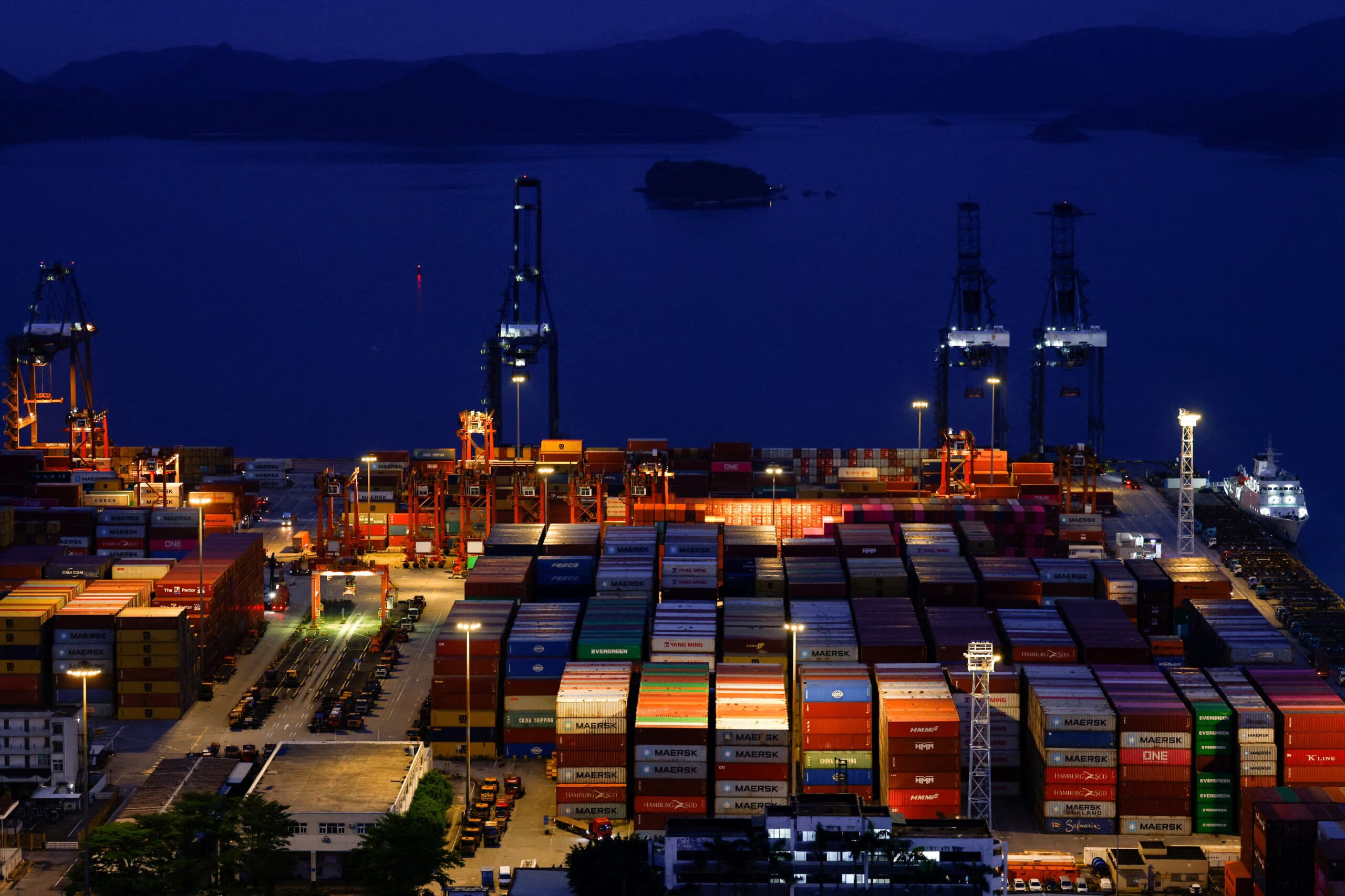
China is expanding its network of automated ports as it seeks a stronger position in global shipping and trade. The country is investing in driverless vehicles, remote-controlled cranes and artificial intelligence systems to modernise port operations. However, the growing reach of Chinese technology is raising security concerns among Western governments and industry experts.
The Mawan Terminal in Shenzhen offers a view of this strategy. Its operations use driverless trucks, remote-controlled cranes and AI-powered systems to move goods. The port is one of many automated facilities that Beijing hopes will help Chinese companies gain an advantage in the global shipping industry.
More than 80% of goods traded worldwide by volume move through maritime transport. This makes ports a key part of the global economy. China wants to use its technology to improve the speed and efficiency of cargo handling while building a larger role in international trade networks.
The issue is expected to draw attention when world leaders gather in Shenzhen for the Asia-Pacific Economic Cooperation summit on November 18 and 19. China has proposed leading working groups on electronic bills of lading and customs databases that use AI and big data.
Electronic bills of lading are digital versions of documents traditionally used as receipts for goods transported by sea. Their wider use could reduce paperwork and make trade processes faster.
China’s transport ministry has argued that countries which complete their digital transformation first will gain an advantage in future competition over ports and shipping. Beijing presents its smart-port plans as a way to help countries increase trade and improve efficiency.
However, some Western officials and analysts are concerned about the risks of relying on Chinese technology. They fear that China’s growing role in port systems could give Beijing greater influence over international supply chains.
Isaac Kardon, an expert on China’s maritime strategy at the Institute for Defense Analyses, said dependence on Chinese systems could create serious strategic problems. He warned that Beijing could gain strong positions in technologies that may be used for economic pressure.
There are also concerns about possible security weaknesses. Analysts fear that hidden access points in port software could allow sensitive information to be collected or trade networks to be disrupted during a crisis. These are concerns raised by experts, not proof that Chinese systems have been used for such purposes.
China says it is already ahead in port automation. According to its transport ministry, the country has 60 automated terminals, more than any other nation. Beijing aims to increase that number to 90 by 2030.
One of its leading facilities is the New Qianwan Container Terminal in Qingdao. China’s transport ministry describes it as the world’s first fully automated terminal. The port says each crane can handle 61 containers per hour, more than twice the rate of conventional docks.
The United States has moved more slowly. Labour unions have raised concerns that automation could reduce jobs and weaken workers’ bargaining power. A 2024 report by the US Government Accountability Office found that the country’s 10 largest ports were less automated than major foreign competitors.
Kyle Chan, a fellow in Chinese technology at the Brookings Institution, said the limited influence of independent labour unions in China had helped the country automate ports more quickly.
China’s domestic network also gives its companies a large testing ground for technology that can be sold overseas. Firms such as Westwell, which makes self-driving trucks, and Huawei are developing systems for international customers.
Westwell’s driverless trucks are already operating at Felixstowe, Britain’s busiest container port. The example shows how Chinese port technology is moving beyond the domestic market.
Beijing is also using its Belt and Road approach to build relationships with developing countries. It offers financing and equipment to ports that want to improve their operations and strengthen trade links with China.
A March report by AidData, a research centre at William & Mary university, found that China had provided about $4.8 billion in financing for port equipment at 69 ports across 47 countries since 2000. This comes in addition to around $15.5 billion spent on building foreign ports or acquiring stakes in them.
Despite its progress in hardware, China has faced more difficulty persuading overseas ports to adopt its software. One example is LOGINK, a Chinese-backed shipping data platform that raised concerns in Washington over access to sensitive cargo information. Reuters reported last month that the platform had quietly collapsed.
China has also struggled to challenge foreign firms in the terminal operating system market. These systems manage daily port activity, including cargo unloading, vehicle movements and customs processing.
China’s transport ministry has described foreign control of this software market as a major problem for the domestic industry. It has called for greater use of Chinese systems to reduce costs and reliance on overseas suppliers.
There are signs of progress. China Merchants Port, a state-backed operator, said in a 2025 filing that it had installed its own terminal operating system at Brazil’s Paranagua port. The company has also introduced the system at terminals in Sri Lanka, Greece, Italy and Turkey.
Consultant Wolfgang Lehmacher, a former World Economic Forum supply chain executive, said China’s long-term investments could gradually create a wider network of influence over global supply chains.
As China expands its smart-port technology, countries will face a choice between the potential benefits of faster trade and the security risks linked to dependence on foreign systems. The outcome could shape the future of international shipping and the balance of influence over global trade.
