

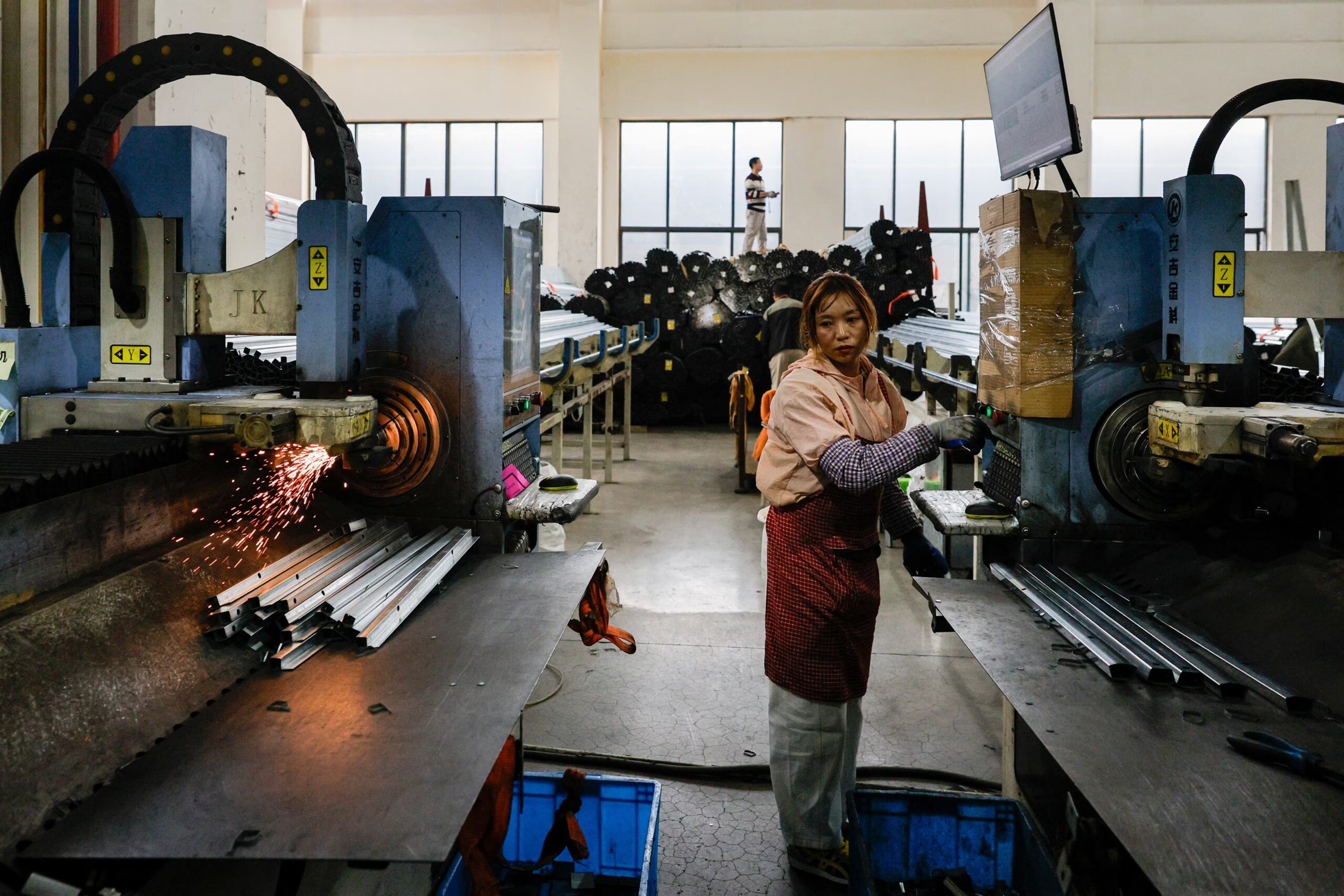
China’s producer inflation rose to its highest level in nearly four and a half years in October. However, consumer inflation slowed during the same month. The latest data show that higher global oil prices are raising costs for Chinese businesses, while weak domestic demand continues to limit price growth.
The producer price index (PPI), which tracks the prices factories receive for their goods, rose 5.7% from a year earlier in October. This was faster than the 5% increase recorded in September. It also exceeded the 5.3% rise expected by economists in a market survey.
In contrast, China’s consumer price index (CPI) rose by 0.7% year on year. This was down from 0.9% in September and slightly below the 0.8% forecast by economists.
On a monthly basis, consumer prices remained unchanged in October. This followed a 0.2% increase in September. The figures point to a gap between rising costs for producers and weak price growth at the consumer level.
Higher oil prices were a key factor behind the rise in producer inflation. Global oil prices stayed high during much of October. This increased costs for coal miners, oil and gas producers, chemical firms and other industries that use large amounts of energy.
These higher costs have pushed up prices across parts of China’s industrial sector. However, businesses have not been able to pass all the extra costs on to consumers. Weak demand has made it harder for companies to raise prices without affecting sales.
China’s economy grew faster than expected in the third quarter of 2026. Strong exports helped support growth during the period. Yet household spending remains weak, creating pressure on businesses that depend on domestic buyers.
Trade tensions and uncertainty in the global economy are also creating risks for China’s export sector. Although overseas sales have remained strong, new trade barriers and changes in global demand could affect future shipments.
An official from China’s state planning agency warned last month that external shocks were having a greater impact on the economy. The official also pointed to a lasting gap between strong supply and weak domestic demand.
This imbalance remains a major concern for policymakers. Chinese factories continue to produce large volumes of goods, but households are not spending enough to support a stronger recovery in prices.
Core inflation also showed signs of easing. This measure excludes food and energy prices to give a clearer view of underlying price trends. It fell to 0.8% in October from 1% in September.
The decline suggests that wider price pressure across the economy remains limited. While higher energy costs are pushing producer prices up, other parts of the economy continue to face weak demand.
China’s stock market has added to these concerns. Shares linked to artificial intelligence have fallen from high valuations in recent weeks. Investors have become more cautious about future AI demand and the impact of export restrictions targeting China.
The fall in technology shares could also affect household confidence. When investors lose money in the stock market, they may become less willing to spend on homes, goods and other services.
Currency movements are another challenge for Chinese businesses. The yuan has gained in value, creating pressure for exporters. A stronger currency can make Chinese goods more costly for overseas buyers and reduce profit margins for companies selling abroad.
China has taken steps to limit the yuan’s rapid rise. It has also introduced measures to support its capital market. However, these actions have yet to create a clear improvement in consumer confidence.
The latest inflation figures highlight the different pressures facing China’s economy. Higher energy costs are pushing up prices for industrial producers, while households remain careful with their spending.
For businesses, the challenge is to manage rising production costs without losing customers. For policymakers, the task is to support domestic demand while keeping industrial costs under control.
China’s strong export performance has helped support economic growth, but the domestic market remains a weak point. Unless household spending improves, businesses may continue to face difficulty passing higher costs on to consumers.
The October data therefore show an uneven recovery. Producer prices are rising at a faster pace, but consumer inflation remains low. The coming months will show whether stronger demand can help close this gap and support more balanced growth.
