

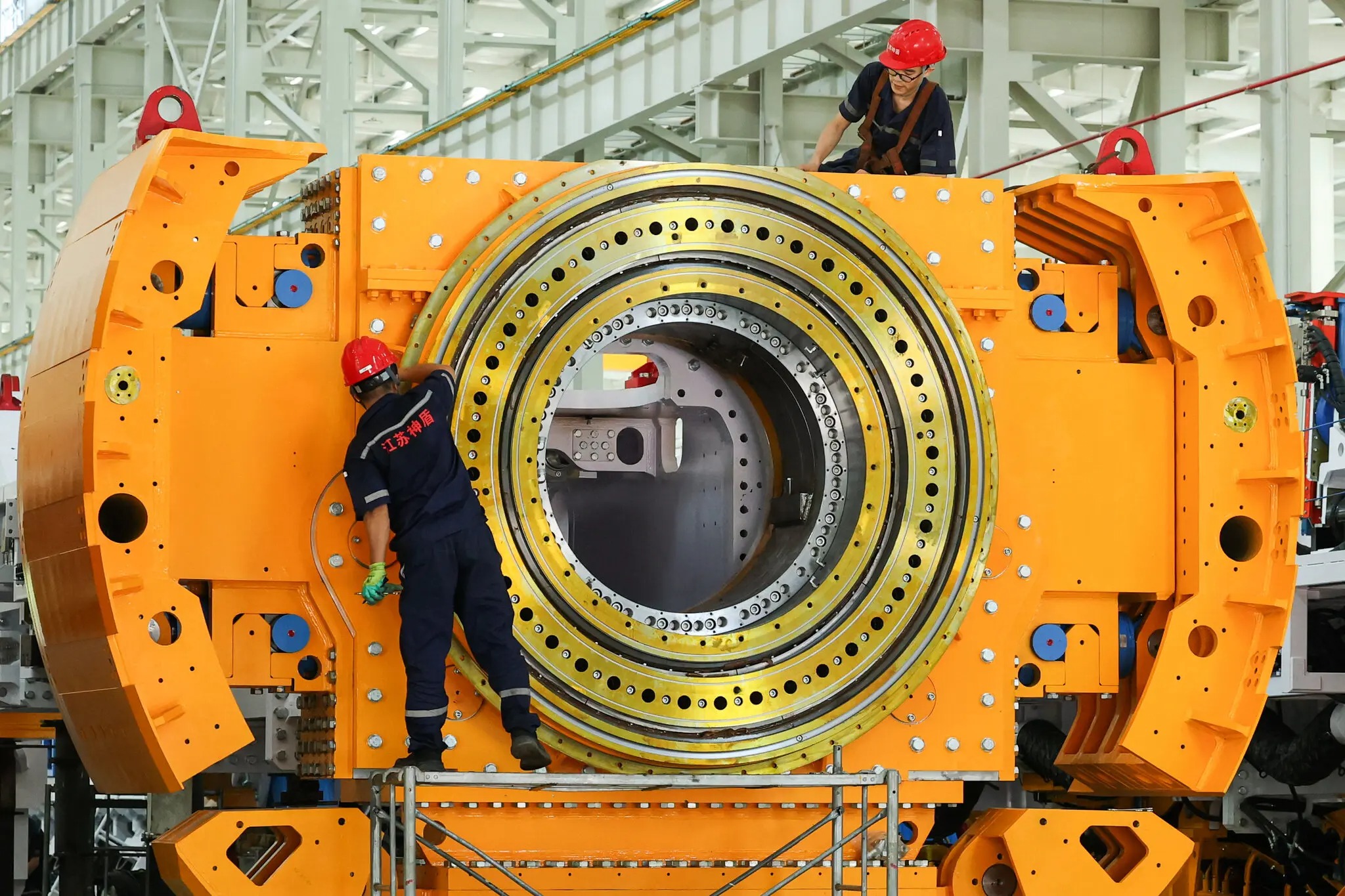
China is increasing its control over key technologies as it seeks to strengthen its position in the global economy. The move could affect industries across the world. It may also make other countries more dependent on Chinese factories and research centers.
One major example is tunnel-boring machines. These huge steel machines can be as long as a football field. They use large rotating cutting discs to break through rock and create tunnels for roads and railways. Only a small number of companies make them, and most of these firms operate factories in China.
India depends on these machines for major construction projects. It uses them to build tunnels in several areas, including the Himalayas. These tunnels help India move troops and supplies closer to its disputed border with China. However, new Chinese export rules could give Beijing greater control over India’s access to this equipment from next month.
The planned limits are part of a wider effort by China to control the flow of important technology to foreign markets. Over the past month, Beijing has taken steps to restrict exports in several sectors. These include drones, artificial intelligence models, AI agents and certain methods used to develop advanced medicines and produce solar panels.
The new rules could have a major effect on global industries. Companies in the United States and other countries may find it harder to build factories that produce solar energy equipment. Many of the tools and production methods they need are linked to Chinese technology.
Access to advanced AI could also become more difficult. Foreign businesses and research groups may face new limits when trying to use China’s latest and most powerful AI models. This could slow the growth of companies that depend on these systems.
China’s approach reflects a clear industrial goal. Beijing wants the world to keep relying on Chinese factories, research and technical skills. This plan comes at a time when many governments are trying to reduce their dependence on China.
The United States has raised concerns about China’s control over rare earth minerals. These materials are vital for many products, including electric vehicles, wind turbines and modern electronics. Washington has started efforts to rebuild its own mining and processing industry.
European countries and Japan are also trying to improve their ability to produce medicines. Many rely on China for antibiotics and the active ingredients used in drugs. Their governments want to reduce this dependence and protect their supply chains.
India is facing a similar challenge. The country’s transport minister has called on local companies to develop and produce tunnel-boring machines at home. This would help India reduce its reliance on Chinese suppliers for important construction equipment.
For Chinese President Xi Jinping, the latest export measures are part of a plan that began several years ago. The COVID-19 pandemic showed how much China depended on foreign suppliers for some advanced medical equipment. These included ventilators, life-support systems, raw materials and special industrial parts.
The crisis pushed Beijing to rethink its industrial strategy. Xi called for China to develop what he described as “trump card” technologies. These would give the country a strong position in key industries such as high-speed rail, renewable energy and telecommunications.
The aim is to make China more self-reliant. At the same time, Beijing wants other countries to depend on Chinese products and technology. This could give China more influence in international trade and political disputes.
Xi has often described China’s relationship with Western countries as a long struggle. He believes some Western governments are trying to limit China’s rise as a global power. Chinese leaders also want to make sure that foreign governments cannot easily block China’s access to important goods and advanced technology.
Kirsten Asdal, a founder of Asdal Advisory, a consultancy focused on Chinese politics, said Beijing also needs influence over other countries. China wants continued access to foreign customers and advanced products, including jet engines and high-end computer chips.
She said China’s ruling Communist Party sees itself as facing a long-term challenge from the West. In her view, Chinese leaders are preparing for possible conflict when they believe the country has the ability and opportunity to respond.
Inside China, the government has also presented its push for industrial strength as a fight for national survival. The Communist Party has used stories from its revolutionary past to build public support for this goal.
In recent days, party leaders have repeatedly referred to the Long March. It was a major retreat by the Red Army that covered about 6,000 miles. The event helped secure Mao Zedong’s leadership and later became a central part of the party’s history.
By recalling the Long March, the government may be seeking to encourage people to remain patient during a difficult period. China is facing slower economic growth, a long-running housing crisis and rising tensions with foreign governments.
The latest export controls show that Beijing is prepared to use its industrial strength as a source of global influence. As China expands these restrictions, countries that rely on its technology may face growing pressure to develop their own production systems.
