

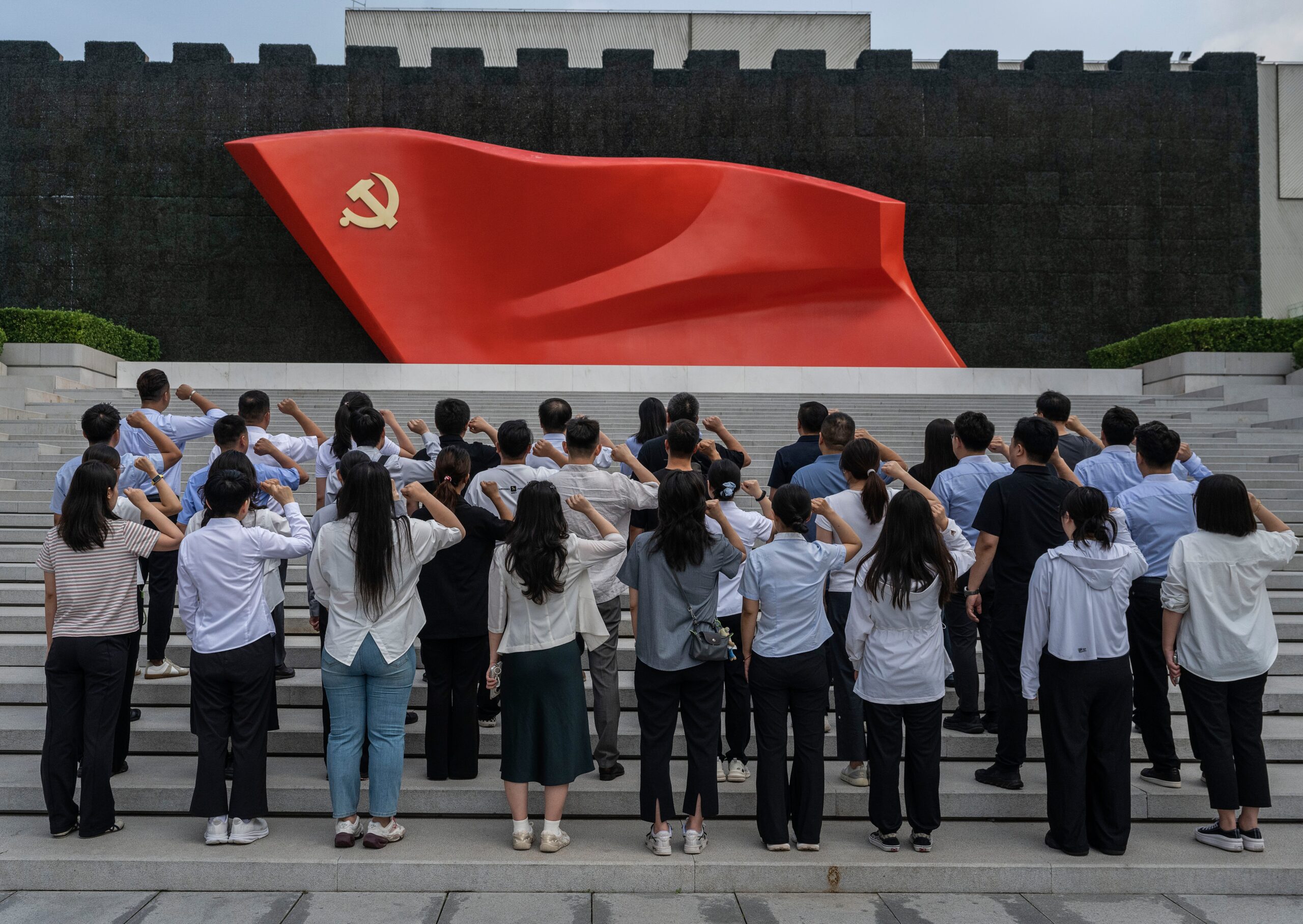
China’s anti corruption campaign continues under President Xi Jinping, more than a decade after he promised to root out corruption across the ruling Communist Party. The drive has led to millions of officials and other people facing scrutiny, while party loyalty remains a major focus of the government.
Chinese disciplinary authorities opened investigations into more than one million people last year. The cases included more than 100 officials at or above the ministerial or provincial level. The figures show that the campaign remains a key part of Xi’s rule.
Senior Communist Party officials began an important meeting on Monday, with discipline and political loyalty high on the agenda. The gathering, known as the fifth plenum, is expected to focus on strengthening the party’s control over its own members and enforcing strict rules.
Chinese state media said the meeting would discuss major issues linked to the party’s full and strict self-governance. In the language of the Communist Party, this idea covers discipline, loyalty and efforts to prevent corruption.
The campaign has raised questions about how China defines corruption and how investigations are used. In many cases, investigations lead to convictions or other punishments. This has led some observers to ask whether all targets are guilty of financial wrongdoing or whether political disputes can also play a role.
Kerry Brown, director of the Lau China Institute at King’s College London, said Xi’s view of corruption is closely tied to political loyalty. Brown explained that the two ideas can overlap in the party’s system.
He said corruption was not limited to money or personal gain. It could also include what the party sees as political or moral failure. Under this approach, officials who do not show sufficient loyalty may face scrutiny alongside those accused of taking bribes or abusing their positions.
Xi launched his campaign after taking power in 2012. He promised to tackle corruption at every level of the Communist Party, from senior leaders to local officials. The campaign has since become one of the defining parts of his leadership.
Supporters say the drive has helped punish officials who abuse public office and has made party members more careful about following rules. The campaign has also strengthened central control over a large political system that governs a population of about 1.4 billion people.
However, analysts say corruption is difficult to remove from a system with a large bureaucracy and strong central control. Officials often have wide responsibilities and must manage local interests while following orders from senior leaders. These conditions can create opportunities for personal gain and misuse of power.
Neil Thomas, a senior fellow at the Asia Society, said Xi had made the party less corrupt while also strengthening his own control. But Thomas noted that tougher punishments alone cannot fully solve the problem of officials placing personal interests ahead of the party.
The challenge is especially difficult because corruption can take many forms. It may involve bribes, misuse of public funds, favouritism or the use of official power to benefit private interests. Political leaders may also view disobedience or resistance to party policy as a form of misconduct.
This creates a complex relationship between anti-corruption work and political discipline. Investigations can expose genuine abuses, but the close link between loyalty and discipline also raises questions about how decisions are made and whether all officials are treated equally.
The fifth plenum comes as Xi continues to place party discipline at the centre of governance. The meeting’s focus suggests that senior leaders want to keep internal rules and loyalty in the spotlight rather than treat the anti-corruption drive as a short-term effort.
The scale of the campaign also reflects the difficulty of governing a vast country through a single ruling party. Even with strict rules and regular investigations, local officials may have reasons to protect their own interests or those of people close to them.
Analysts argue that lasting change requires more than punishment. Clear rules, effective oversight and systems that limit opportunities for abuse can also affect how officials behave. Without broader changes, investigations may continue without fully removing the conditions that allow corruption to occur.
At the same time, the campaign has become a way for Xi to reinforce the party’s authority. Officials face pressure to follow central decisions and show that their actions support the leadership’s goals.
The meeting is therefore about more than financial misconduct. It also reflects the Communist Party’s wider effort to control its members and maintain unity under Xi. How the party defines discipline will continue to shape the work of officials across China.
More than a decade after the campaign began, investigations remain widespread. The latest figures show that anti-corruption enforcement is still active, while debate continues over how closely it is linked to political loyalty and central control.
