

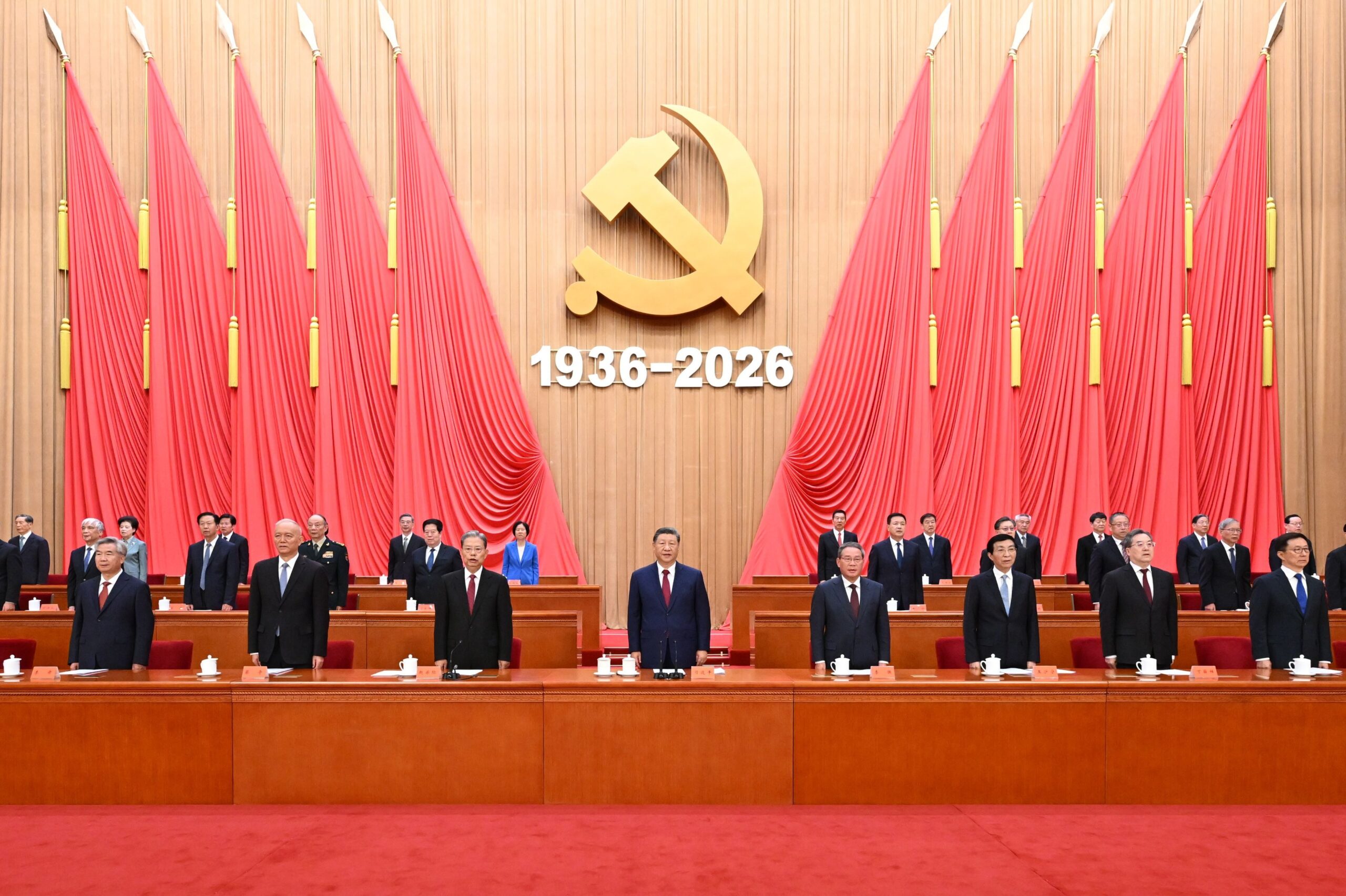
China’s President Xi Jinping is tightening his grip on the ruling Communist party as a major meeting puts discipline and loyalty at the center of its agenda. More than a decade after he promised to root out corruption, investigations continue across the country’s political system.
China’s disciplinary bodies opened cases against more than one million people last year. More than 100 of those investigated held positions at ministerial or provincial level, showing that senior officials remain targets of the campaign.
The latest meeting, known as the fifth plenum, began on Monday. It is expected to focus on strict party rule and the need to strengthen internal discipline.
Chinese state media described the main topic as advancing the party’s full and rigorous self-governance. In the language of the Communist party, this means enforcing loyalty, fighting corruption and keeping officials under close control.
The meeting comes as analysts debate whether the long-running campaign is mainly about stopping abuse of power or also about removing people who may threaten Xi’s authority.
Loyalty and Corruption Linked
Under Xi, the fight against corruption has become a central part of how China is governed. Yet the near certainty of punishment after an investigation has raised questions about how the system works.
Some observers ask whether officials are always targeted for clear evidence of corruption or whether political rivalry can also play a role.
Kerry Brown, director of the Lau China Institute at King’s College London, said Xi sees corruption and political disloyalty as closely linked.
In Xi’s view, Brown explained, an official who is corrupt cannot be fully loyal to the party. At the same time, a loyal official should not be corrupt.
Brown added that corruption means more than taking money or using public office for personal gain. It can also include what the party sees as a lack of political commitment.
This approach gives the leadership wide power to judge whether an official has failed to meet its standards.
Neil Thomas, a senior fellow at the Asia Society, said Xi has reduced some forms of corruption while strengthening his own control over the party.
However, Thomas warned that harsh punishment cannot fully stop officials from putting personal interests ahead of the ruling party. China’s large bureaucracy and strict top-down system make the problem difficult to remove.
Xi’s answer, Thomas said, has been to tighten discipline further and turn the anti-corruption drive into a lasting part of government. There is no clear point at which the leadership can declare the campaign complete.
Key Meeting Before Party Congress
The fifth plenum is one of seven meetings that usually take place during a five-year cycle between Communist party congresses. It brings together more than 300 members of the party’s Central Committee, which includes some of China’s most senior officials.
This gathering carries added weight because it is expected to be the last major meeting before next year’s 21st Party Congress.
At that congress, a new Central Committee will be selected. Xi is widely expected to secure a fourth term as the party’s leader, extending his rule over the world’s second-largest economy.
Keeping the party united is a key goal for Xi as the leadership prepares for that event. Officials who threaten his authority or damage the party’s public standing may face investigation.
Xi has long warned that the Communist party could lose power if it failed to control corruption and put its own house in order. He has said the party could be swept away by history if it did not address the problem.
Nearly 15 years after he took office, the latest investigations suggest that the campaign remains a major part of his political vision.
Military Purges Raise Questions
The focus on discipline comes amid a series of investigations involving senior political and military figures.
In January, Zhang Youxia, China’s top general and one of the most powerful figures in the military, was placed under investigation. He was later expelled from the party and removed from the Central Military Commission, the body that oversees the armed forces.
A wider series of purges has sharply reduced the commission’s membership. It normally has seven members but now has only two: Xi and Zhang Shengmin, who oversees discipline.
Other senior figures who have faced scrutiny include Ma Xingrui, the former party secretary of Xinjiang, and Huang Qifan, the former mayor of Chongqing.
Huang had long been seen as a political survivor because he remained in office through earlier scandals involving Bo Xilai, a former Chongqing party chief and rival of Xi.
Bo was convicted of bribery and embezzlement after a scandal linked to the death of British businessman Neil Heywood. He is serving a life sentence. Huang survived that period, but has now become another high-profile figure caught up in the latest wave of action.
Campaign Seen as Tool of Control
The scale of the recent purges has led some China analysts to question whether the party is facing internal instability. Investigations reaching the highest levels of government and the military could suggest deep problems within the leadership.
Xi’s approach, however, may be different. The investigations allow him to show that no official is beyond the reach of party discipline.
Brown said anti-corruption cases are also a direct way to enforce unity. They give the leadership a tool to remove officials and remind others of the need to follow party rules.
The campaign may therefore serve two purposes: limiting corruption and strengthening Xi’s political position.
For China’s leadership, the challenge is to ensure that officials follow party rules without allowing personal interests to take priority. But as investigations continue, the line between fighting corruption and enforcing political loyalty remains a central question.
With the next party congress approaching, discipline is likely to remain high on Xi’s agenda. The latest meeting shows that the campaign is not close to ending and will continue to shape China’s political system.
