

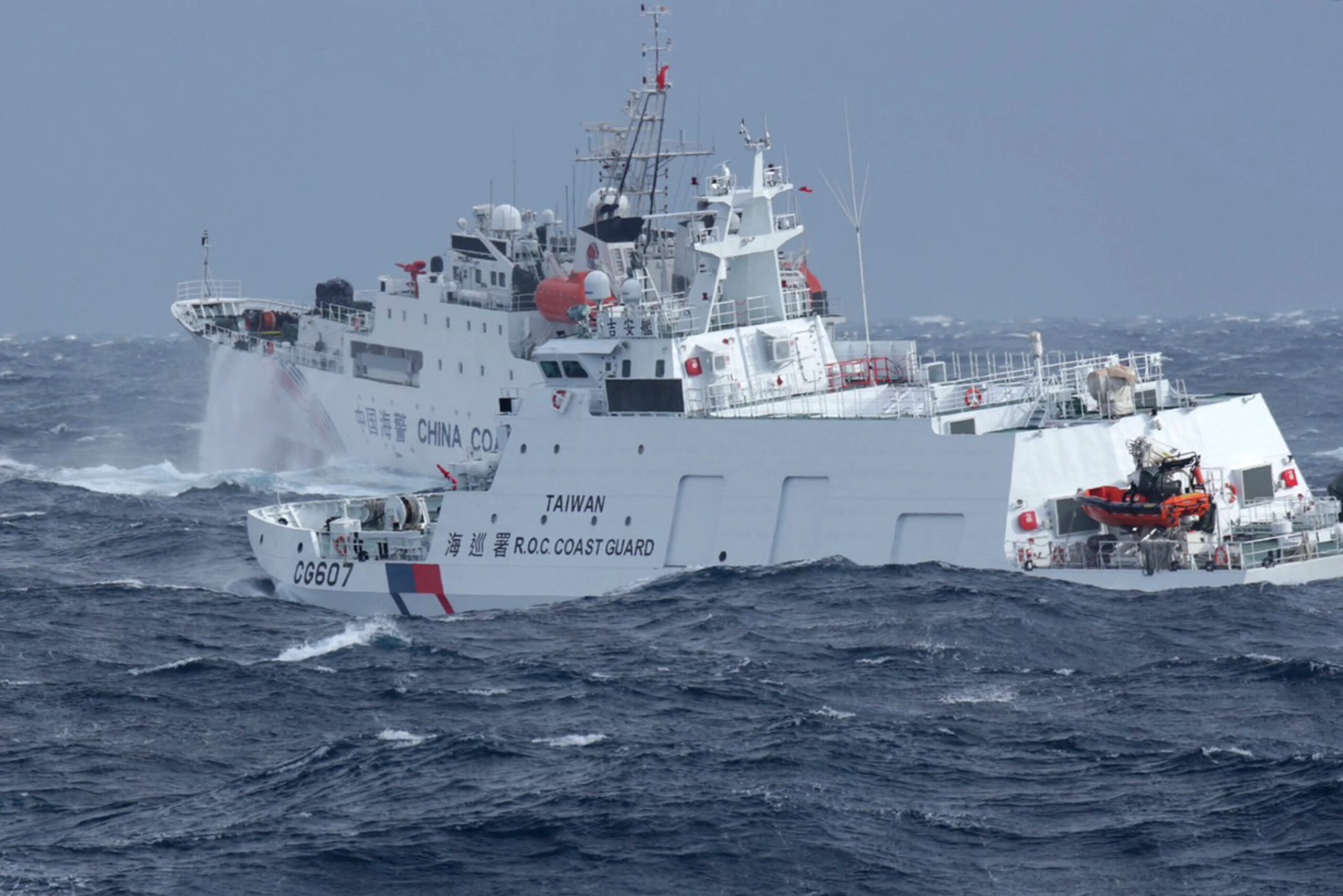
China said on Wednesday, October 21, that its coast guard was working to maintain order around the Pratas Islands, an area controlled by Taiwan in the South China Sea. The statement came as tensions grew between Beijing and Taipei over patrols near the islands and a dispute involving a Chinese fishing boat.
Chinese officials said Taiwan had used a water cannon against a Chinese fishing vessel near the atoll. Beijing criticised the action and warned that Taiwan could face consequences. China claims Taiwan as part of its territory, while Taiwan’s government says its future must be decided by its own people.
Taiwan has reported recent cases in which Chinese coast guard vessels approached the Pratas Islands. Officials in Taipei described the moves as provocative and said they were concerned about China’s growing activity in waters around Taiwan. The two sides offer different accounts of the situation, reflecting a long-running dispute over control and sovereignty.
The Pratas Islands lie more than 400 kilometres from Taiwan and have no permanent population. Their location makes them important in the wider security picture in the South China Sea. Although they are small and remote, their position means that activity around them can draw attention from both sides and raise questions about the balance of power in nearby waters.
China’s coast guard said its patrols were legal and aimed at protecting rights and safety. Taiwan’s officials, however, warned that Beijing was trying to assert greater control over surrounding waters and islands. The dispute shows how coast guard operations can become a tool in wider political and security contests, even when they are described as routine law enforcement.
Taiwan’s Mainland Affairs Council said China was becoming more aggressive in its efforts to establish a stronger presence around Taiwan. The concern is that repeated patrols could change the situation on the ground, or at sea, without a formal move to take control. Such actions may test how Taiwan responds and how other countries view the status of the area.
The issue comes at a time when regional governments are closely watching China’s military and maritime activity. Coast guard ships can be used for tasks such as patrols, search and rescue, and enforcing maritime rules. But when they operate in disputed areas, their presence can also carry a political message. The same movement may be described as lawful protection by one side and pressure by the other.
The dispute is part of a wider disagreement over Taiwan’s status. Beijing says Taiwan is part of China and has not ruled out using force to bring it under its control. Taiwan operates its own government and rejects Beijing’s claim to rule it. The disagreement has shaped regional security for decades and remains a concern for the United States and other countries with interests in the region.
Analysts have described the Pratas Islands as vulnerable because of their distance from Taiwan and their limited population. Their remote location may make it harder to respond quickly if a serious incident occurs. That does not mean conflict is certain, but it helps explain why patrols and encounters near the islands are being watched closely.
For now, both sides are presenting their actions as a defence of their rights. China says it is maintaining order, while Taiwan says China’s moves are provocative. The differing accounts make it important to separate confirmed events from claims made by officials. Further incidents could raise tensions, especially if ships come into close contact or either side takes a stronger step.
The latest dispute shows how small maritime encounters can carry wider meaning when they occur in a region with deep political divisions. The next steps by Beijing and Taipei will be important in deciding whether the situation stays at the level of patrols and statements or becomes a more serious confrontation. Regional governments will continue to watch the area as they assess the risk to stability and safe passage.
