

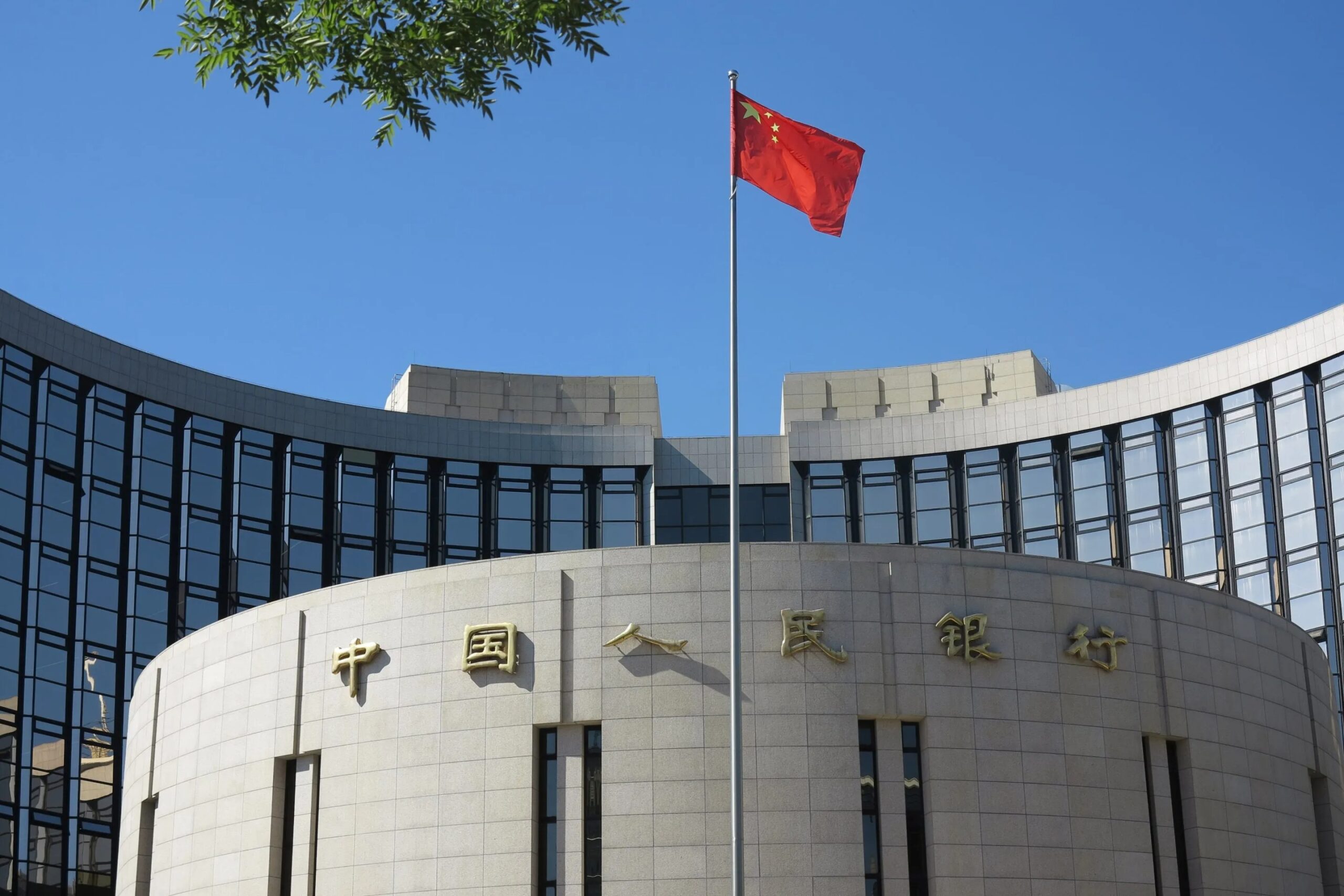
China’s reported holdings of US Treasury securities have fallen to their lowest level in 18 years, adding to questions about Beijing’s plans for its financial reserves and the future role of the US dollar.
US Treasury data released on Friday showed that China held $591 billion in Treasury securities in August. That was down from $700 billion a year earlier and far below the $1 trillion level recorded as recently as April 2022.
The decline has accelerated since around 2021. However, experts say the figures may not show the full picture of China’s investments in US government debt.
The US Treasury Department collects much of its data from US-based banks, custodians and securities dealers. It has warned that US assets held through overseas accounts may be recorded under the country where the account is held rather than the actual owner.
This creates uncertainty about whether China has sold large amounts of US debt or moved some of its holdings through financial institutions in other countries.
Some analysts have pointed to sharp increases in reported Treasury holdings in Canada and Belgium. These increases have occurred during the same period that China’s reported holdings have dropped.
Canada held $465 billion in US Treasury securities in August, compared with $169 billion in the same month five years earlier. Belgium’s holdings rose to $490.5 billion from $228 billion over the same period.
The increases have led some China watchers to question whether part of China’s US debt is now held through overseas custodians. If that is the case, the official data may not fully reflect the country’s exposure to US government securities.
Brad Setser, a senior fellow at the Council on Foreign Relations and a former US Treasury official, has highlighted the possibility that China uses Canadian custodians for some of its holdings in bonds issued by US government-backed housing agencies.
Setser pointed to the rise in Canada’s reported holdings and changes in detailed Treasury survey data. His comments added to discussion about whether the apparent decline in China’s investments is partly a result of changes in how those assets are held and reported.
The issue matters because China has been working to strengthen its position in global finance and reduce its reliance on the US dollar. Beijing has promoted the use of its own currency in international trade and has sought to expand alternative sources of financial influence.
US sanctions imposed on Russia after its full-scale invasion of Ukraine in 2022 also encouraged some central banks to review their dollar exposure. The restrictions showed how access to foreign reserves could be affected by geopolitical disputes.
China’s central bank and other monetary authorities have diversified some reserves into assets such as gold. The broader trend reflects efforts by some countries to reduce risks linked to holding large amounts of dollar-based assets.
Trade tensions between Washington and Beijing have added another reason for China to consider its financial exposure to the United States. President Donald Trump’s trade policies have increased pressure on Chinese exports and deepened concerns about the long-term economic relationship between the two countries.
Yet China continues to depend heavily on exports to support its economy. Domestic demand has remained weak amid problems in the property sector and the burden of debt, making overseas sales an important source of growth.
China recorded a trade surplus of about $1.2 trillion in 2025, a record level. The surplus grew much faster than global trade in goods, highlighting the scale of the country’s export strength despite tensions with major trading partners.
The trend has continued this year. China’s trade surplus reached $938 billion in the first nine months of 2026, according to reported figures. The total has increased expectations that the country could exceed last year’s record.
Large trade surpluses mean China receives substantial amounts of foreign currency from overseas buyers. Those funds must then be held, invested or used for payments abroad.
US Treasury securities have traditionally been a major destination for foreign reserves because of their large market and role in global finance. If China is reducing its direct holdings, it must decide where to place the money and how to balance safety, liquidity and political risk.
Moving investments through overseas custodians could help explain part of the decline shown in official US figures. However, the available data do not establish how much of the reported drop reflects actual sales and how much may result from changes in custody arrangements.
The distinction is important for financial markets and policymakers. A major reduction in China’s direct Treasury holdings could signal a shift in reserve strategy, while a change in custody could mean that the country still has greater exposure to US debt than official figures suggest.
For now, China’s reported Treasury holdings continue to fall, but the full scale of its investments remains uncertain. The figures highlight growing financial tensions between the two countries and the challenges of tracking global capital across a complex international banking system.
