

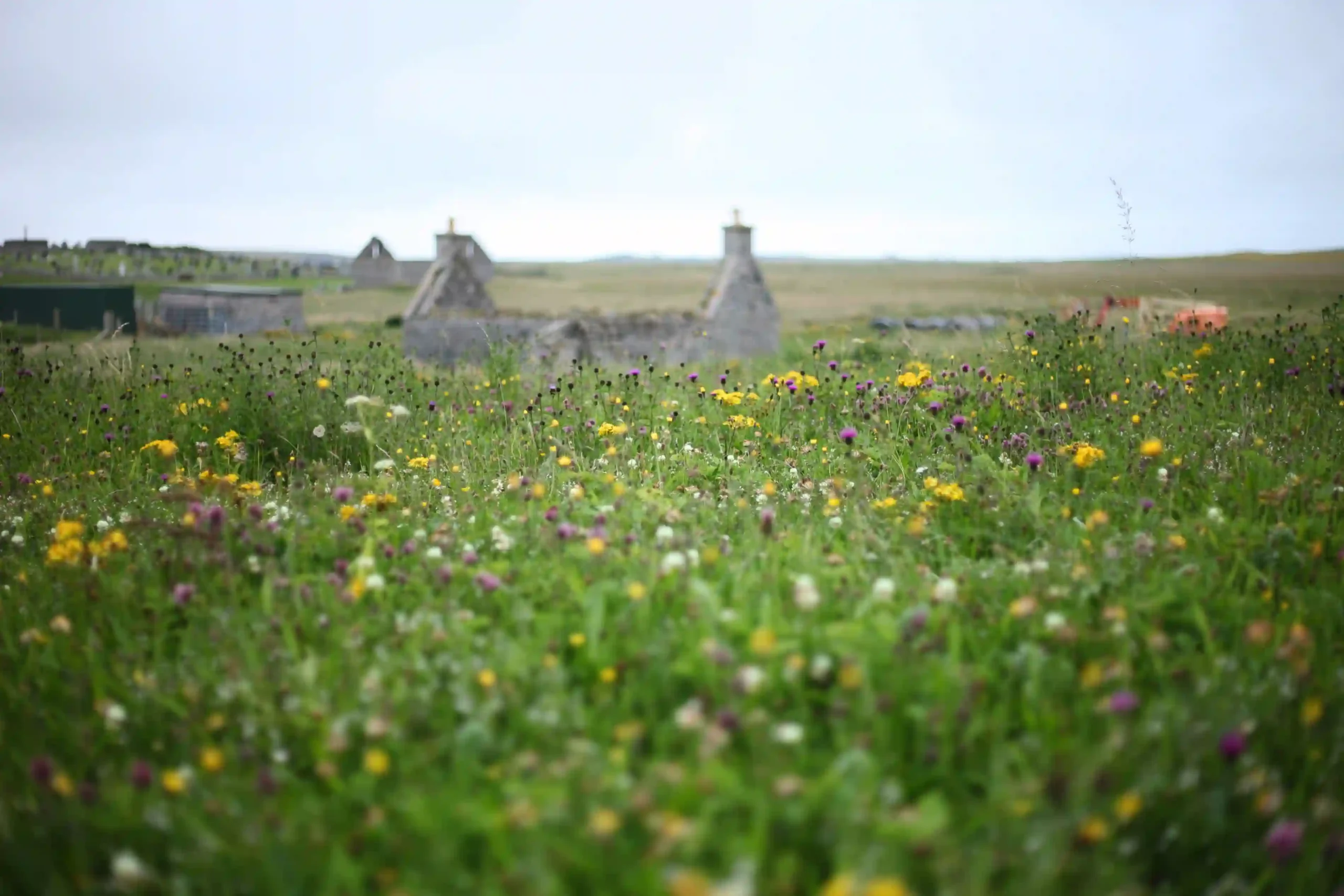
Scotland’s Outer Hebrides transform into a vibrant tapestry each summer as wildflowers erupt across the rare coastal grasslands known as machair. This unique habitat, shaped by ancient glaciers and strong Atlantic winds, is now celebrated as one of Europe’s most vital natural areas. It teems with biodiversity, supporting a diverse array of orchids, clover, and other rare plant species, alongside otters, seals, and countless seabirds. What appears simple from a distance reveals itself as a landscape brimming with intricate life and detail up close, playing a crucial role in global biodiversity.
Central to this ecological marvel is the traditional practice of crofting, especially prevalent on islands like Barra, Uist, and Harris. For centuries, crofters have cultivated the machair’s light, lime-rich soil, employing sustainable methods that work in harmony with nature. By grazing animals and using seaweed as a natural fertilizer, they maintain the soil’s fertility while simultaneously fostering an environment where both wildlife and plants thrive. This enduring tradition, now increasingly integrated with eco-tourism, allows families to sustain their livelihoods while preserving a cultural and ecological legacy. Visitors can experience this unique blend firsthand, exploring white sandy beaches, interacting with crofters, and witnessing the machair’s vivid bloom.
The immersive experience of traversing the islands, often by motorhome, offers unparalleled flexibility to explore hidden coves, historic villages, and nature reserves. Beyond the breathtaking floral displays and diverse wildlife, the journey highlights a profound commitment to sustainable living. Local food, from fresh seafood to baked goods, often found at small vans or honesty boxes, underscores the islanders’ resourceful and community-focused approach. The Outer Hebrides stand as a testament to how human activity, when deeply rooted in respect for the environment, can coexist with and even enhance natural beauty, offering visitors a deep appreciation for this wild, welcoming, and profoundly meaningful corner of Scotland.
