

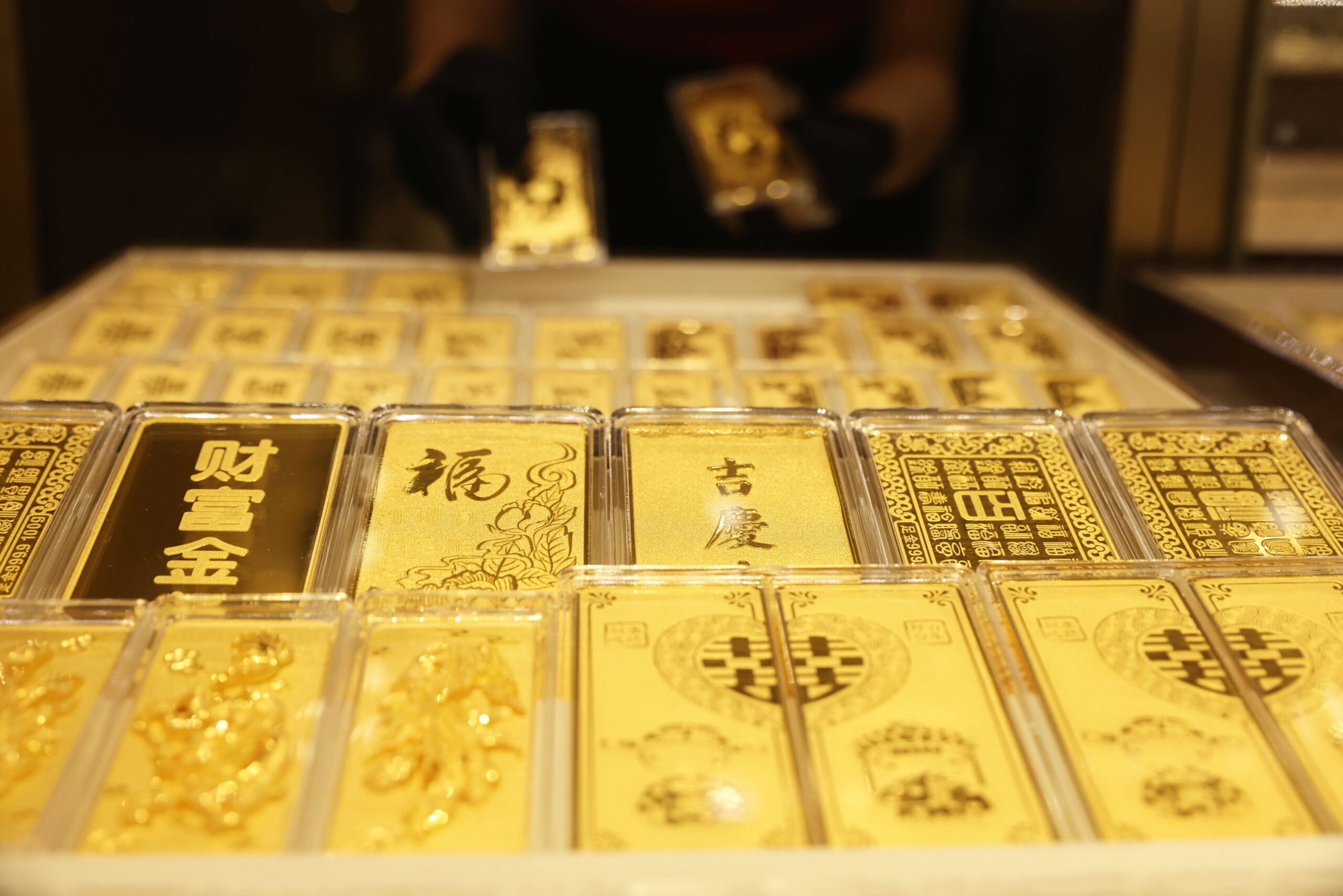
China is buying more gold as the central bank extends its long run of purchases. Households and businesses are also turning to the precious metal to protect their savings. The trend reflects concerns about the economy and Beijing’s goal of reducing its reliance on the US dollar.
The People’s Bank of China added about 23 tonnes of gold in September. This was its largest monthly purchase in almost three years. The move also extended its buying streak to 23 straight months, based on data from the country’s foreign exchange authority.
At the same time, China’s gold imports have reached new highs. The country spent $158.8 billion on more than 1,000 tonnes of gold in the first eight months of 2026. This was far above the $96.5 billion spent on 886 tonnes during all of 2025.
The figures show how demand is growing among both official buyers and private investors. Analysts expect the trend to continue as households look for ways to protect their wealth.
Gold Demand Rises Despite Lower Prices
China’s consumer gold imports reached a record level during the first eight months of this year, according to Aakash Doshi, head of gold strategy at State Street Investment Management.
Doshi said higher local gold prices compared with global prices point to stronger demand ahead of the winter season. These price differences, known as premiums, suggest that buyers in China are willing to pay more to secure gold.
The increase in demand comes even as global gold prices have fallen from their recent peak. Prices dropped by more than 8% in September to around $4,176 per ounce. Gold had reached a record above $5,500 per ounce in January.
Despite the recent decline, Doshi expects prices to recover. He forecasts gold could trade between $4,750 and $5,500 per troy ounce by the end of the first quarter of 2027. Strong demand is one factor behind that outlook.
However, future prices will depend on several factors, including interest rates, global risks and central bank purchases.
China Seeks Less Reliance on the Dollar
China’s central bank has a clear reason to keep adding gold to its reserves. Carsten Menke, an analyst at Julius Baer Group, said the main motive is political and linked to the risks of depending on the US dollar.
Western governments froze Russian central bank assets after Russia invaded Ukraine in 2022. That action showed how foreign reserves can face limits during periods of conflict.
Gold held inside a country’s own vaults carries a different risk profile. It does not depend on another government allowing access to assets held in its financial system.
China has also reduced its holdings of US Treasury debt. Those holdings fell to an 18-year low of $618 billion in July, according to US Treasury data. The move forms part of Beijing’s wider effort to spread its foreign reserves across different assets.
Gold offers one way to reduce exposure to the dollar. Yet it does not produce interest income, and its market price can change sharply.
Households Look for Safer Places to Save
Private demand is also helping drive China’s gold purchases. Many households are facing limited options as the economy struggles and returns from other investments remain weak.
China’s property market, once a major source of household wealth, has suffered a prolonged downturn. This has reduced confidence in a sector that many families once viewed as a safe place to invest.
Stock market returns have also been under pressure. The CSI 300 index has fallen about 8% this year, while the US S&P 500 has gained around 13% over the same period.
Savings accounts and bonds offer less income than before. China’s one-year government bond yield has dropped to about 1.2%. The comparable US yield stands near 4.46%.
Ole Hansen, head of commodity strategy at Saxo Bank, said the cost of holding gold is lower in China than in many Western markets. Low returns on other assets can make gold more attractive, even though it does not pay interest.
Consumers are buying gold jewelry, bars and coins as they seek to protect their savings from uncertainty.
Beijing Builds Its Domestic Gold Market
China is also working to develop a deeper domestic gold market. Menke said this effort may be adding to the central bank’s need to rebuild its gold inventories.
He estimated that China’s central bank had bought around 190 tonnes of gold by the end of August. That total included about 110 tonnes of purchases that had not been officially reported.
The estimate suggests that China’s actual buying may be higher than public figures show. Still, unreported purchases are difficult to measure, and estimates may differ.
China’s gold strategy now serves several purposes. It supports reserve diversification, gives households another option for saving and helps expand the local gold market.
With property concerns, low domestic yields and global political risks still in play, analysts expect gold to remain important to Chinese investors. The pace of future purchases, however, will depend on prices and changes in the wider economy.
