

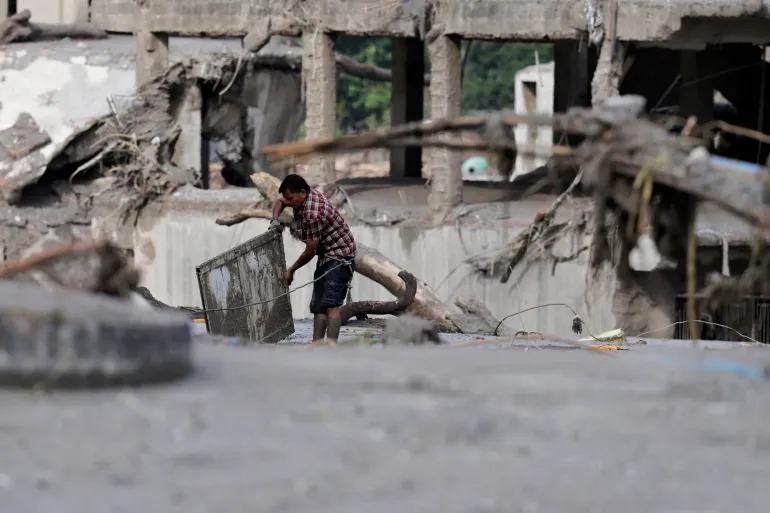
The Himalayan Flood Disaster Crisis has left more than 1,300 people missing across Nepal and China’s Tibet region after a massive collapse of mud and rock into a Himalayan river triggered destructive flooding through valleys, towns, and mountain communities.
Authorities in both countries are continuing large-scale rescue operations as search teams race against time to locate survivors and provide aid to thousands of people stranded by damaged roads, destroyed infrastructure, and dangerous terrain.
Officials in Nepal reported that 823 people remain missing, including more than 500 foreign nationals. Chinese authorities said another 558 people are unaccounted for in Tibet’s Gyirong county, bringing the combined number of missing people to more than 1,300.
The disaster has affected one of the region’s most important mountain travel routes, used by trekkers, tourists, and pilgrims moving between Nepal and Tibet.
Nepalese police confirmed that at least 270 bodies have been recovered so far. In Tibet, state media reported at least three deaths linked to the flooding.
Authorities warned that the number of casualties could rise as rescue teams reach isolated areas that remain cut off from transportation and communication networks.
The flooding followed the sudden collapse of a huge mass of mud and rock into a river system in the Himalayas. The impact sent powerful waves of water and debris rushing through mountain valleys and settlements located downstream.
Many communities had little time to react before floodwaters arrived.
Among the missing are travelers from more than two dozen countries. Nepalese tourism officials reported that 177 missing individuals are from India, 63 from the United States, 34 from Australia, 33 from the United Kingdom, and 25 from Canada.
The large number of international visitors reflects the popularity of the region among trekkers and religious pilgrims who travel through the Himalayan mountain corridors each year.
Rescue operations have expanded across some of the most difficult terrain in the world.
Helicopters have been deployed to search for survivors and deliver emergency supplies to communities cut off by landslides and flooding. Rescue teams are working in steep mountain areas where damaged roads and unstable ground continue to create challenges.
According to military officials, more than 5,000 army personnel, police officers, and emergency responders have joined the rescue effort.
Authorities said helicopters are delivering tents, food, medicine, and other essential supplies to affected districts. Emergency aid from neighboring India is also being transported into some of the hardest-hit locations.
Rescuers successfully evacuated and assisted 125 people during recent operations, including 20 foreign nationals.
Video footage from the disaster zone showed powerful torrents of water carrying debris through border areas and mountain communities. In several locations, floodwaters swept away buildings, roads, bridges, and utility infrastructure.
Many residents have been forced to leave their homes as authorities continue to assess damage and identify areas at risk of further flooding.
The destruction has disrupted transportation routes and damaged power systems, making recovery efforts more difficult.
Nepal’s Prime Minister Balendra Shah traveled to one of the worst-affected districts to assess conditions and coordinate the national response. Government agencies are working with military units and local authorities to support rescue and relief operations.
Officials said restoring access to isolated communities remains a top priority.
Investigators are also trying to determine the exact cause of the disaster.
Early reports from Nepalese authorities suggest that seismic activity may have played a role. Preliminary assessments indicate that an earthquake in the region could have triggered the collapse of part of a glacier, leading to the massive surge of water, mud, and rock.
Experts continue to study the event and have not yet reached a final conclusion regarding the cause.
The Himalayan Flood Disaster Crisis is one of the most serious natural disasters to strike the region in recent years. With hundreds of people still missing and thousands affected, rescue teams continue searching for survivors while emergency agencies work to provide shelter, food, and medical assistance.
As operations continue across Nepal and Tibet, families around the world are waiting for updates on loved ones caught in the disaster, while authorities focus on saving lives and supporting affected communities.
