

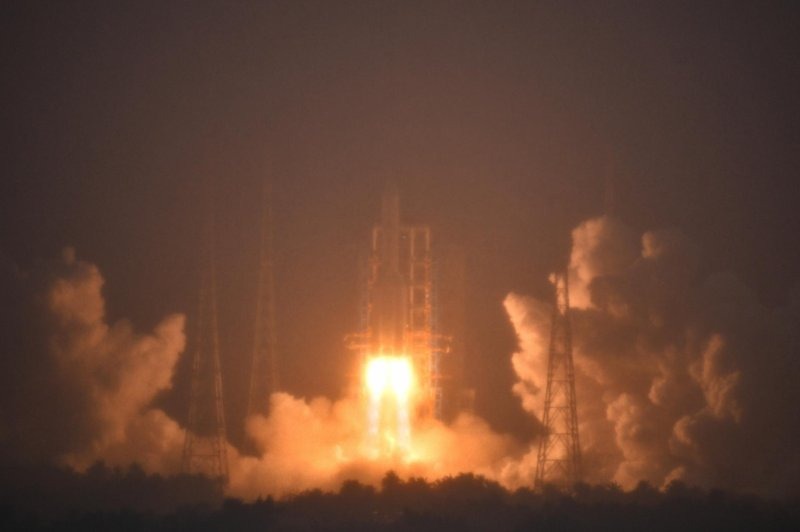
China has delayed the launch of its Chang E Seven lunar mission after officials said the mission did not meet the conditions needed for launch.
The mission had been due to launch from the Wenchang Spacecraft Launch Site in Hainan. It was designed to travel to the Moon’s south pole and study an area that may hold water ice.
The delay was announced after a review of the mission and its launch conditions. Chinese space officials did not give a new launch date. Reports said bad weather linked to Tropical Depression Narra was a major factor around the planned launch period.
The delay is a setback for one of China’s most important Moon missions. Chang E Seven is part of a wider lunar program that aims to learn more about the Moon’s south pole.
The mission is planned to use several spacecraft and tools. These include an orbiter, a lander, a rover and a small hopping vehicle. Together, they are meant to study the Moon’s surface and nearby environment.
One of the main goals is to search for water ice in areas near the lunar south pole. Some craters there receive very little sunlight. Scientists believe water may remain frozen in these cold and dark places.
Water on the Moon could be important for future space work. It could provide drinking water and oxygen. It could also help make fuel. That could reduce the amount of material that future missions need to carry from Earth.
Chang E Seven is also meant to test new ways of exploring difficult parts of the Moon. The hopping vehicle could move between areas that are hard for a normal rover to reach.
The mission is important beyond one launch. China plans more lunar missions as it works toward a stronger and longer-term presence on the Moon.
The country has already made major progress in lunar exploration. Chang E Six returned samples from the far side of the Moon in 2024. That mission was the first to bring material from that side of the Moon back to Earth.
The new mission is expected to build on that work. Its focus on the south pole could provide data for later robotic and human missions.
China has also linked its lunar plans to the future International Lunar Research Station. The planned station would require detailed knowledge of the Moon’s surface, resources and environment.
The delay does not mean the mission has been cancelled. Officials said the launch could not take place during the planned window. A later launch will depend on the mission, weather and other conditions.
The timing of the delay also shows the limits of lunar launches. Rockets must meet strict safety rules. Weather at the launch site can affect the rocket, support systems and other equipment.
For scientists, the delay means more time before the search for water ice can begin. For China’s space program, it means more time to check the mission before the next attempt.
The Moon’s south pole has become a major focus of global space activity. The region may offer useful resources and places where future crews could work.
China’s plans are developing as other space powers also prepare new lunar missions. The race is not only about reaching the Moon. It is also about learning how to work there for longer periods.
Chang E Seven will be closely watched when a new launch window is set. Its findings could add to knowledge about lunar water and the harsh conditions near the Moon’s south pole.
For now, China faces a pause in a mission that was ready for launch. The delay puts safety first while keeping the wider goal of lunar exploration on track.
The mission also has value for basic science. Data from the south pole could help scientists learn how light, heat and dust act on the Moon. It may also help map sites for future work.
The delay is therefore a pause, not an end. China still has a major goal in lunar science. Chang E Seven remains a key step in that plan.
