

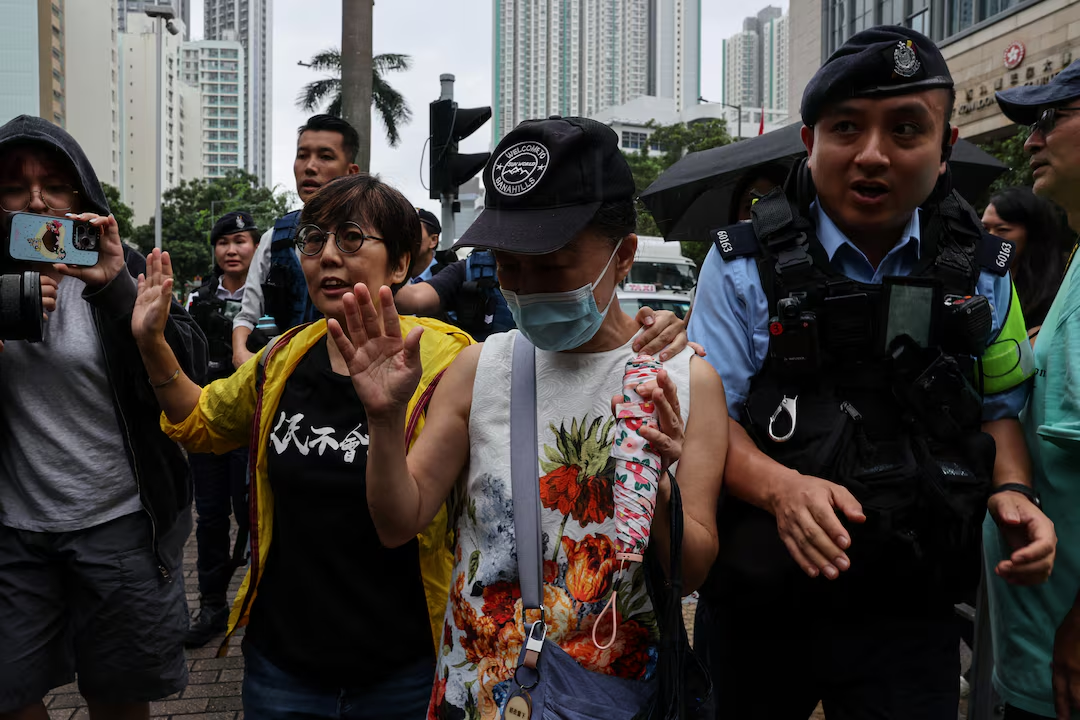
A Hong Kong court has found two former leaders of a group that held annual Tiananmen vigils guilty of inciting subversion. The ruling came on Friday, August 21, in a case that has drawn close attention in Hong Kong and abroad.
Lee Cheuk-yan, 69, and Chow Hang-tung, 41, were convicted under Hong Kong’s national security law. Both were leaders of the now disbanded Hong Kong Alliance in Support of Patriotic Democratic Movements of China. The group held large candlelight vigils each year to remember those killed in the 1989 Tiananmen crackdown.
The court said the group’s political work went beyond peaceful remembrance. Judges focused on its call to end one party rule in China. They said the slogan could encourage people to oppose the political system and the central government.
Lee and Chow had denied the charge. Their defense said the group was using peaceful means to call for change. They argued that their actions were protected by the rights promised under Hong Kong’s legal system.
The court did not accept that view. It ruled that the group’s work, including its political aims and public activities, could amount to inciting others to undermine state power. The case was heard by judges who were chosen to handle national security cases.
The annual Tiananmen vigil had been a major part of public life in Hong Kong for more than three decades. Thousands of people once gathered in Victoria Park each June 4. They lit candles and remembered those who died during the crackdown in Beijing in 1989.
That tradition ended after the introduction of the national security law in 2020. Police later stopped the annual event, and the Alliance was dissolved in 2021.
The case has therefore become a symbol of the wider political change in Hong Kong. Supporters of the defendants say the ruling shows how much space for public dissent has narrowed since the law came into force.
Hong Kong and Chinese authorities have defended the national security law. They say it is needed to protect national security and public order. They also say peaceful political activity is not banned unless it crosses the line set by the law.
The court case lasted 24 days and began in January this year. Another former Alliance leader, Albert Ho, pleaded guilty before the trial of Lee and Chow. The case against the group and its leaders focused on their activities between July 2020 and September 2021.
Lee and Chow have been in custody since 2021. They now face the next stage of the case, when the court will decide their sentences. The offense can carry a prison term of up to 10 years.
The verdict has also drawn concern from foreign governments and rights groups. Critics say the case shows the growing use of the national security law against people linked to Hong Kong’s former protest and civil society groups.
Supporters of the law reject that view. They say the ruling is based on evidence and the law, not on a ban on political views alone.
The decision marks another major moment in Hong Kong’s changing political landscape. The city once allowed large public events to mark the Tiananmen crackdown. Today, those events are no longer permitted.
For Lee and Chow, the guilty verdict now leaves their future in the hands of the court. For Hong Kong, the case has raised wider questions about free speech, political rights and the limits of public dissent under the national security law.
