

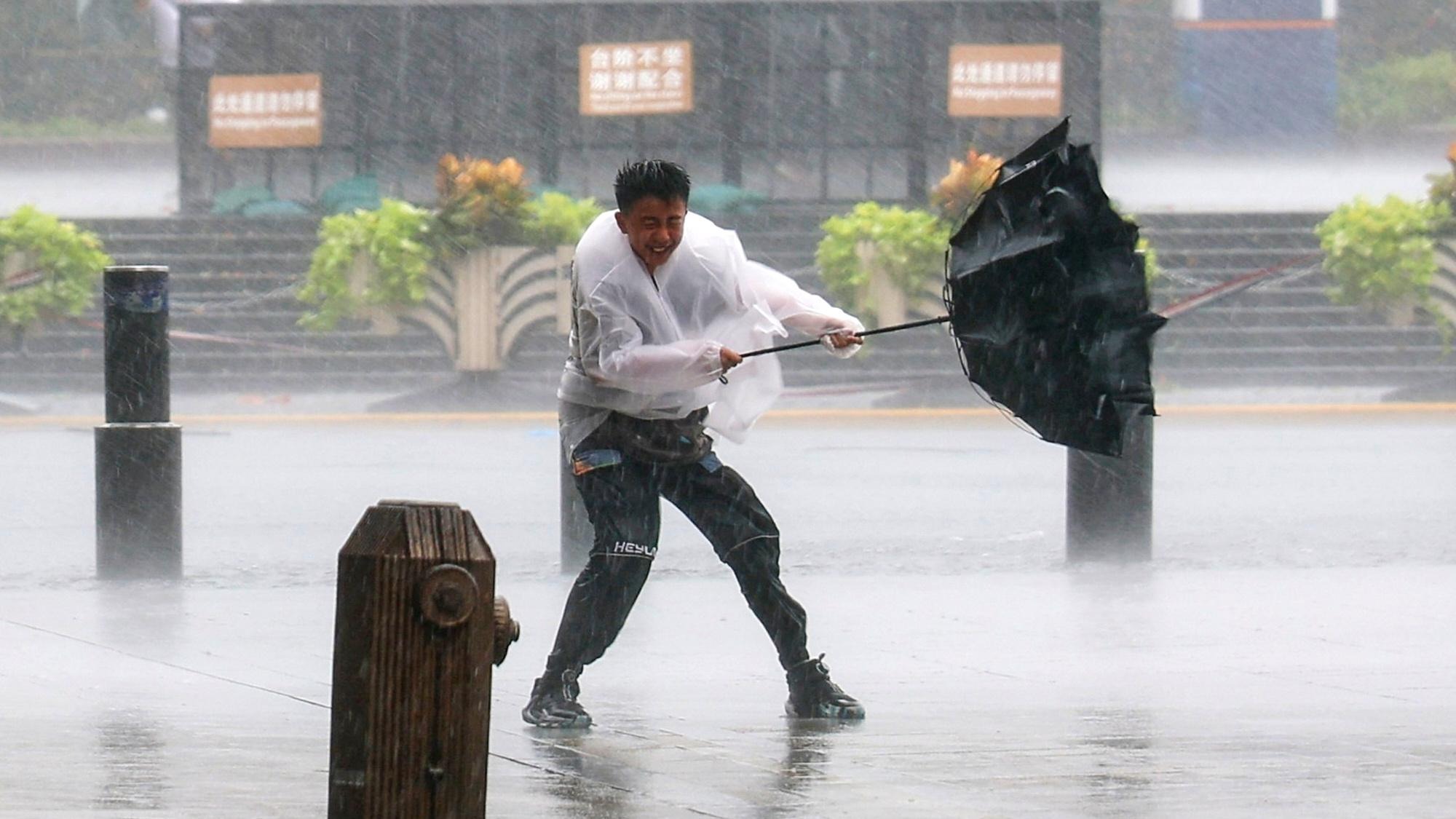
Typhoon Dolphin has hit the east coast of China as the strongest storm in the country this year.The powerful tropical cyclone brought heavy rain and wild winds that triggered urgent warnings for flooding and landslides.Before moving into China, the storm swept across southern Japan.It hurt six people in Okinawa and cut power to over fifty thousand buildings.
The storm made landfall near Yuhuan in Zhejiang province around five thirty on Sunday afternoon.Data showed top winds reaching ninety-four miles per hour near the storm center.That speed makes it equal to a category one hurricane on the global scale. High waves and fierce squalls slammed coastal towns as the eye moved ashore.
Local authorities moved quickly to safeguard lives and property.Transport networks faced massive disruptions across eastern regions.More than one million people were moved out of dangerous zones to safe shelters.Rescue teams placed offshore workers in secure places and directed all fishing boats back to harbor.Teams also increased safety checks at water dams, mountain streams, and outdoor building sites.
Major economic hubs felt the direct impact of the approaching cyclone. In Shanghai, officials evacuated over thirty thousand residents from low-lying areas.Flight tracking data showed that airlines canceled roughly fifteen hundred flights into and out of the city. The flight disruptions left thousands of travelers waiting inside air terminals for new departure times.
Heavy rainfall forecasts remain active across several big eastern provinces. Forecasters expect torrential downpours across Zhejiang, Shanghai, Fujian, Jiangxi, Anhui, and Jiangsu.Some central areas of Zhejiang could see up to twenty inches of rain in a short window. Such heavy rain creates serious risks for sudden flash floods in low valleys.
Weather experts warned that the storm will move slowly westward into inner areas. Top meteorologists noted that the system will lose force as it travels over dry land. However, the slow movement means heavy rain will linger over central regions for many hours. Lingering rain increases the chance of mudslides on steep hillsides.
Stranded travelers shared their personal thoughts on the storm event. A visitor from Guangdong named Chen got stuck in Shanghai after his Sunday flight was canceled.He was rebooked on a Monday night flight, but remained unsure if planes would take off on time. Chen noted that people from his home province are used to coastal storms, comparing the weather to a simple daily routine.
Emergency crews continue to watch high-risk areas along smaller rivers and mountain roads. Local leaders urge all residents to stay indoors until wind levels drop. Rescue teams stay ready to help isolated towns if rising waters block primary roads. Rain checks will continue until the storm system weakens completely.
