

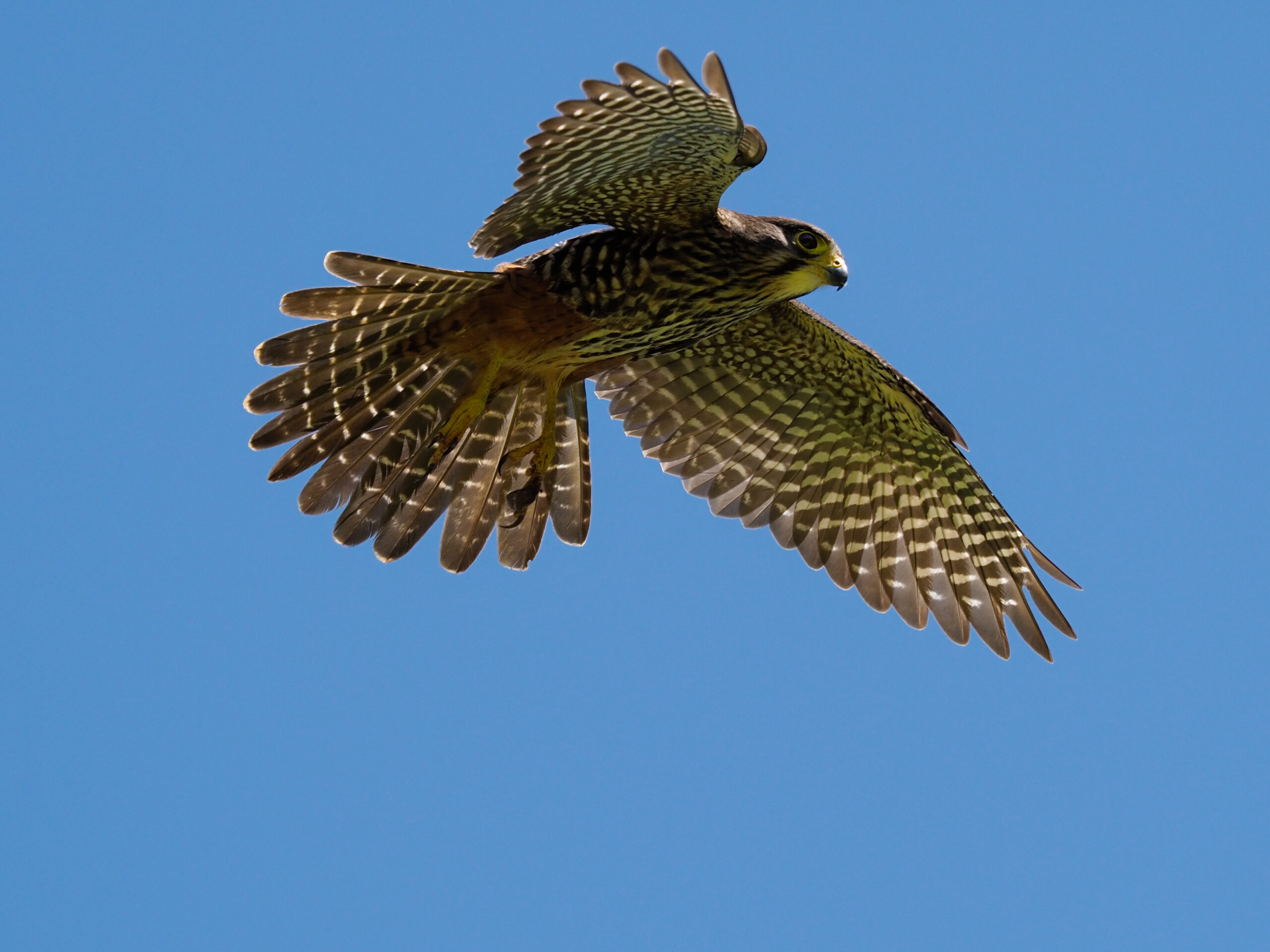
New Zealand’s fastest bird, the kārearea falcon, has soared to victory in the country’s annual Bird of the Year competition, winning the title for the second time in a contest free of the usual scandals and pranks.
The kārearea, capable of reaching speeds of up to 200km/h when hunting, is New Zealand’s only falcon and its last remaining endemic raptor. Small and tawny with striking talons and dark eyes, the falcon is a powerful aerial predator that dives from high vantage points to snatch prey, often larger than itself.
With only an estimated 5,000 to 8,000 birds left in the wild, the kārearea faces threats from introduced predators such as stoats, cats, and hedgehogs that feast on its ground-laid eggs, as well as habitat loss from logging and farmland expansion. Collisions with power lines, buildings, and protective nets around orchards add to the dangers.
“This is just a stunning bird,” said Emma Blackburn, chair of the Karearea Falcon Trust. “It’s our only remaining endemic raptor and a really important part of our ecosystem.”
The competition, run by conservation group Forest and Bird, attracted more than 75,000 verified votes from 123 countries. Each of the 73 candidate species had its own campaign manager, with New Zealanders eagerly taking to social media to promote their favourites.
The kārearea previously won in 2012, joining the kākāpō and the hoiho as the only birds to have claimed the top spot twice. This year, the mischievous alpine parrot, the kea, finished second, while the rare “goth” black robin, the karure, took third place.
Launched 20 years ago to highlight the plight of native birds, the poll has a history of mischief – from a bat winning in 2021, to alleged Russian meddling in 2019, and Australians attempting to sway the result in favour of the shag in 2018. In 2023, a tongue-in-cheek global campaign by comedian John Oliver propelled the pūteketeke to victory.
Despite the humour, the message is serious. “Behind the memes and mayhem is a serious message,” said Nicola Toki, chief executive of Forest and Bird. “Eighty percent of the species in this year’s top 10 are in trouble. Climate change, habitat loss and predators are pushing them towards extinction. People fall in love with these birds – and once they know their stories, they care, they advocate and they act.”
