

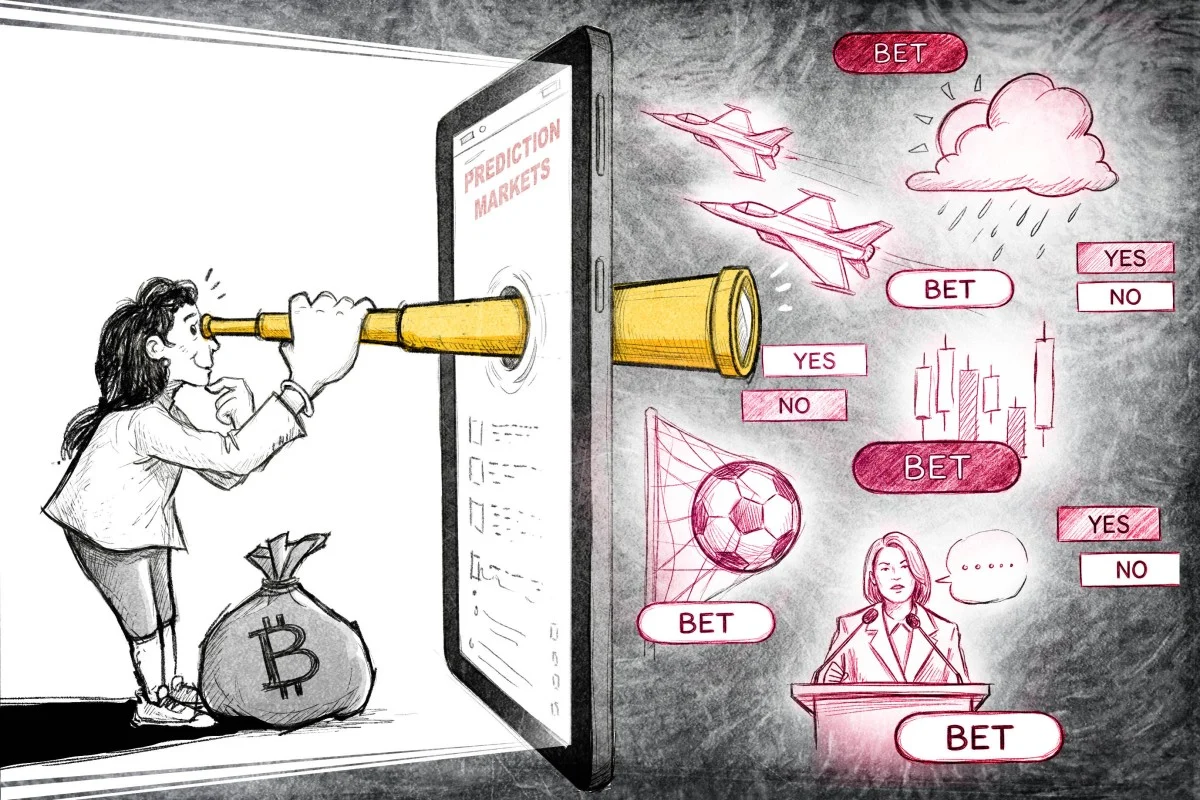
In recent months, prediction markets have gained growing attention in the online betting scene linked to Hong Kong. The trend is especially visible among young users who are exploring global platforms in search of quick profits and new ways to trade on real world events.
When 25-year-old Jean Pierre started using Polymarket last year, he said his motivation was simple. He wanted to see if he could make easy money. He lives in Hong Kong and works as a freelance video creator. He said the platform gave him many different betting options linked to future outcomes.
He is part of a wider group of users who are turning to prediction markets. These platforms allow people to trade on whether future events will happen. These events can include elections, sports results, economic changes, and major global news. Instead of traditional betting systems, users buy and sell contracts based on their expectations.
In many cases, contracts are priced between zero and one dollar depending on probability. When an event becomes more likely, the price rises. Traders can exit early and lock in profit or loss. This structure makes the platform feel similar to trading, but outcomes remain uncertain and often shift quickly due to breaking news or market sentiment.
The appeal of prediction markets is linked to the idea of turning knowledge into profit. Many users believe they can use information, timing, and analysis to gain an advantage. However, the same structure also creates strong risk exposure, especially for users who are new to financial style betting systems.
In Hong Kong, gambling related activity is tightly regulated, and online betting platforms are closely monitored. Offshore prediction markets exist in a grey zone because they combine elements of financial trading and gambling. This raises questions about how such platforms should be classified under existing rules.
The growing popularity of prediction markets has also raised concerns about financial risk. Prices can change very quickly based on global news, viral posts, or sudden political developments. This makes it easy for inexperienced users to lose money in a short period of time.
Another concern is user behavior. Because many platforms operate continuously without time limits, users can trade at any hour of the day. This constant access can encourage repeated activity and create patterns similar to online gambling habits, especially among younger users.
At the same time, supporters argue that prediction markets are not the same as traditional betting. They say these platforms collect dispersed information from users and convert it into probability signals. Some investors also use them as tools to hedge risk or test market expectations in real time.
However, regulatory uncertainty remains a key issue. Many governments are still trying to determine how prediction markets should be treated under financial law and gambling regulations. This is particularly relevant in markets like Hong Kong, where enforcement frameworks are strict but evolving.
For users like Jean Pierre, the attraction remains strong despite the risks. He says the chance of making fast profits keeps him interested, even though he understands losses can happen just as quickly. He also admits that the temptation to keep trading is difficult to ignore.
As prediction markets continue to expand globally, questions around regulation, consumer protection, and financial education are expected to grow. In Hong Kong, the debate is likely to continue as more users explore these platforms and the line between trading and betting becomes harder to define.
