

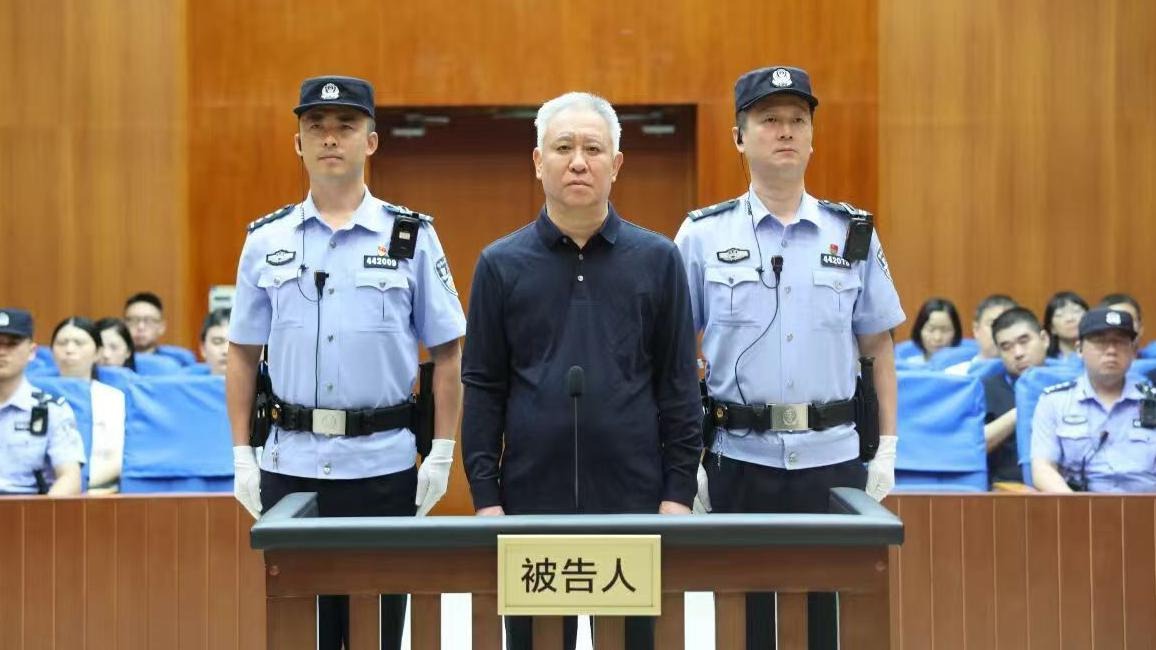
Hui Ka Yan, the founder of China Evergrande Group, has been sentenced to life in prison after a Chinese court found him guilty of several financial crimes.
The Shenzhen Intermediate People’s Court gave the ruling on Thursday, August 20. The court also ordered the former property tycoon to give up all of his personal assets. He was also stripped of his political rights for life.
The case marks a major moment in the long fall of Evergrande. The company was once one of China’s biggest property firms. It later became a symbol of the country’s deep housing crisis.
Hui faced eight charges. They included misuse of company funds, fundraising fraud and the illegal taking of public deposits. He pleaded guilty to the charges in April.
The court also handed large fines to Evergrande and its main property unit. Evergrande was fined 8.82 billion yuan. Evergrande Real Estate was fined another 7 billion yuan. Several other senior staff also received prison terms. Their sentences ranged from six to 18 years.
The ruling brings a sharp end to Hui’s rise from a modest background to one of China’s best known business figures.
Hui built Evergrande during China’s huge housing boom. The company grew at a fast pace by borrowing large sums and using the money to buy land and build homes.
At its peak, Evergrande was a major force in China’s property market. Its annual sales reached about 700 billion yuan by 2020. Hui was also once one of Asia’s richest people. His wealth was estimated at more than $45 billion in 2017.
But the company’s rapid growth came with a huge debt load.
Evergrande began to struggle after China moved to limit heavy borrowing by property firms. The company failed to repay much of its debt in 2021. Its total liabilities later rose to more than $300 billion.
The crisis did not stay within Evergrande. The company’s collapse added pressure to China’s wider housing market. Other major developers also faced debt problems. Falling home sales then put more pressure on the sector.
Evergrande was eventually ordered to be liquidated after efforts to fix its debt failed. The company became one of the clearest examples of the risks created by years of rapid borrowing in China’s property market.
The court case also focused on false financial records. Investigators found that Evergrande had overstated its revenue by about $80 billion in 2019 and 2020 by recording some property sales too early.
Hui’s downfall is therefore about more than one businessman. It also shows how China’s property boom turned into a long period of financial stress.
The life sentence is unlikely to solve the money problems left behind by Evergrande. Creditors in China and abroad still face large losses. Many have spent years trying to recover money from the failed developer.
The ruling may, however, give a clear signal about how Chinese authorities view serious financial misconduct by company leaders.
For Evergrande, the legal case against its founder closes one of the most dramatic chapters in China’s property crisis. The company that once helped define the country’s housing boom is now remembered mainly for its huge debts, unfinished projects and collapse.
Hui’s life sentence puts the final focus on the man who built that empire. It also underlines the high cost of a business model based on fast growth and heavy debt.
