

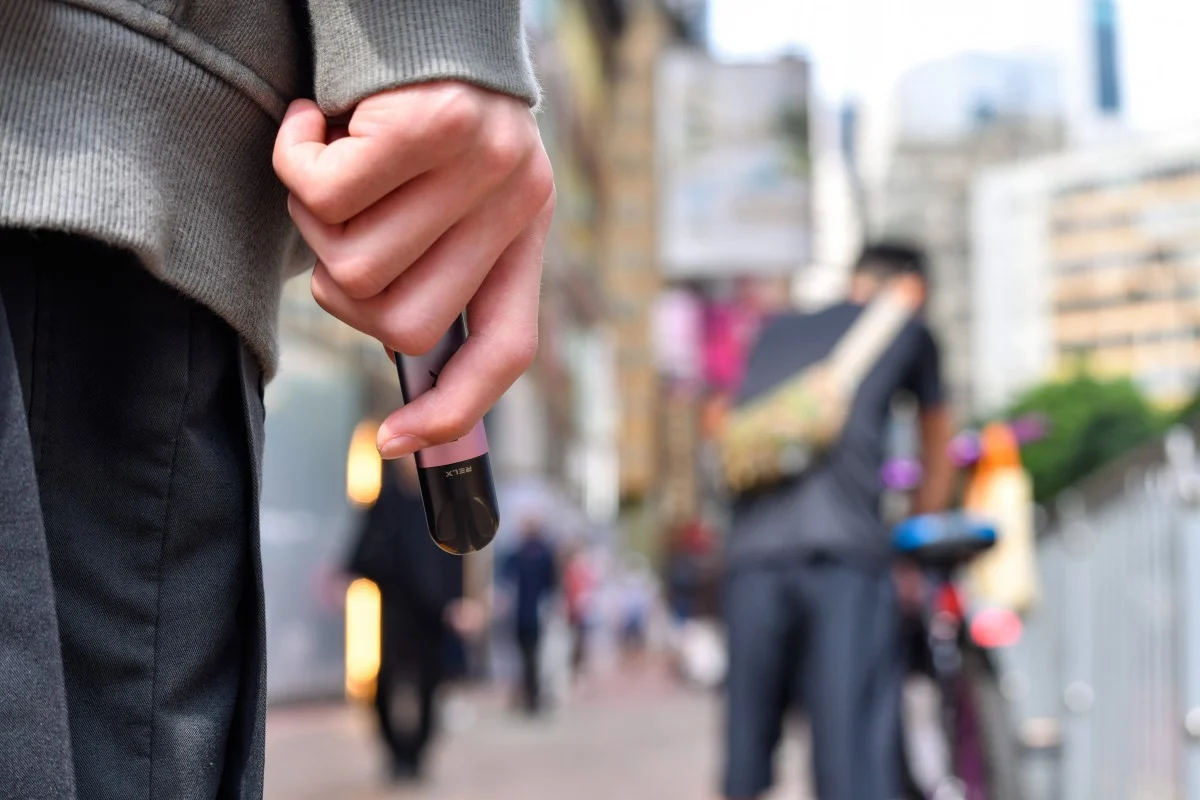
Hong Kong has begun enforcing a new public vaping ban as part of a wider effort to improve public health. The Hong Kong vaping ban started on Thursday and introduces fines, penalties, and possible jail terms for violations. Officials say the move is aimed at reducing the risks linked to tobacco alternatives.
The new rules cover vaping products such as e-cigarettes and heated tobacco sticks. These products are designed to imitate traditional smoking. Health authorities say limiting their use in public spaces is an important step to protect people from exposure.
Under the Hong Kong vaping ban, strict penalties now apply in public areas. Anyone caught carrying more than five vape pods or more than 100 heat sticks may face a fine of up to HK$50,000, which is about US$6,400. They could also face up to six months in prison.
For smaller amounts, offenders will receive a fixed penalty of HK$3,000. This matches the fine for smoking traditional cigarettes in public spaces.
Authorities have confirmed that enforcement will be firm. Dr Manny Lam Man-chung, head of the Tobacco and Alcohol Control Office, said warnings will not always be issued. Officers will directly issue penalty tickets where violations are found.
He also said enforcement will be increased in busy public locations. These include business districts and other crowded areas where many people pass through each day.
The Hong Kong vaping ban builds on earlier restrictions in the city. Hong Kong already banned the sale of vaping products in 2022. The new rules now focus on reducing public use as well.
Officials are also reviewing the possibility of a full ban on vaping in the future. Health authorities say they are considering further steps to reduce access to tobacco alternatives.
The decision comes as global health concerns around vaping continue to grow. Researchers in Australia have warned of possible links between vaping and lung and oral cancers. They have called on governments to act early, even while long-term studies are still ongoing.
Hong Kong health officials say they are taking a precautionary approach. They argue that waiting for full scientific confirmation could take many years. They believe early action is needed to reduce potential risks.
The Hong Kong vaping ban is part of a broader public health strategy. Authorities aim to reduce smoking-related harm and discourage young people from using nicotine products.
Despite the new rules, some residents were still seen vaping in hidden areas on the first day of enforcement. Officials say it may take time for full compliance as people adjust to the new regulations.
Public health experts say vaping is often seen as less harmful than smoking, but its long-term effects are still not fully known. This uncertainty has led some governments to introduce stricter controls.
Hong Kong now has one of the strictest vaping policies in the region. By combining a sales ban with public use restrictions, the city is limiting both availability and visibility of vaping products.
Officials say public education campaigns will continue alongside enforcement. They want to ensure residents understand the new rules and health concerns linked to vaping.
The Hong Kong vaping ban is expected to change behaviour among users over time. Authorities believe stronger rules will help reduce overall usage in the city.
Health officials say the goal is to create cleaner public spaces and reduce exposure to potentially harmful substances. They also hope the policy will discourage young people from starting nicotine use.
The policy marks another step in Hong Kong’s long-term anti-smoking efforts. Further restrictions may be introduced in the future if the government moves toward a complete vaping ban.
