

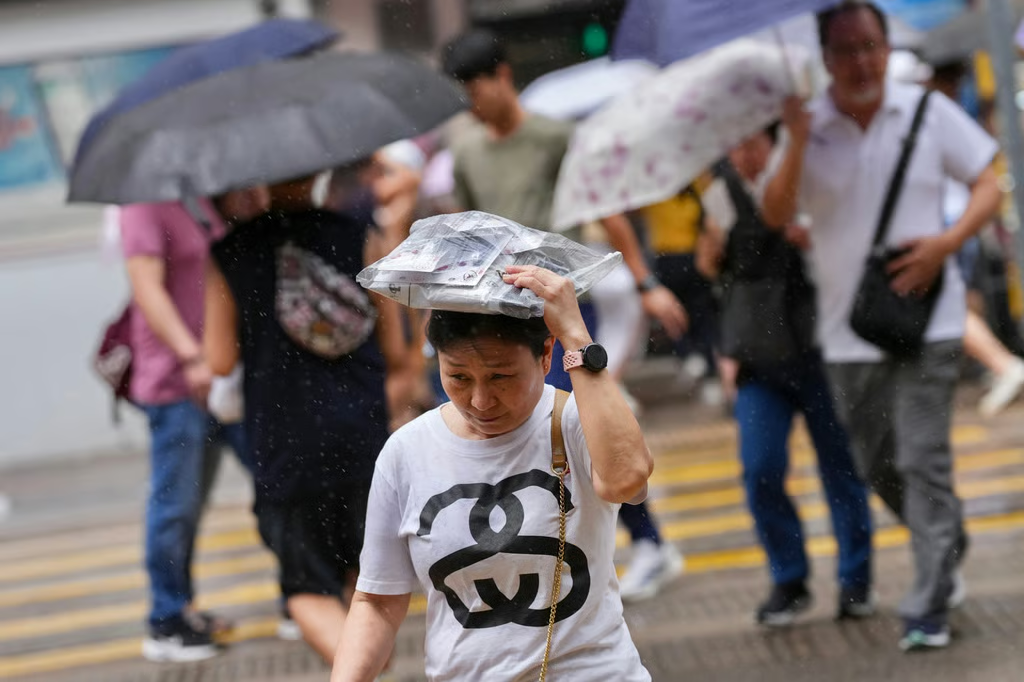
Hong Kong faced a day of unstable weather on Saturday as the Hong Kong Observatory issued and then cancelled an amber rainstorm warning twice. The short-lived alerts came as heavy showers and thunderstorms swept across the city under the combined effect of a southwest monsoon trough and a low-pressure system.
The amber signal, which is the lowest level in Hong Kong’s three-tier rainstorm warning system, was first issued at 5am. It was cancelled at 8:45am as rainfall eased in the morning. However, the weather quickly changed again. The warning was reissued at 2:15pm before being lifted again at 3:40pm.
The repeated warnings show how quickly the weather shifted across the city. Many areas recorded heavy rainfall in a short period of time. More than 30mm of rain fell in several districts during the morning hours, causing wet roads and reduced visibility.
One of the hardest-hit areas was Tsuen Wan. It recorded around 70mm of rainfall. This level of rain is close to what is normally seen in stronger storm conditions and is near the threshold for a higher black rainstorm warning level.
The Hong Kong Observatory warned that unstable weather may continue for several days. It said storm conditions could last until at least Monday. Temperatures are expected to stay between 28°C and 30°C, keeping conditions warm and humid.
Authorities earlier warned residents about possible flash floods. People were advised to avoid rivers, slopes, and water-filled areas. Drivers were also urged to take extra care due to slippery roads and sudden heavy rain.
During the morning storm, a serious lightning incident was reported at the Sha Tin Jockey Club Swimming Pool. According to the Hong Kong and Kowloon Life Guards’ Union, lightning struck a diving platform at 6:41am, just minutes after the pool opened.
The strike caused panic among swimmers and staff. Some people had already entered the water when the thunderstorm hit. Lifeguards later found damage to a concrete diving platform, including a broken tip and burn marks. Fortunately, no injuries were reported.
The union said the sudden storm created dangerous conditions in public swimming areas. It urged people to leave pools, beaches, and rivers immediately during thunderstorms. It also warned that lightning does not need to strike a person directly to cause harm, as electricity can spread through water surfaces.
Officials said the unstable weather pattern is linked to strong seasonal systems affecting the region. The combination of monsoon winds and a low-pressure trough has increased rainfall activity across southern China and nearby coastal areas.
The Observatory also reminded the public of earlier warnings about more extreme weather this year. It had previously noted that a developing El Niño pattern could lead to hotter temperatures, heavier rain, and more tropical storms in the coming months.
This recent weekend marks the second consecutive week of heavy rainfall in Hong Kong. It follows the city’s first black rainstorm warning of the year on June 8, which caused widespread disruption.
With more rain expected, authorities continue to monitor conditions closely. Residents have been advised to stay alert, follow official updates, and prepare for sudden weather changes as the rainy season continues.
